
A film studio's orchestration board shows every virtual-firewall order completed, while users still report failed inspection sessions on the firewall that is already running. What does the completed-order figure evidence?
Select an answer to reveal the explanation.
Short Explanation
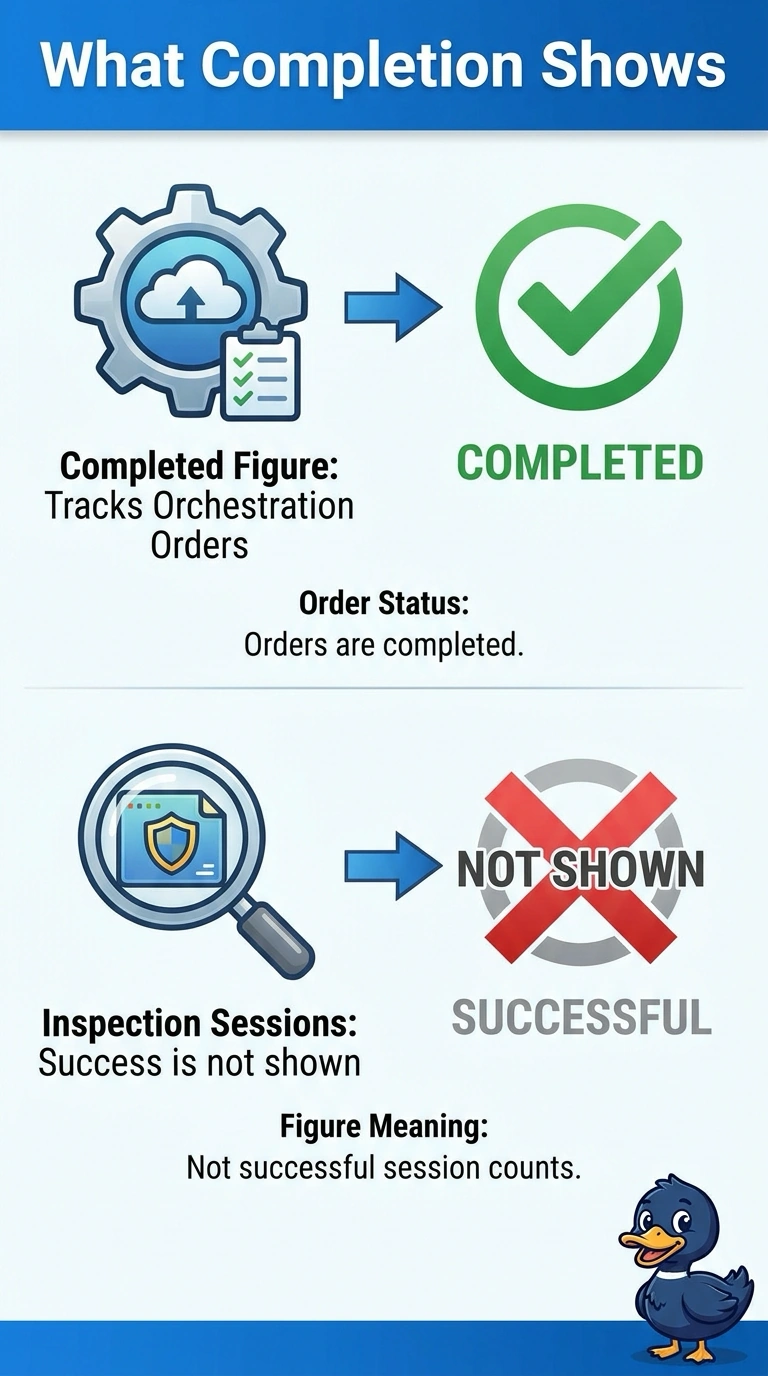
Think of a shop ticket that only says the work order was closed. You can close every order and still have a firewall that drops the sessions people actually use. That completed-order figure tells you the orchestrator finished, not that inspection succeeded.
Full Explanation
An orchestration-order figure counts lifecycle work the management stack finished, such as instantiate or update requests that reached a completed state. It is evidence about the NFVI management and orchestration workflow. It is not a sample of whether the running virtual firewall is meeting its inspection-session objective. Those are different objects: one records that an order closed, and the other records what the function did with user traffic after it was running. Completed orders do not establish API latency or exclude a later storage problem. Diagnose those possibilities with API latency/error measurements and volume I/O evidence; the completed-order count alone measures orchestration completion. Exam caveat: keep the order figure; it is the right evidence when the complaint is that a service will not finish deploying. Operational check: for the same time window, compare the completed-order count with the firewall's own session-success counter before you call the service healthy.