
In a university research cloud, traffic still passes through virtual routers that are already running, and their volumes still read and write. Every new call to list flavors or create a port returns an error. Which layer has failed?
Select an answer to reveal the explanation.
Short Explanation
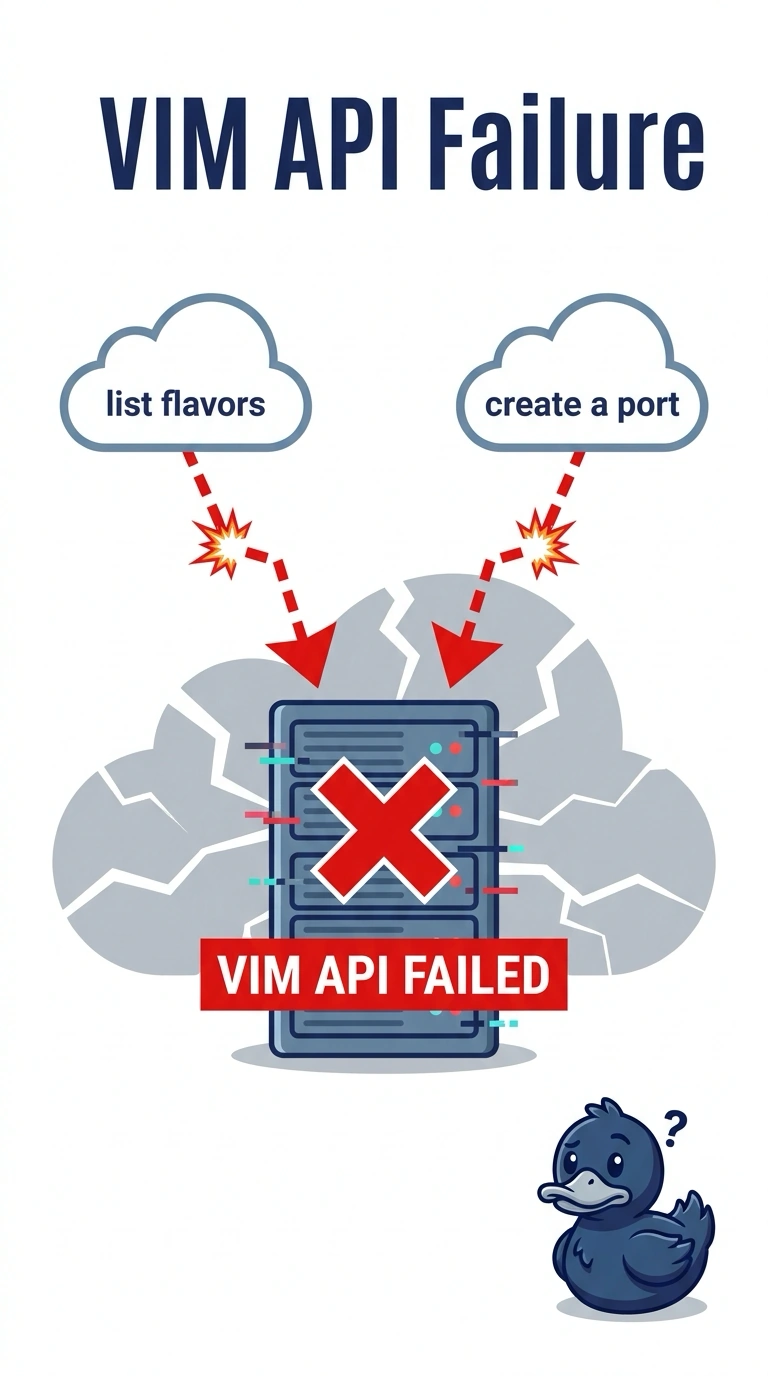
The shop can still sell what is on the shelf while the order terminal is down. Your running routers are forwarding and their disks answer, and every new API call fails. The layer that failed is the VIM API, not the guests that are already working.
Full Explanation
The VIM API is the cloud controller's front door for operations such as listing flavors and creating ports. When those calls return errors for the research cloud and the already-running virtual routers keep forwarding with volumes that still read and write, the failed layer is the API. The data plane does not have to die for the controller to be unreachable. The compute host is still forwarding, so this is not a host outage. The storage backend is still serving the volumes, so this is not a disk outage. One guest operating system that is still passing traffic is not the source of errors on every new API call across the cloud. Exam caveat: do not evacuate healthy guests as the first response to an API outage; you will add a data-plane change to a control-plane fault. Operational check: from an orchestration host, repeat a read-only API call and a port-create call, and compare that with a dataplane probe through a running router that does not use the API. Leave the running routers where they are while you fix the API, or you will schedule an evacuation for a control-plane fault.