
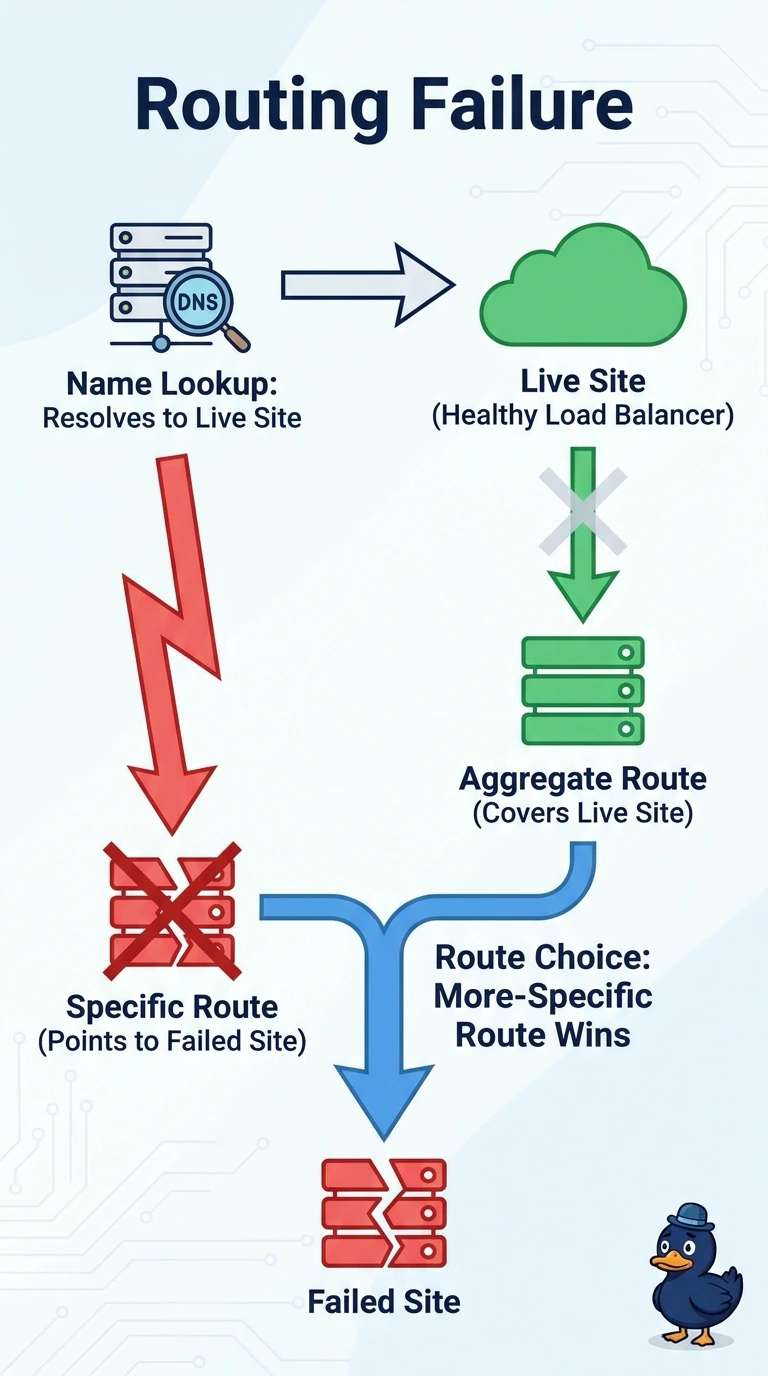
A retail checkout name resolves to the live site, and the load balancer at the live site is healthy. Traffic still arrives at a failed site because a more-specific route to the failed site is preferred over the aggregate that covers the live site. Which failure mode is this?
Select an answer to reveal the explanation.
Short Explanation
The sign on the highway points at the right town, and a closer exit still dumps you into the closed one. The name resolves to the live site and that balancer is healthy. The more-specific route to the failed site is winning, and that is a routing failure.
Full Explanation
Routing prefers the longest matching prefix. A more-specific route to the failed site beats the aggregate that would have carried traffic toward the live site, so packets arrive at the failed site even though the name and the balancer are fine. That is a routing failure mode: the longer prefix is what still delivers packets to the failed site. DNS is not failing: the checkout name resolves to the live site, so the name is not still pointing at the failed site. The live site's load balancer is healthy, so this is not a health-check failure. A resolver outage would mean the name does not resolve, and it does. Exam caveat: withdrawing the more-specific route is the routing fix; a healthy load balancer at the live site does not override a longer prefix. Operational check: compare the route lookup for a client packet with the address the name returns, and confirm the more-specific prefix is the one that points at the failed site. Remove or fix the longer prefix and watch the next packet follow the aggregate toward the live site without touching the balancer.