
A winery tenant wants guest devices isolated from the production cellar network, with their own subnets and a controlled exit. Which design supplies that isolation?
Select an answer to reveal the explanation.
Short Explanation
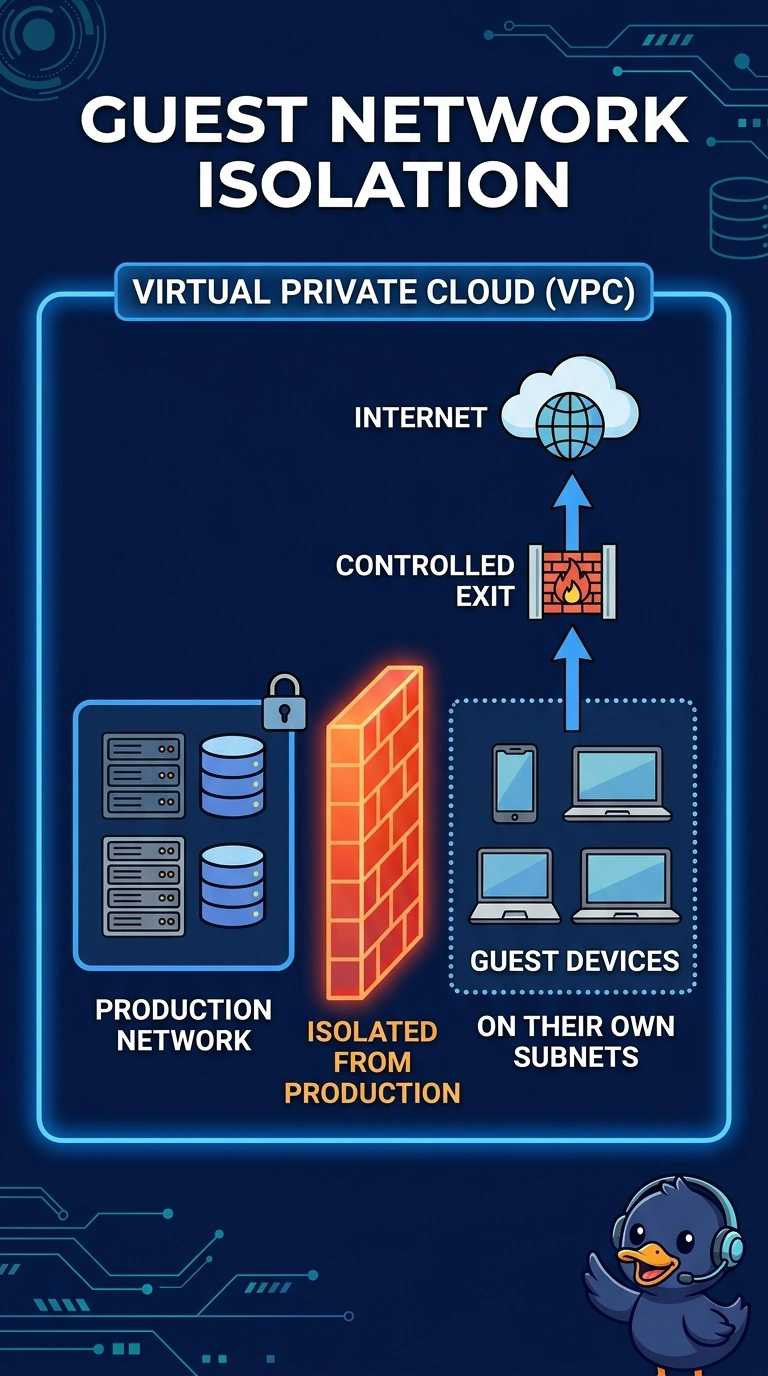
Think of a virtual private cloud as a private suite with its own rooms and front door. You give winery guests their own subnets and a controlled exit, keeping them apart from the cellar network. Reusing the provider underlay, stretching one flat VLAN, or adding a circuit without guest subnets and a controlled exit does not create that boundary.
Full Explanation
A virtual private cloud with guest devices on their own subnets and a controlled exit is the right design because it gives winery guests a separate routed network and a defined way out, keeping them apart from the production cellar network. Reusing the provider underlay as the guest network does not give guests their own subnets or a controlled exit; the underlay is shared transport, not the required guest boundary. Stretching one flat VLAN from cellar hosts across winery guest devices joins guests to the cellar broadcast domain rather than isolating them. Adding a second physical circuit without guest subnets or a controlled exit supplies another connection, but not the required network boundary or controlled egress. Exam caveat: A virtual private cloud provides the guest boundary; an additional exit does not replace the need for guest subnets. Practical check: Verify that guest devices use their own subnets with a defined route out, and that a guest broadcast does not reach cellar hosts.