
Shoppers resolve the store name, and the route to the checkout site is up, but one load-balancer node is dead and still receives new sessions. Which fix matches the component that failed?
Select an answer to reveal the explanation.
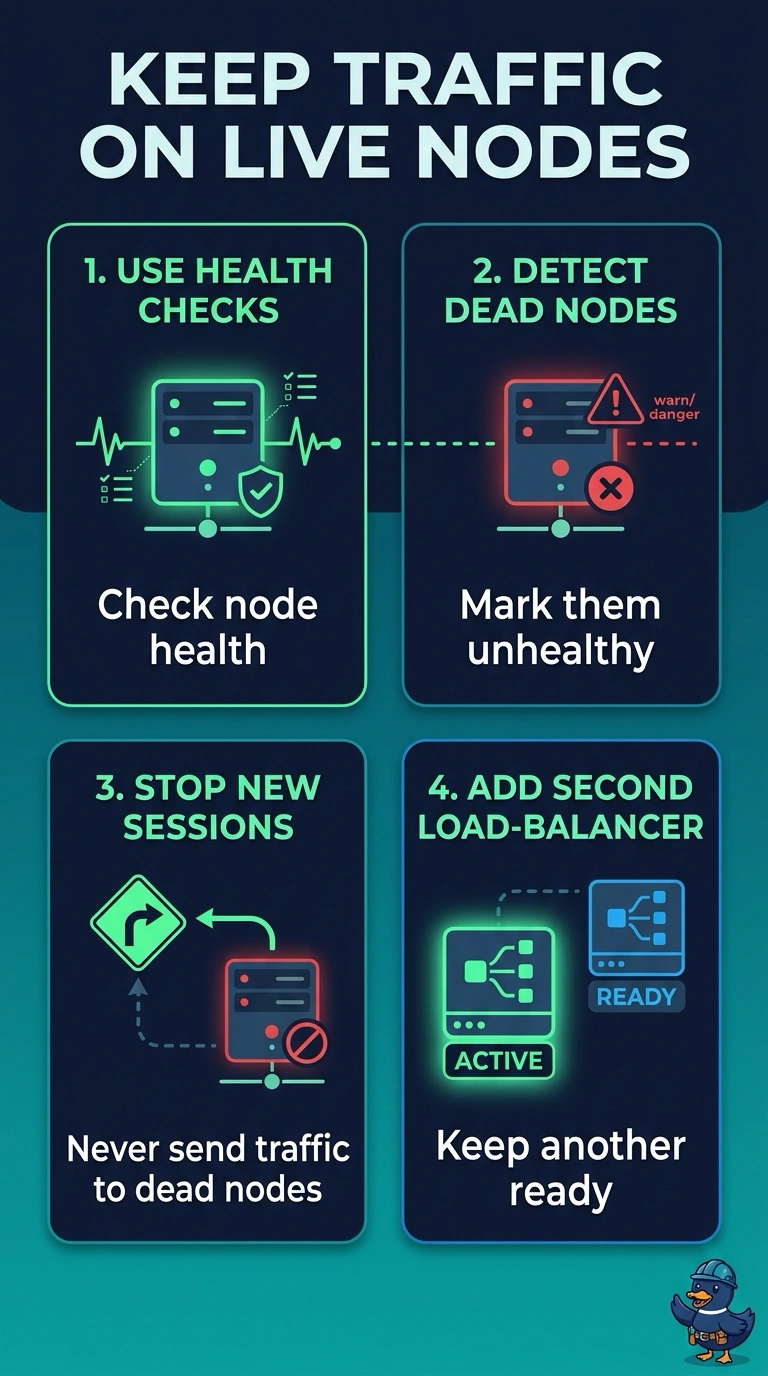
Short Explanation
The dining room is open and the sign on the street is correct, but one host stand keeps seating people at a closed table. You add a health check and a second load-balancer node so new sessions leave the dead node. A second resolver, a second next hop, and anycast each repair name service or routing that is already working.
Full Explanation
DNS, routing, and load balancers fail differently, and the evidence says which one failed. Resolution works and the route is up, while a dead load-balancer node still receives sessions. The design is a health check that stops using that node and a second node that can take the sessions. A health check and a second load-balancer node so dead nodes stop receiving new sessions is the design that meets this requirement. A second DNS resolver so the store name keeps resolving if a resolver fails is the wrong fit because the name already resolves, so another resolver does not stop sessions from landing on the dead load-balancer node. A second routing next hop so the site stays reachable if one route is withdrawn is the wrong fit because the route to the site is up, so another next hop does not remove a dead load-balancer node from service. Add a second recursive resolver behind a shared anycast resolver IP while leaving the failed load-balancer node in service is the wrong fit because Resolver anycast changes which resolver IP instance receives a query, not the number of addresses in the answer, and the dead node still receives new sessions. Exam caveat: A health check only helps the load balancer, and a later DNS failure still needs resolver redundancy. Operational check: Confirm new sessions move to the healthy node when one is stopped, while name resolution and the route stay up.