
Harbor grain-terminal clients use only one resolver, and that resolver has stopped. Application routes are present and both load-balancer nodes pass health checks. What covers this failure?
Select an answer to reveal the explanation.
Short Explanation
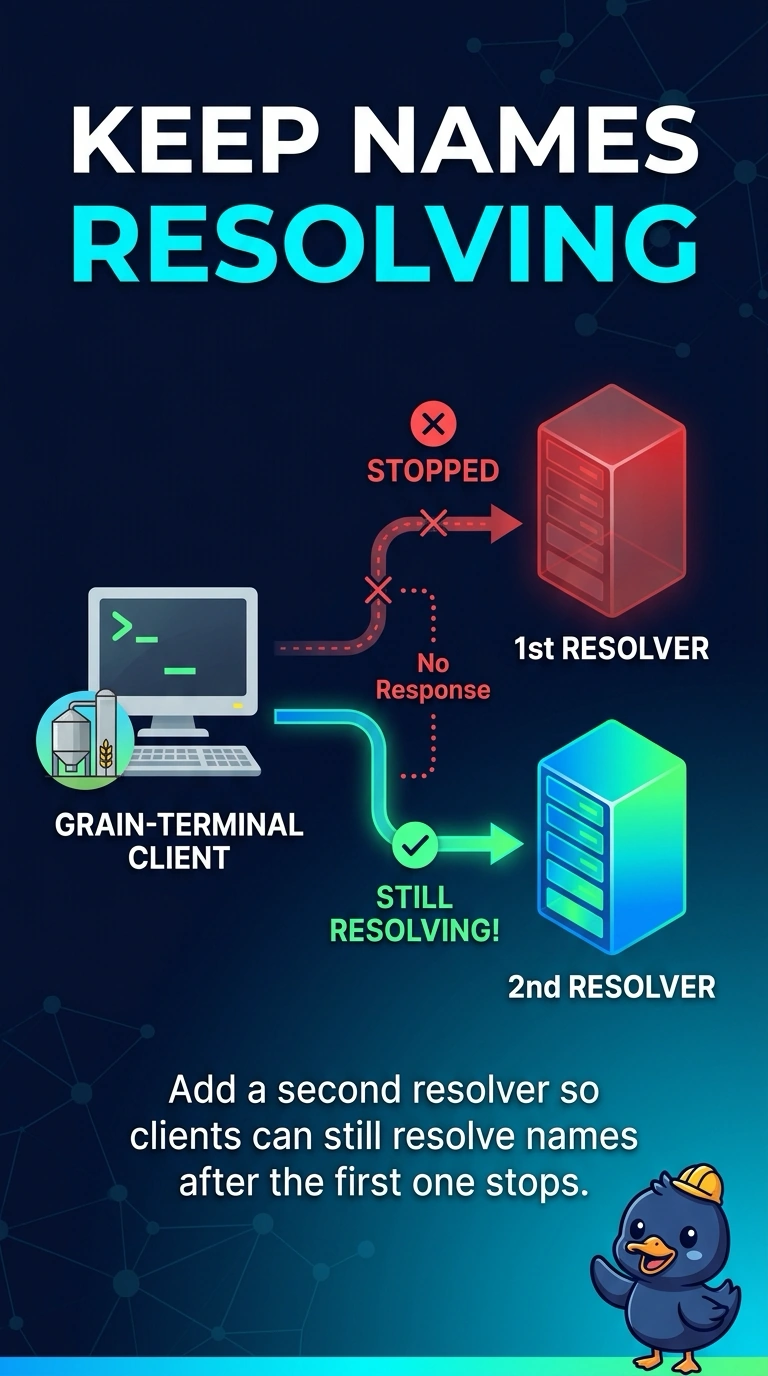
You can think of name lookup as the directory clients need, even when the roads and loading docks are fine. Add a second resolver so grain-terminal clients can still resolve names after the first one stops. Another load-balancer node, another application next hop, or a larger application guest does not restore name lookup.
Full Explanation
Name lookup fails when the only resolver stops, even if routing and the load balancer are healthy. These grain-terminal clients have one resolver, and it has stopped; application routes are present, and both load-balancer nodes pass health checks. A second resolver covers the DNS failure so clients can still resolve names after the first resolver stops. Another load-balancer node while both current nodes already pass their health checks is the wrong fit: the load-balancer nodes are healthy, and adding one does not restore name lookup. Another application next hop while the application route is already present and healthy is also the wrong fit: clients that cannot resolve the name are not helped by an additional next hop. A larger grain-application guest that does not answer name lookups for the clients cannot repair the failed resolver either. Exam caveat: Match the fix to the component that failed; here, the resolver failed, not the route, load balancer, or application guest. Practical check: Stop the remaining test resolver and confirm clients fail, then bring up a second resolver and confirm lookups succeed while the route and both load-balancer nodes stay healthy.