
Name lookups for a clinic cloud stop after its only recursive resolver fails, while existing routes and application health checks stay intact. Which resilience matches the component that failed?
Select an answer to reveal the explanation.
Short Explanation
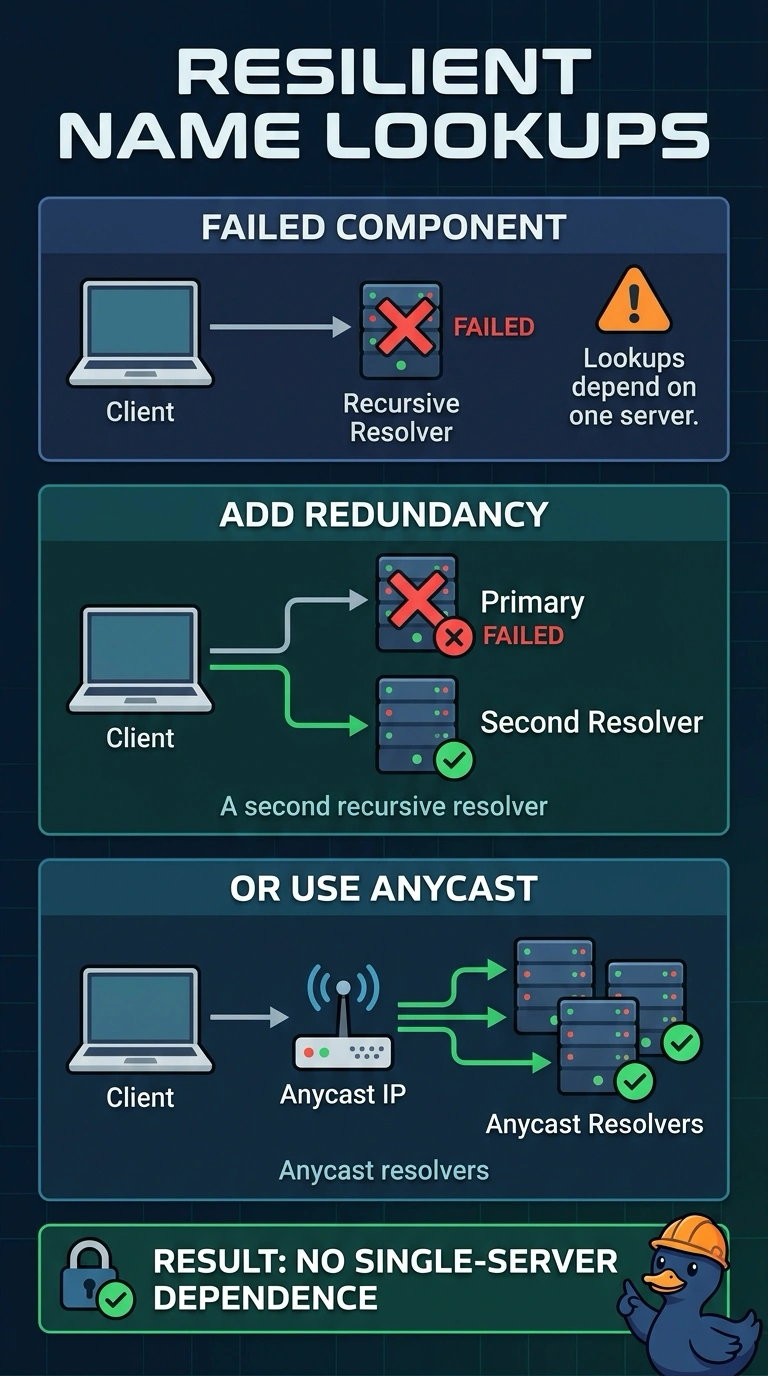
When your only phone book is gone, a second road out of town won’t help you look up a name. Add another resolver, or use anycast resolvers, so lookups no longer depend on the failed server. A second routing next hop, a load balancer and second node for a healthy application tier, or anycast of the application address won’t restore name resolution.
Full Explanation
DNS, routing, and load balancing address different failure points, so you need resilience for the component that failed. Here, the only recursive resolver failed, while routes and application health checks remain intact. A second recursive resolver, or anycast resolvers, removes dependence on one server and provides the DNS resilience this situation requires. A second routing next hop for prefixes that are still reachable and were not the failed part does not help: it provides routing resilience, but routing remains intact. A load-balancer health check and a second node for an application tier that is still healthy address application-tier resilience, not failed name lookup. Anycast of the application address while name lookup still uses the one failed resolver changes how clients reach the application address; it does not supply a working recursive resolver. Exam caveat: Anycast is not automatically a DNS fix; anycast of resolver addresses can cover DNS, whereas anycast of the application address covers a different failure. Practical check: Confirm that clients receive more than one resolver, or that an anycast resolver address is still served after the failed resolver stops answering.