
A factory runs a single ACI fabric. A contract already permits one pair of endpoint groups inside the first VRF. The devices that fail are in two different VRFs, and no route is shared between those VRFs. Underlay ports are up. Where is the fault?
Select an answer to reveal the explanation.
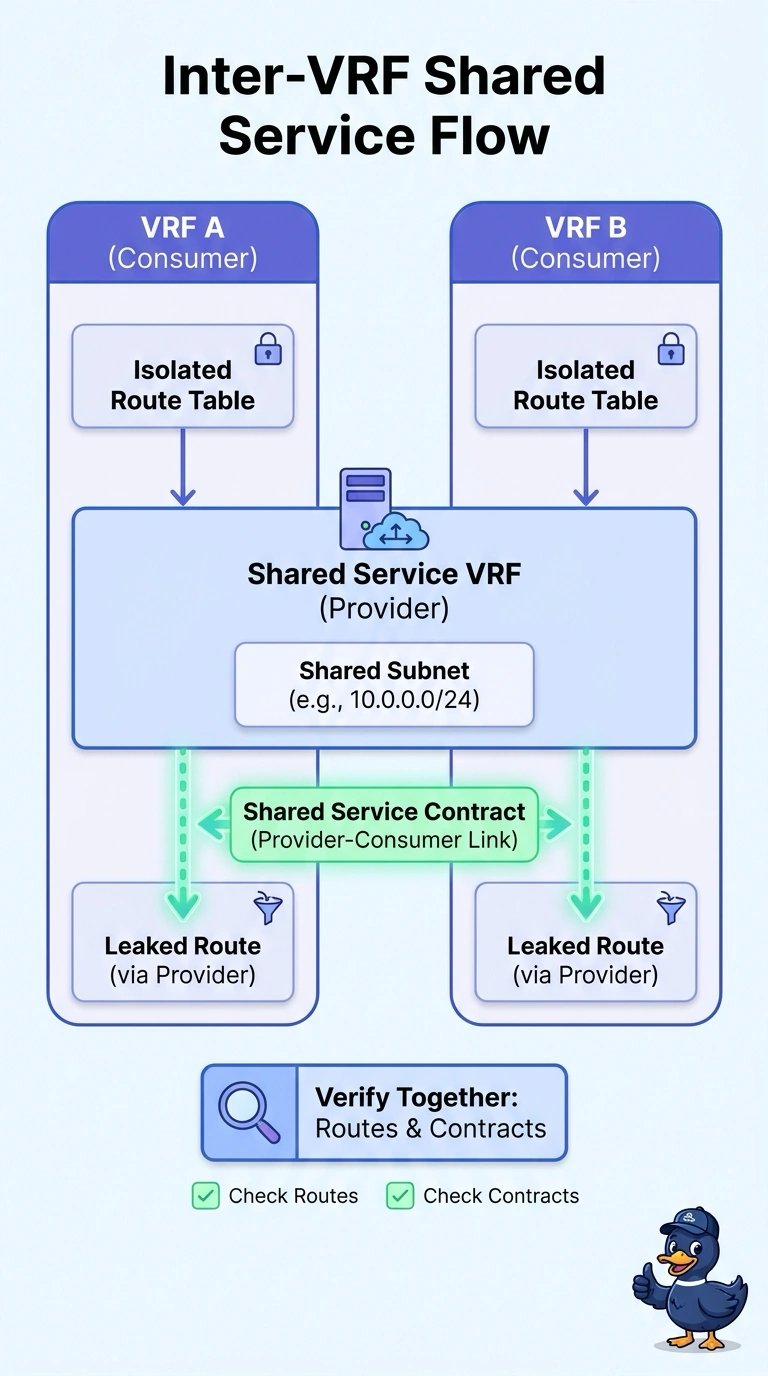
Short Explanation
A pass that works on one floor does not open a staircase that was never built. Your contract already permits a pair inside the first VRF, and these devices sit in two VRFs with no shared route. Your existing intra-VRF permit does not establish the shared-service routing and contract relationship these endpoints need.
Full Explanation
In an ACI fabric each VRF is its own routing table. A permit for an unrelated endpoint pair inside one VRF does not enable these endpoints to communicate across VRFs. ACI shared services require an appropriately scoped provider/consumer contract relationship and the relevant subnet-sharing configuration to install inter-VRF routes. Verify routing and policy together rather than assuming an intra-VRF permit applies across VRFs. The underlay ports being up simply means the fabric links are not the symptom you were given. The contract inside the first VRF already permits its own pair, so rewriting that contract does not connect a second VRF. A VXLAN overlay between two data centers is a different interconnect; this failure is inside one factory fabric. A pseudowire is not how this ACI fabric joins the devices. Exam caveat: sharing a route between VRFs is not the whole policy story; once the route exists, the contract still has to permit the flow. Operational check: check the routing table of each VRF for the other VRF's subnet and confirm the failing endpoints are not both in the VRF where the contract already matches. Confirm the shared-service contract relationship, subnet sharing and resulting routes for the actual endpoint pair.