
City network staff are labeling the new NSX-T fabric and debate which layer is overlay versus underlay. Which identification is correct?
Select an answer to reveal the explanation.
Short Explanation
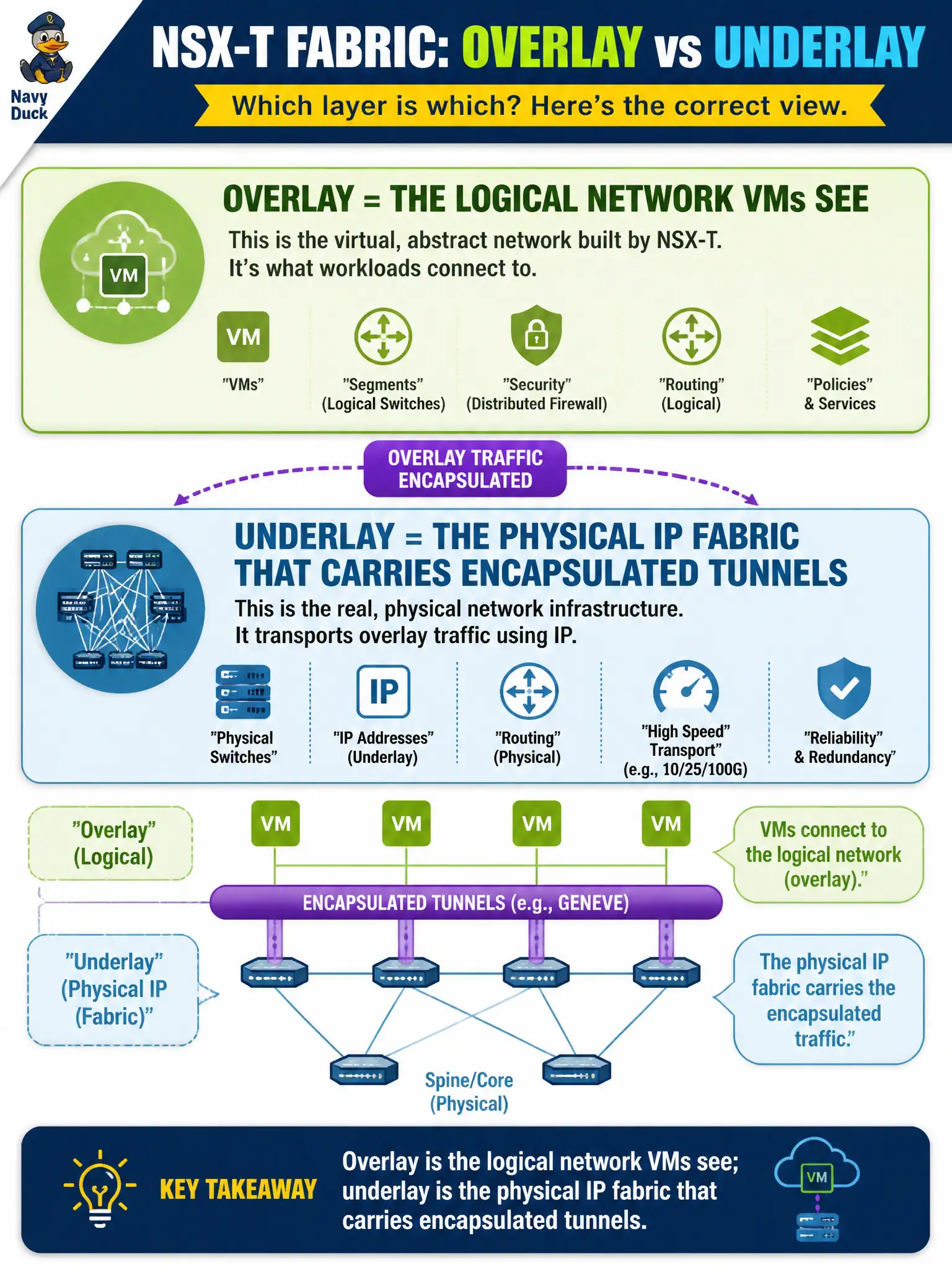
Think of overlay as the named bus routes the VMs ride and underlay as the actual pavement those buses roll on. Encapsulated packets travel the physical IP fabric; the VMs still see their logical segments. Cabling, vSAN, and Carbon Black are not those two SDN layers.
Full Explanation
Overlay is the logical network VMs see; underlay is the physical IP fabric that carries encapsulated tunnels. City network staff labeling the NSX-T fabric should keep that identification crisp for Harborview operations. Overlay is not the physical ToR cabling, and underlay is not the NSX Manager UI. Overlay is not vSAN storage policy, and underlay is not vSphere HA heartbeats. Overlay is not Carbon Black prevention, and underlay is not Workspace ONE enrollment. Exam caveat: VLAN-backed segments blur language for some use cases, but Geneve overlay versus IP underlay remains the core teaching contrast. Operational check: pick a civic VM segment and trace inner overlay identity versus outer VTEP underlay IP in a packet capture or tracing tool. Keep municipal naming and change tickets aligned with the software objects so civic audits can trace intent. Prefer verifying with a non-production agency workload before promoting the same pattern to life-safety systems. Record realization state and underlay health in the runbook used by on-call city operators. Keep municipal naming and change tickets aligned with the software objects so civic audits can trace intent. Prefer verifying with a non-production agency workload before promoting the same pattern to life-safety systems.