
Permitting developers wait on the physical-network team for every test network, which stalled the rewrite. How does virtual networking address that organizational bottleneck?
Select an answer to reveal the explanation.
Short Explanation
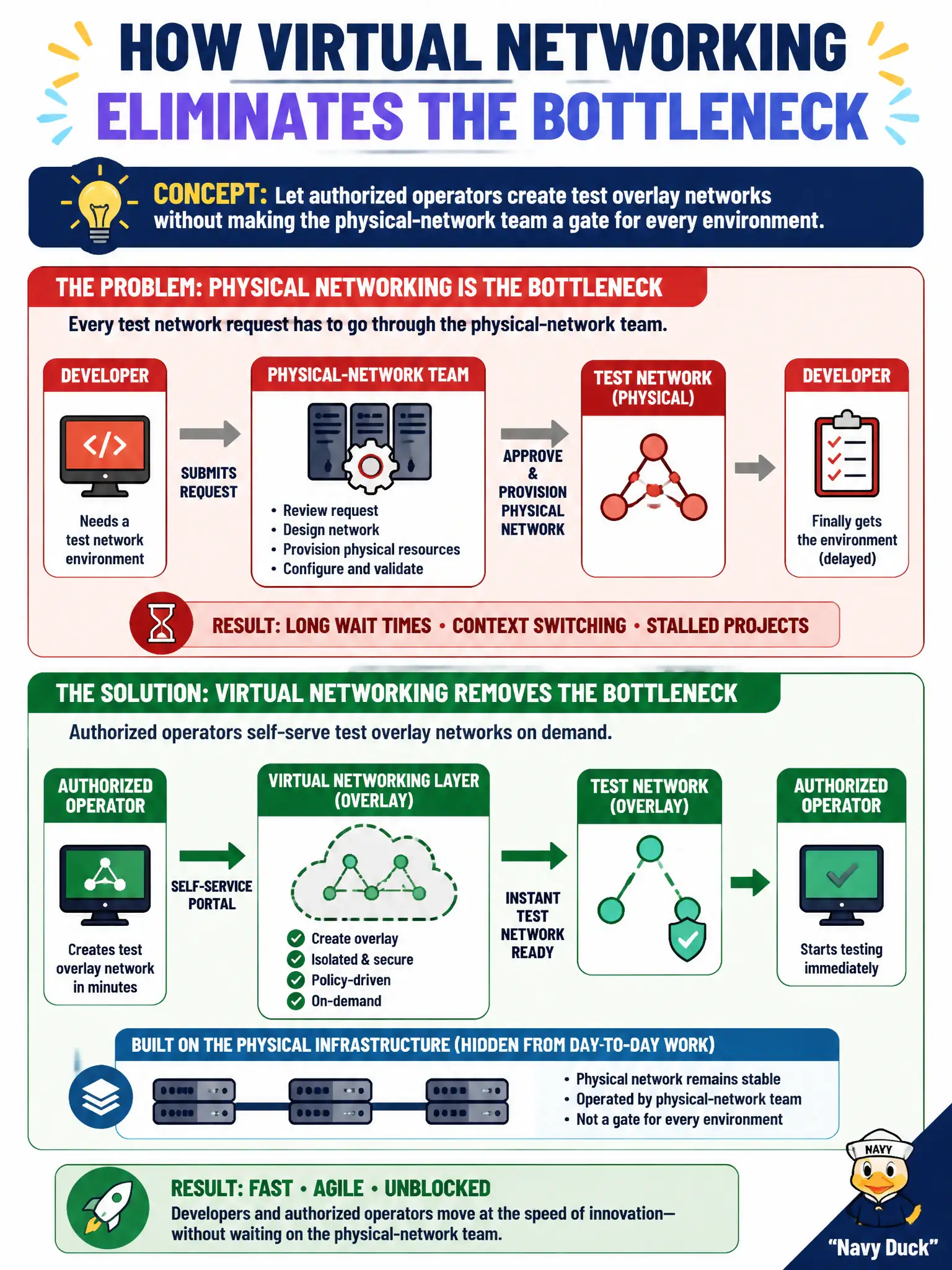
Waiting on the core team for every lab VLAN is like needing the street department to tape off a conference room. Authorized operators can spin overlay test networks on the existing underlay and keep the rewrite moving. Boxer and a cloned production VLAN are not that self-service.
Full Explanation
Authorized operators creating test overlay networks without making the physical-network team a gate for every environment addresses the organizational bottleneck that stalled the permitting rewrite. Virtual networking separates tenant network create rights from underlay ownership. Requiring a weekly core-switch window so developers never create networks preserves the bottleneck. Hosting all test apps on Workspace ONE Boxer avoids networks by avoiding the architecture. Cloning the production VLAN flat across ESXi hosts is unsafe shared-LAN testing. Exam caveat: developer self-service needs RBAC, quotas, and guardrails so test overlays cannot pierce production. Operational check: grant permitting non-prod operators rights to create test segments and measure time-to-network versus waiting on physical-network tickets. Keep municipal naming and change tickets aligned with the software objects so civic audits can trace intent. Prefer verifying with a non-production agency workload before promoting the same pattern to life-safety systems. Record realization state and underlay health in the runbook used by on-call city operators. Keep municipal naming and change tickets aligned with the software objects so civic audits can trace intent.