
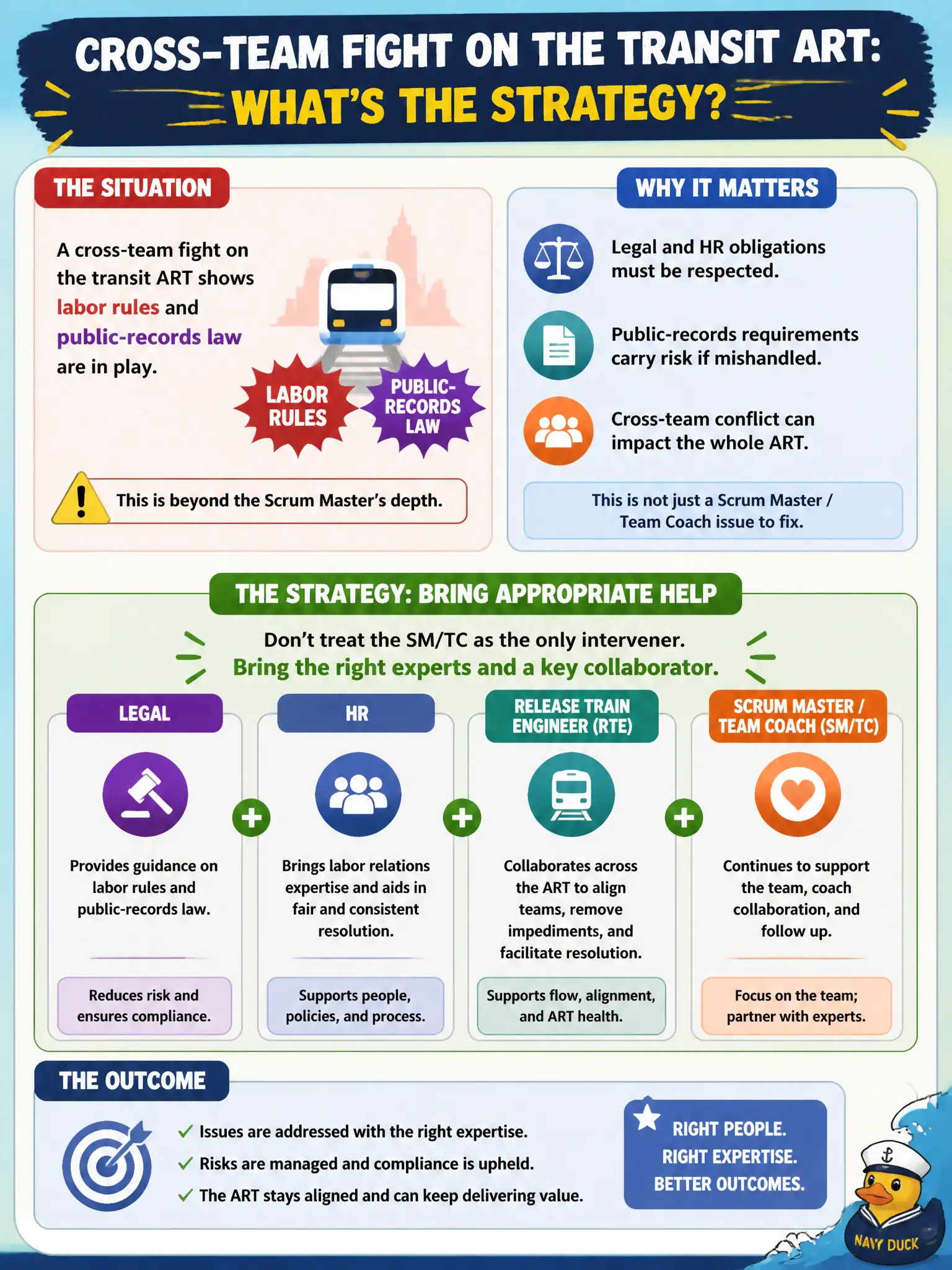
Analysis of a cross-team fight on the transit ART shows labor rules and public-records law are in play, which is beyond the Scrum Master’s depth. What should the strategy include?
Select an answer to reveal the explanation.
Short Explanation
Labor law and public-records fights are not a sticky-note retro. The transit coach is not the whole city attorney’s office. Strategy design includes calling the right help—not solo heroics.
Full Explanation
Some conflicts exceed the Scrum Master’s depth. When transit ART analysis shows labor rules and public-records law in play, the strategy must include appropriate help—legal, HR, and the Release Train Engineer as collaborator—rather than heroic solo facilitation. Bringing the right expertise protects staff and the public and keeps the SM/TC in a coaching stance. Pretending to own every domain is a risk to the ART.
Solo-facilitating labor and public-records fights so the coach looks capable endangers outcomes and people. Hiding legal issues inside a team retrospective keeps statutory risk off the ART. Canceling conflict work because a Team Coach must never involve other roles misunderstands collaboration.
Exam caveat: advanced conflict skill includes knowing when to co-intervene with specialists. Operational check: if labor or public-records law appears in a transit conflict analysis, invite legal/HR/RTE before facilitating alone.
In municipal ARTs, residents experience conflict outcomes as delayed permits, missed benefits, unsafe shelter conditions, or opaque public data—so the Scrum Master / Team Coach keeps facilitation tied to service flow, safety, and transparent inspection rather than positional wins. Document the chosen frame or strategy, the evidence used, and the next check date so the team can see whether the intervention improved civic delivery.