
A Scrum Master drafts a conflict strategy that secretly steers the housing Product Owner toward a pre-chosen backlog call. What does ethical strategy design require?
Select an answer to reveal the explanation.
Short Explanation
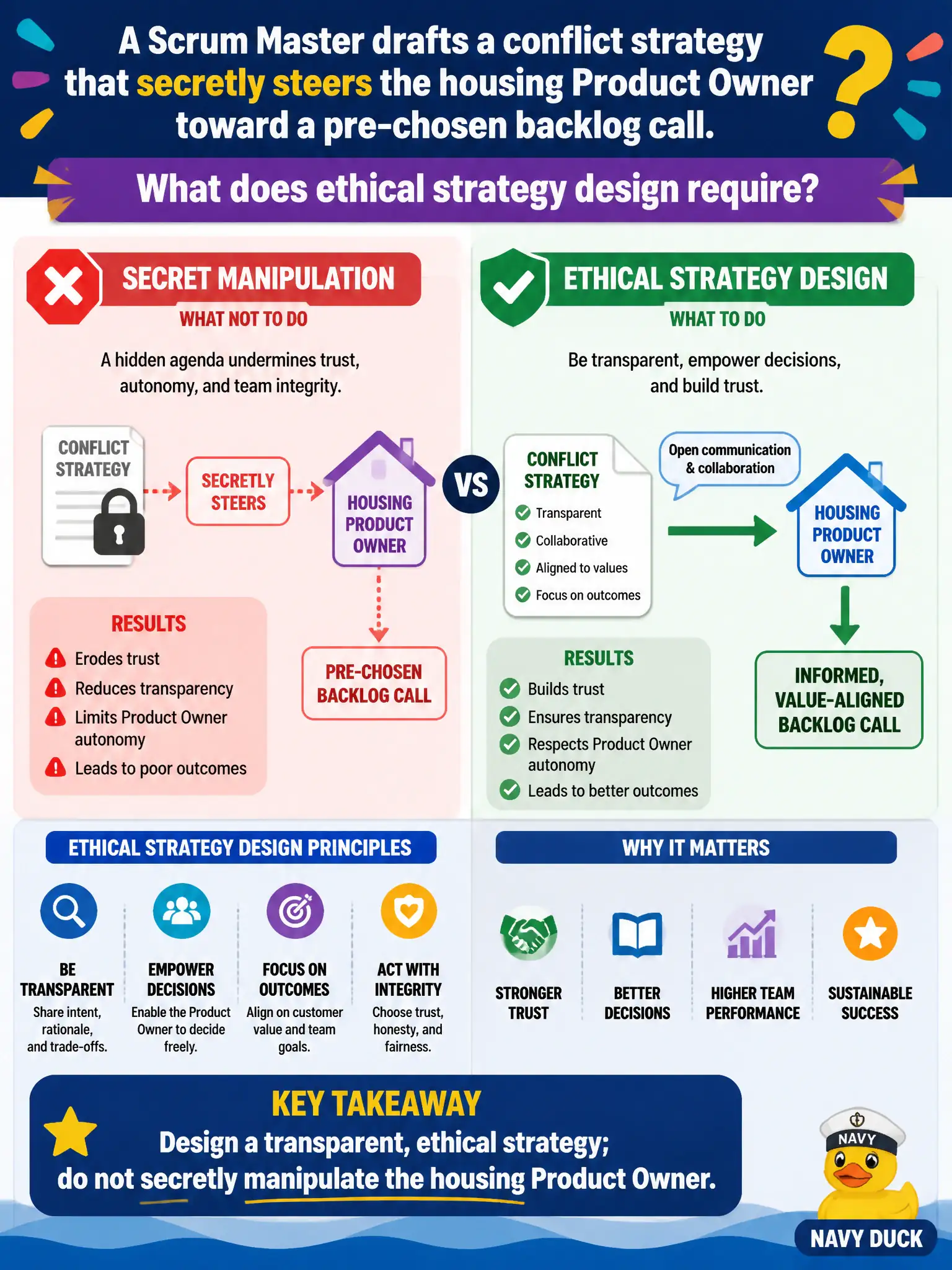
A secret playbook on the housing PO is politics, not coaching. Conflict strategy has to be something people can see and consent to. If it only works when nobody knows, it is the wrong strategy.
Full Explanation
Ethical strategy design requires transparency. A Scrum Master who drafts a covert plan to steer a housing Product Owner toward a pre-chosen backlog call manipulates rather than facilitates. The advanced SM/TC designs visible processes—options, criteria, and open discussion—so the Product Owner retains decision rights for resident value. Secret steering destroys trust on a housing ART and models politics over empiricism.
Keeping a covert plan so the Product Owner “discovers” the right answer is manipulation. Asking an AI assistant to draft a hidden script the coach reads deepens the ethics failure. Briefing only the housing director while keeping the team dark removes transparency from people who must deliver.
Exam caveat: facilitation influences process, not by secretly predetermining backlog content. Operational check: if you would be unwilling to describe your conflict strategy aloud to the Product Owner and team, redesign it.
In municipal ARTs, residents experience conflict outcomes as delayed permits, missed benefits, unsafe shelter conditions, or opaque public data—so the Scrum Master / Team Coach keeps facilitation tied to service flow, safety, and transparent inspection rather than positional wins. Document the chosen frame or strategy, the evidence used, and the next check date so the team can see whether the intervention improved civic delivery.