
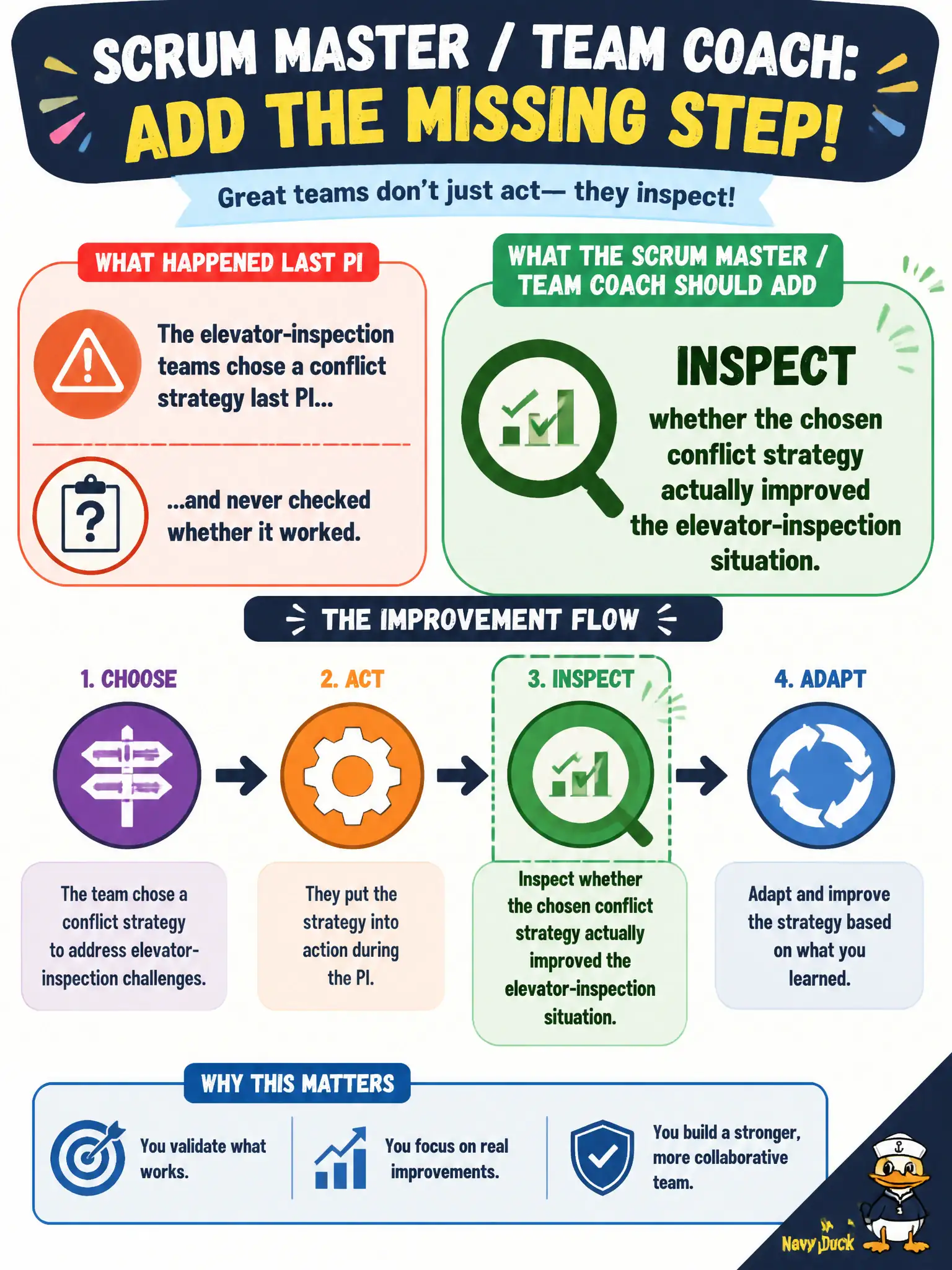
The elevator-inspection teams chose a conflict strategy last PI and never checked whether it worked. What should the Scrum Master / Team Coach add?
Select an answer to reveal the explanation.
Short Explanation
Writing a conflict strategy is not the same as fixing elevator inspection. Empiricism still applies: look at whether the fight actually got better. If it did not, change the strategy.
Full Explanation
Conflict strategies themselves must be inspected. Elevator-inspection teams that chose a strategy last PI and never checked results are flying blind. The Scrum Master / Team Coach adds an inspect-and-adapt loop: did wait times, safety findings, or collaboration improve? Declaring success because something was written on an improvement board is cargo-cult change. Civic inspection work needs evidence that the intervention worked.
Declaring success because the strategy was written down confuses documentation with outcomes. Never revisiting the strategy prevents learning. Replacing it with a new icebreaker every week without checking results churns tactics and teaches nothing.
Exam caveat: strategy design includes feedback; choose, try, inspect. Operational check: put a check date next to the elevator teams’ conflict strategy and review metrics or qualitative signals on that date.
In municipal ARTs, residents experience conflict outcomes as delayed permits, missed benefits, unsafe shelter conditions, or opaque public data—so the Scrum Master / Team Coach keeps facilitation tied to service flow, safety, and transparent inspection rather than positional wins. Document the chosen frame or strategy, the evidence used, and the next check date so the team can see whether the intervention improved civic delivery.