
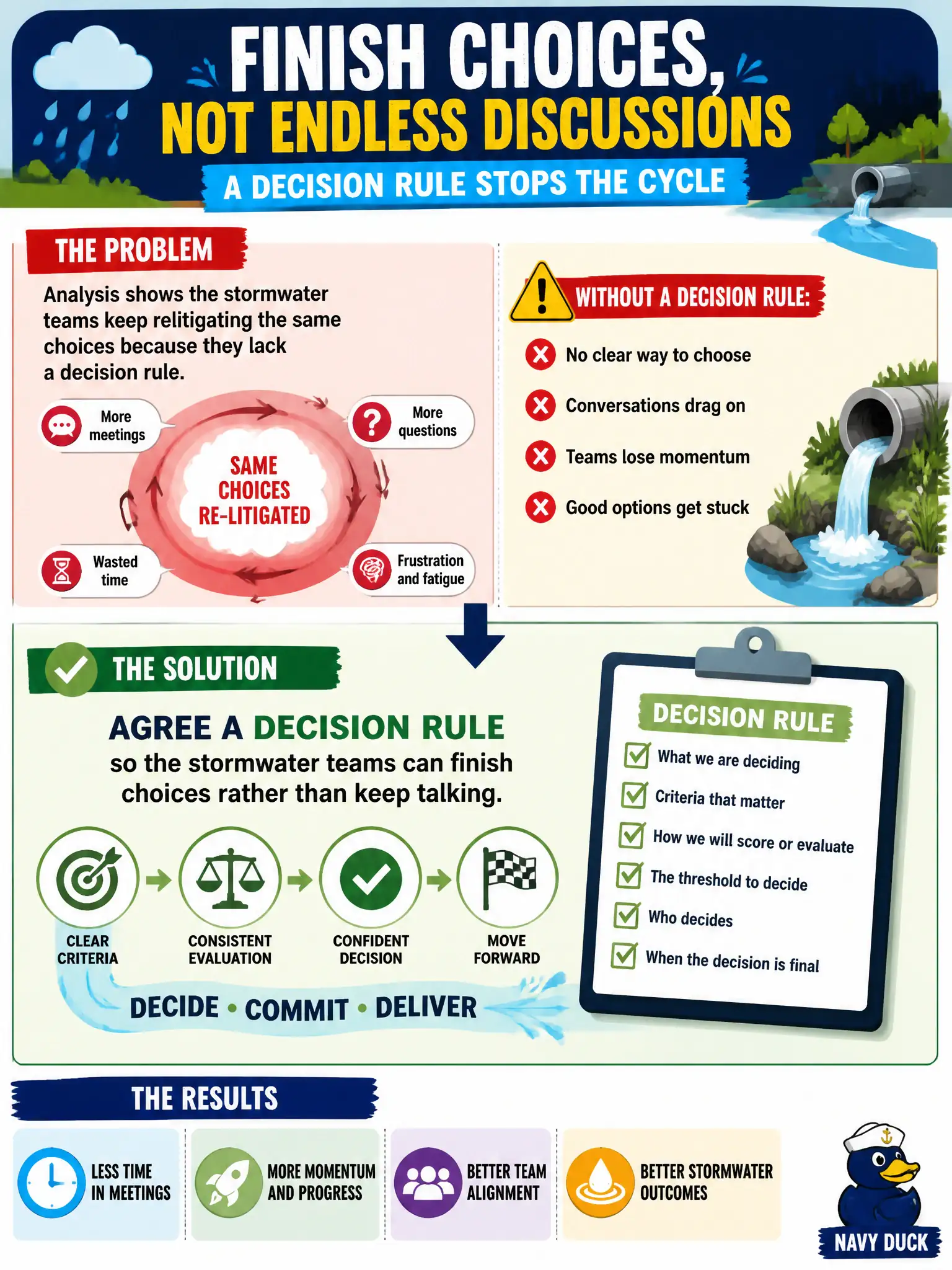
Analysis shows the stormwater teams keep relitigating the same choices because they lack a decision rule. What should the designed strategy include?
Select an answer to reveal the explanation.
Short Explanation
If stormwater teams have no rule for who decides, every meeting is a rerun. Dialogue without a decision rule is a hamster wheel. Write the working agreement; then the talk can actually end.
Full Explanation
When stormwater teams keep relitigating the same choices, the missing piece is often a decision rule, not more dialogue. Analysis should drive a strategy that includes how the group will finish a choice—who decides, by what criteria, and by when—so flood-mitigation work can move. The Scrum Master / Team Coach helps the teams agree a decision rule that matches stakes and authority, turning endless talk into civic delivery. Without that rule, facilitation becomes a standing argument club.
Scheduling endless dialogue until consensus appears on every item confuses participation with decision and stalls capital or maintenance work. Flipping a coin abandons criteria and erodes trust in professional judgment. Letting the coach decide all items as a people manager collapses servant leadership into command and removes team ownership.
Exam caveat: interest-based discussion still needs an explicit close; strategy design includes decision rules. Operational check: for recurring stormwater debates, write the decision rule on the board before the next facilitation starts.
In municipal ARTs, residents experience conflict outcomes as delayed permits, missed benefits, unsafe shelter conditions, or opaque public data—so the Scrum Master / Team Coach keeps facilitation tied to service flow, safety, and transparent inspection rather than positional wins. Document the chosen frame or strategy, the evidence used, and the next check date so the team can see whether the intervention improved civic delivery.