
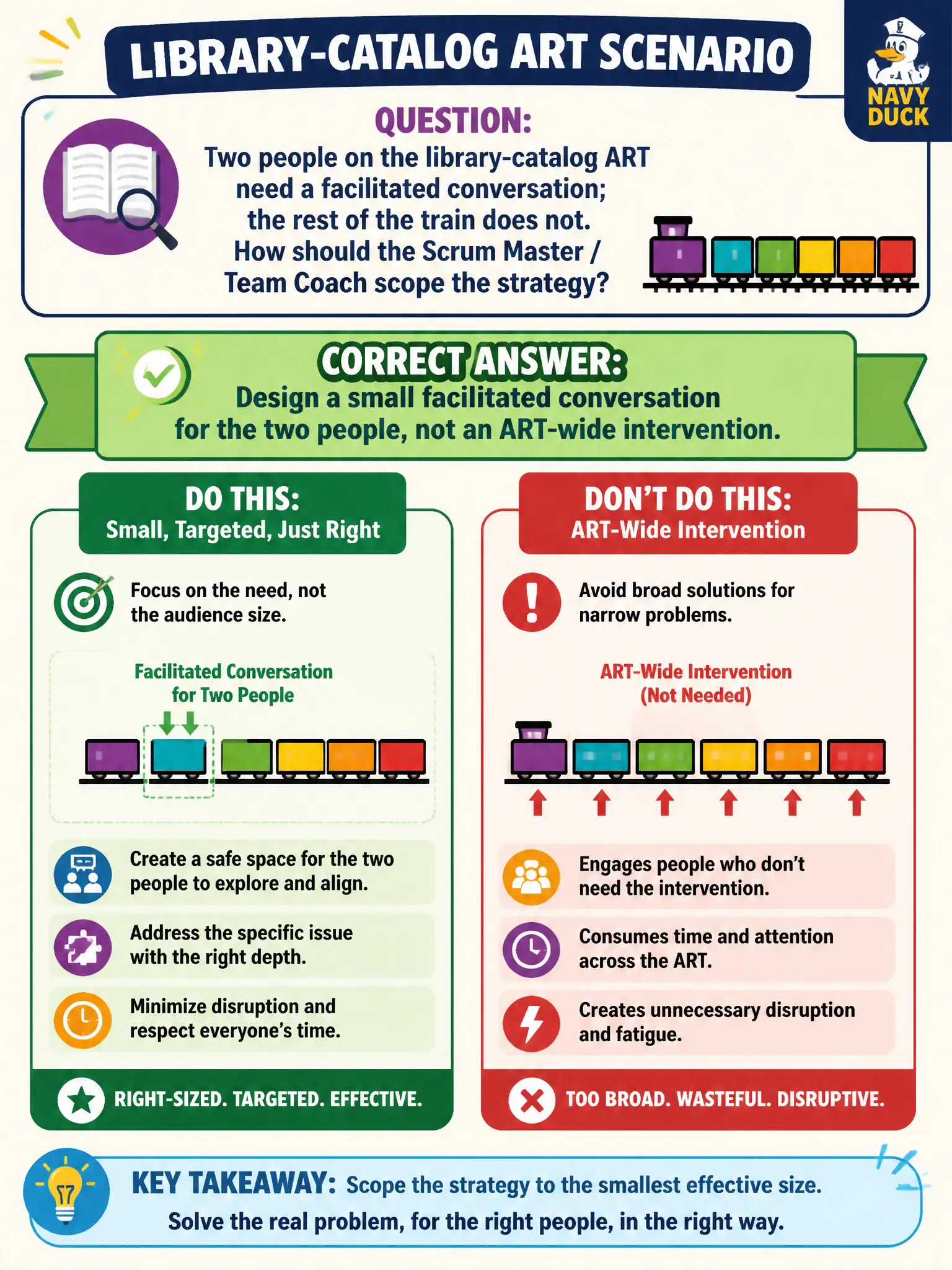
Two people on the library-catalog ART need a facilitated conversation; the rest of the train does not. How should the Scrum Master / Team Coach scope the strategy?
Select an answer to reveal the explanation.
Short Explanation
Two librarians in a jam do not require a city-wide summit. Scope the help to the people who are actually in the conflict. An ART-wide show turns a private problem into a spectacle.
Full Explanation
Scope the intervention to the people actually in conflict. When two people on a library-catalog ART need a facilitated conversation and the rest of the train does not, an ART-wide offsite turns a private problem into spectacle and wastes dozens of hours of civic delivery capacity. The Scrum Master / Team Coach designs a small facilitated conversation for those two, with clear purpose and confidentiality appropriate to the stakes, so the train keeps delivering catalog value for patrons.
Running an ART-wide conflict offsite so nobody feels left out expands scope without need and can escalate gossip. Asking the Release Train Engineer to restart PI Planning for the whole train misuses an ART event for a two-person issue. Publishing the dispute in the ART newsletter violates privacy and inflames the conflict.
Exam caveat: proportional scoping is part of strategy design—parties and intensity drive who is in the room. Operational check: if only two librarians are stuck, facilitate those two; do not convene the train unless analysis shows ART-wide involvement.
In municipal ARTs, residents experience conflict outcomes as delayed permits, missed benefits, unsafe shelter conditions, or opaque public data—so the Scrum Master / Team Coach keeps facilitation tied to service flow, safety, and transparent inspection rather than positional wins. Document the chosen frame or strategy, the evidence used, and the next check date so the team can see whether the intervention improved civic delivery.