
The parking-enforcement team’s coach skips analysis because “we always use the same icebreaker.” What should the Scrum Master / Team Coach do instead?
Select an answer to reveal the explanation.
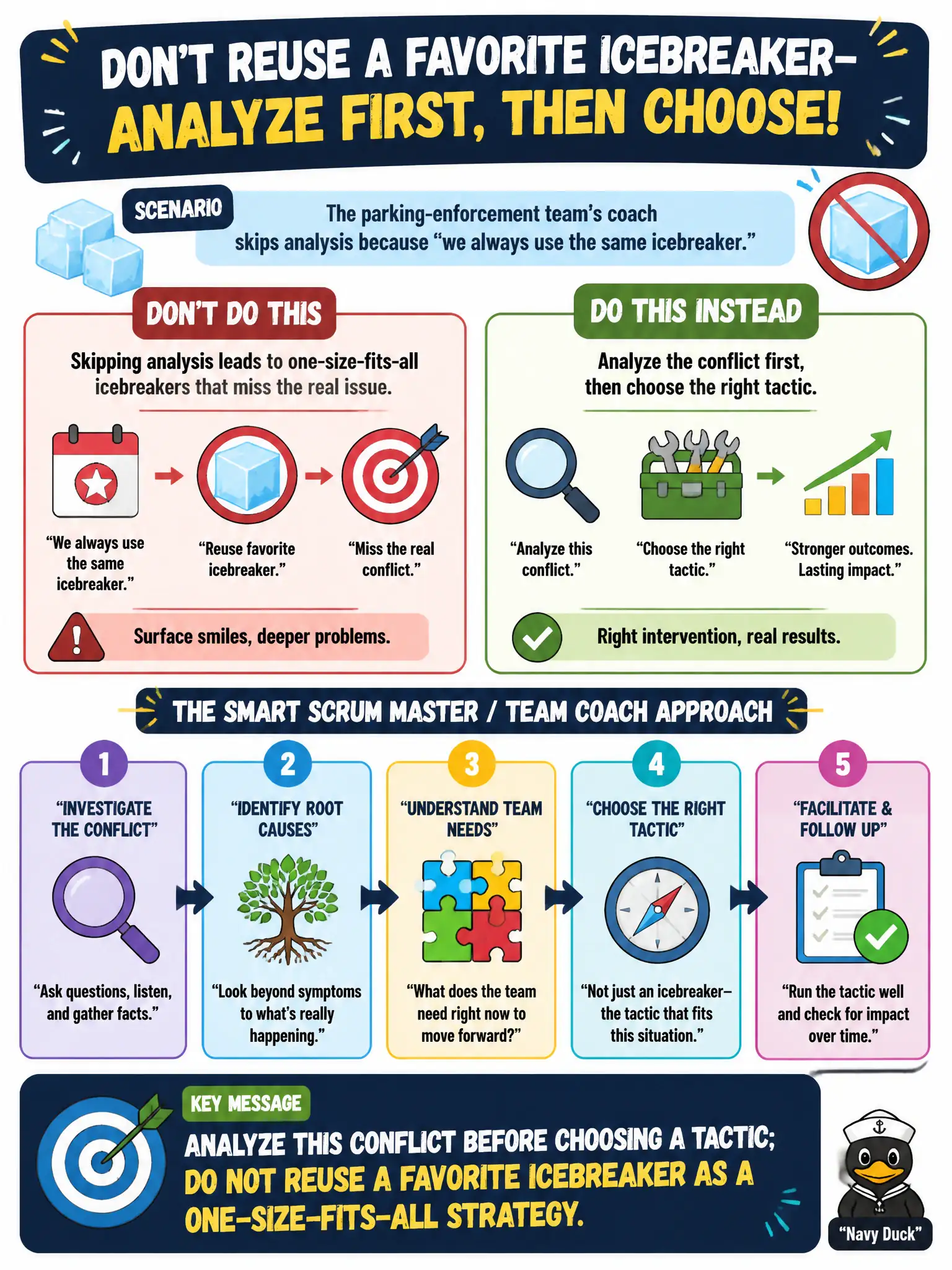
Short Explanation
A favorite icebreaker is a party trick, not a diagnosis. Parking-enforcement fights are not all the same animal. Look at this conflict, then pick a tactic—do not play the same song on every radio.
Full Explanation
Conflict strategy is not a favorite icebreaker reused by habit. The parking-enforcement team’s coach must analyze this conflict—source, parties, intensity, stakes—before choosing a tactic. One-size icebreakers skip fit and can trivialize serious disputes or over-process light ones. The Scrum Master / Team Coach designs from analysis so enforcement workflow conflicts get an appropriate path, not a canned warm-up.
Keeping the icebreaker as the official strategy for every fight ignores variation in civic conflicts. Writing the icebreaker into the Definition of Done forces ceremony into quality criteria where it does not belong. Skipping conflict work and adding status meetings substitutes noise for strategy.
Exam caveat: familiar facilitation tools are inputs after analysis, not substitutes for it. Operational check: before the next parking conflict session, complete a one-page analysis; only then pick the tactic.
In municipal ARTs, residents experience conflict outcomes as delayed permits, missed benefits, unsafe shelter conditions, or opaque public data—so the Scrum Master / Team Coach keeps facilitation tied to service flow, safety, and transparent inspection rather than positional wins. Document the chosen frame or strategy, the evidence used, and the next check date so the team can see whether the intervention improved civic delivery.