
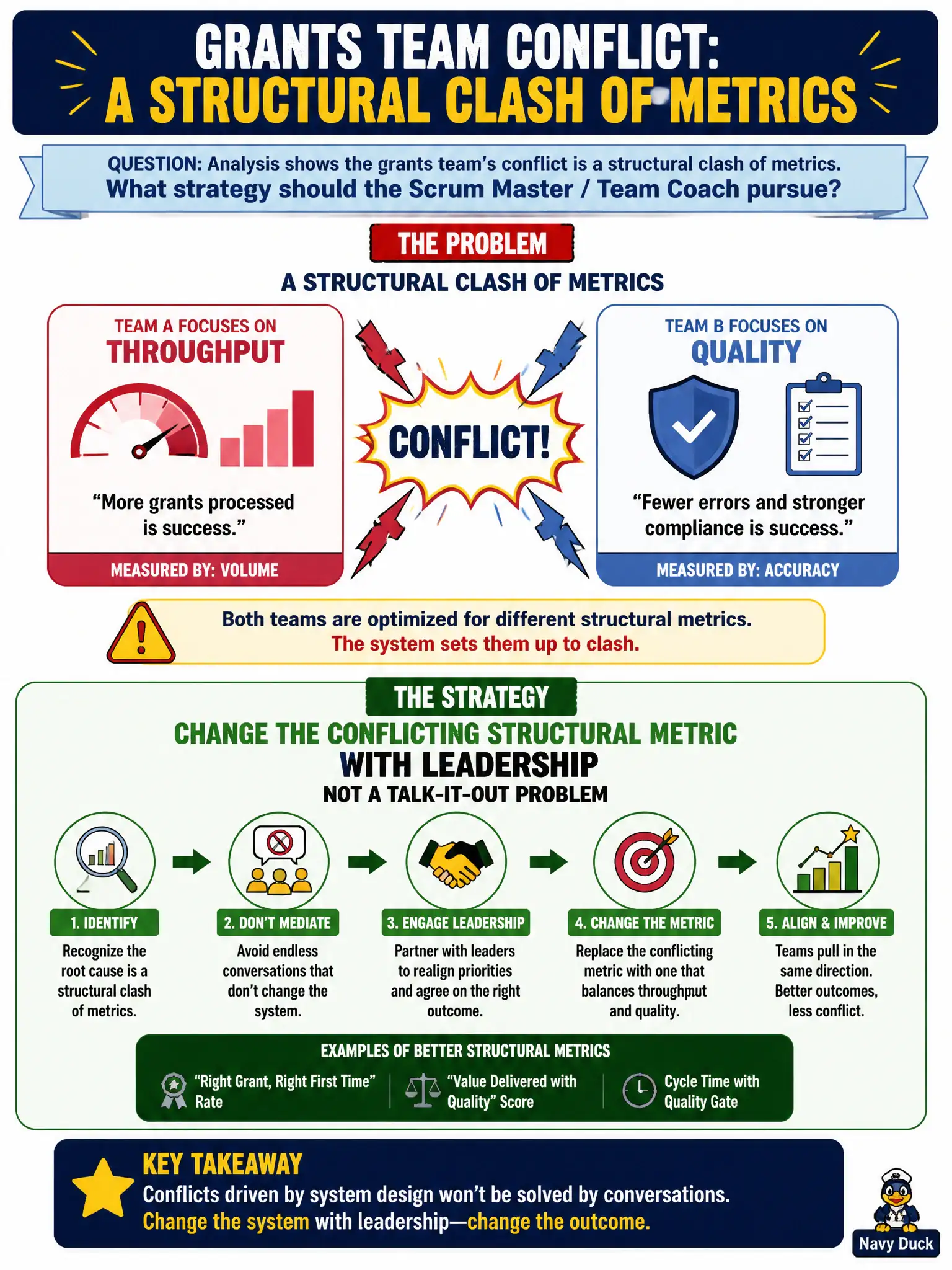
Analysis shows the grants team’s conflict is a structural clash of metrics. What strategy should the Scrum Master / Team Coach pursue?
Select an answer to reveal the explanation.
Short Explanation
If grants staff are scored on opposite scoreboards, a kindness workshop will not move the ball. The fight is in the metric design. Change the structure with leadership; do not just coach the conversation.
Full Explanation
Strategy must match source. When analysis shows the grants team’s conflict is a structural clash of metrics, communication workshops will not realign incentives. People scored on opposite scoreboards will keep colliding. The Scrum Master / Team Coach works with leadership to change the conflicting metric so incentives stop pulling staff apart while grant processing for the public continues. Structural problems need structural strategies, not nicer conversations about broken scoreboards.
Running a communication workshop so people talk more nicely about the same clashing metrics treats a system problem as interpersonal skill. Telling teams to ignore the metrics denies the real incentive design. Converting the clash into personality mediation between the two loudest staff misdiagnoses structure as chemistry.
Exam caveat: after analysis names a structural source, choose a structural intervention—not more dialogue alone. Operational check: list the metrics that reward grants staff; if they conflict, escalate metric redesign with leadership before another kindness session.
In municipal ARTs, residents experience conflict outcomes as delayed permits, missed benefits, unsafe shelter conditions, or opaque public data—so the Scrum Master / Team Coach keeps facilitation tied to service flow, safety, and transparent inspection rather than positional wins. Document the chosen frame or strategy, the evidence used, and the next check date so the team can see whether the intervention improved civic delivery.