
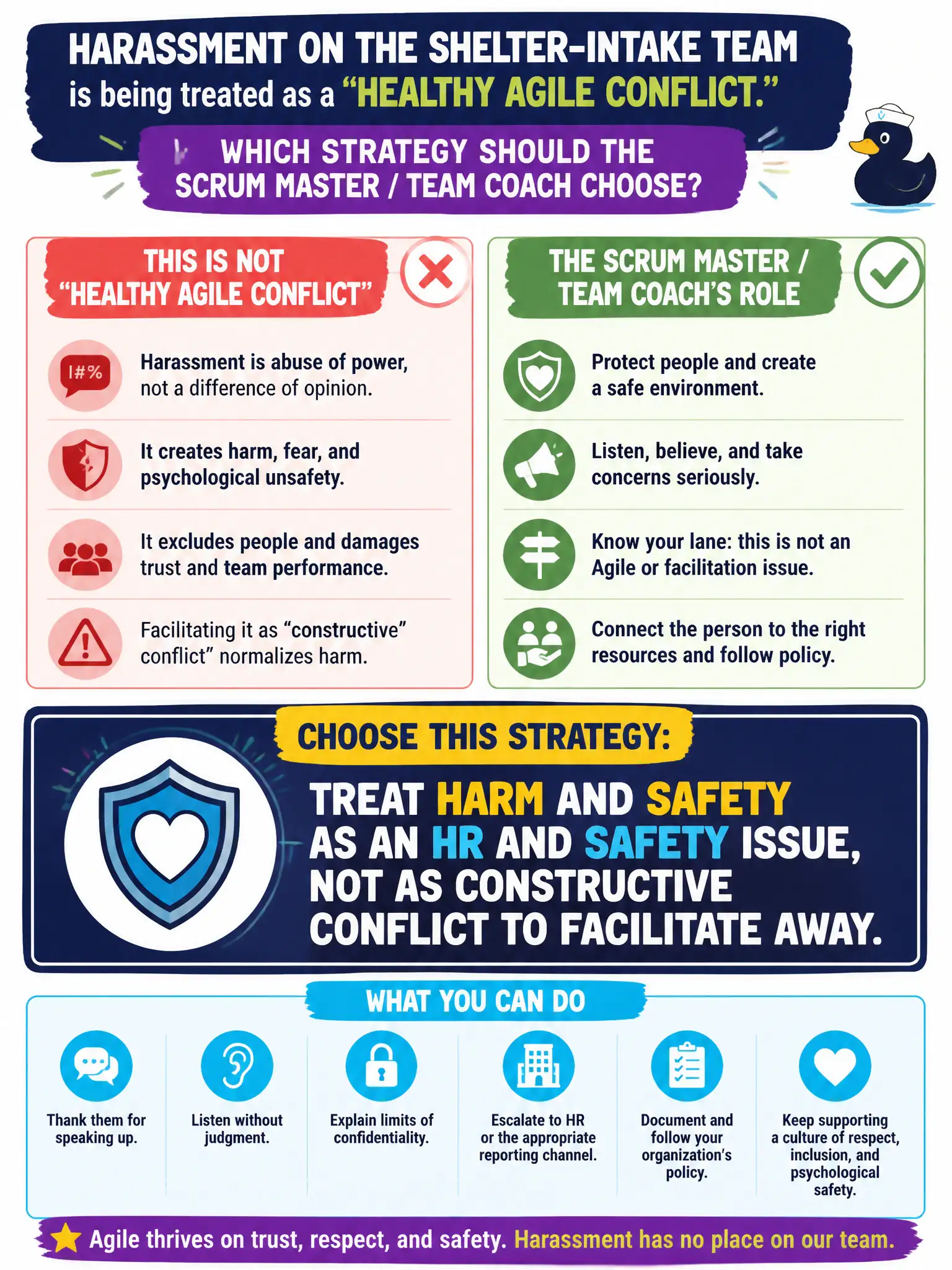
Harassment on the shelter-intake team is being treated as a “healthy Agile conflict.” Which strategy should the Scrum Master / Team Coach choose?
Select an answer to reveal the explanation.
Short Explanation
Harassment is not a spicy standup. Shelter-intake staff need safety, not a clever reframe into “healthy conflict.” That path goes to HR and safety—facilitation theater is the wrong tool.
Full Explanation
Constructive disagreement is in scope for SM/TC conflict skill; harm and safety are not. Treating shelter-intake harassment as a retrospective topic, a methods bargain, or a timeboxed story argument puts people at risk and misuses the conflict framework. Analysis of source and stakes points to an HR and safety strategy. The Scrum Master / Team Coach does not facilitate abuse as Agile conflict; protecting staff and residents comes first, then any process learning that belongs outside a blame-free “healthy conflict” label on a shelter team.
Facilitating a team retrospective so harassment can be “inspected and adapted” as process keeps victims in an unsafe room. Reframing harassment as a methods conflict and running interest-based bargaining trivializes harm. Timeboxing a same-day story argument to protect the shelter increment prioritizes throughput over safety.
Exam caveat: know the boundary between workplace conflict coaching and mandatory HR/safety pathways. Operational check: if behavior includes harassment or threats on a civic team, stop Agile facilitation of that issue and engage HR/safety immediately.
In municipal ARTs, residents experience conflict outcomes as delayed permits, missed benefits, unsafe shelter conditions, or opaque public data—so the Scrum Master / Team Coach keeps facilitation tied to service flow, safety, and transparent inspection rather than positional wins. Document the chosen frame or strategy, the evidence used, and the next check date so the team can see whether the intervention improved civic delivery.