
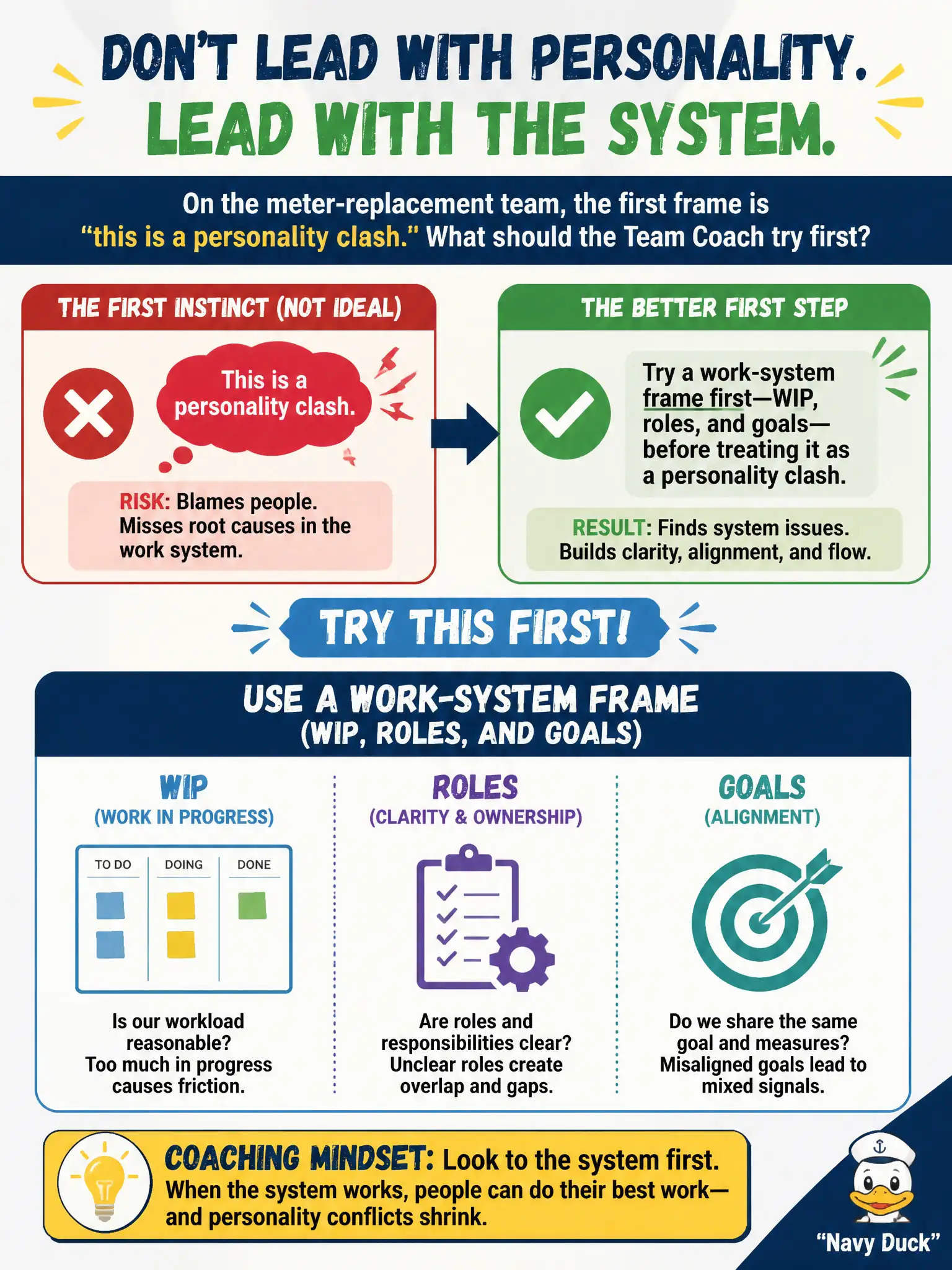
The first frame on the meter-replacement team is “this is a personality clash.” What should the Team Coach try first?
Select an answer to reveal the explanation.
Short Explanation
“Personality clash” is the easy sticker on a messy meter-replacement board. Overloaded WIP, fuzzy roles, and colliding goals make people look difficult. Inspect the work system first; chemistry is the last label, not the first.
Full Explanation
Many interpersonal frames are downstream of work-system design: WIP limits, unclear roles, and competing goals. On a meter-replacement team, “personality clash” is often the easy sticker on an overloaded board. The Team Coach tries a work-system frame first—visualize WIP, clarify roles, align goals—before labeling people as chemistry problems. If the system is the source, changing load and design is higher leverage than workshops about temperament, and residents still get meters replaced on a predictable schedule.
Sending both people to a mandatory personality workshop before looking at the board treats symptoms and leaves structural causes intact. Picking a winner and moving the other person off the team resolves nothing about WIP or role conflict and may lose skill. Labeling the conflict as chemistry and stopping inspection freezes a people-blame story.
Exam caveat: interpersonal tools still matter after analysis; SASM prefers system inspection before personality labels. Operational check: if meter work shows overload and colliding goals, fix those first and reassess whether a “personality” fight remains.
In municipal ARTs, residents experience conflict outcomes as delayed permits, missed benefits, unsafe shelter conditions, or opaque public data—so the Scrum Master / Team Coach keeps facilitation tied to service flow, safety, and transparent inspection rather than positional wins. Document the chosen frame or strategy, the evidence used, and the next check date so the team can see whether the intervention improved civic delivery.