
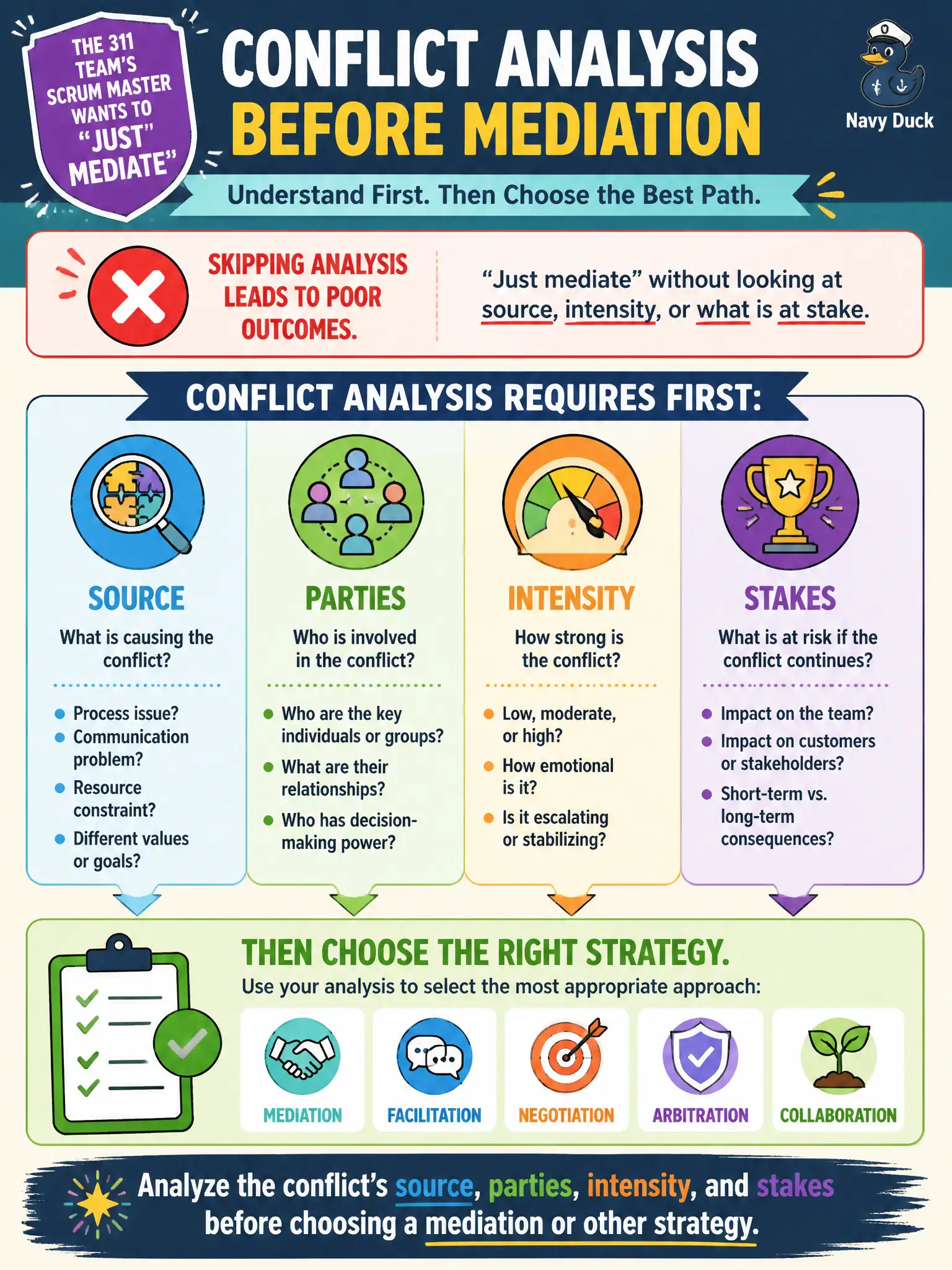
The 311 team’s Scrum Master wants to “just mediate” without looking at source, intensity, or what is at stake. What does conflict analysis require first?
Select an answer to reveal the explanation.
Short Explanation
Jumping straight to mediation is grabbing a wrench before looking at the engine. 311 conflicts have a source, people, heat, and stakes. Analyze those first, then pick a strategy—maybe mediation, maybe not.
Full Explanation
Conflict analysis and strategy design require understanding the conflict before choosing how to intervene. For a 311 team, source, parties, intensity, and stakes determine whether mediation, structural change, coaching, or escalation fits. The Scrum Master who “just mediates” without that analysis grabs a favorite tactic. The advanced SM/TC analyzes first, then designs a matching strategy so resident-facing queue work is not subjected to one-size icebreakers that ignore what is actually driving the tension.
Mediating immediately with a favorite icebreaker skips fit and may waste time on the wrong lever. Posting a “be nice” working agreement without analysis is slogan theater. Asking the Release Train Engineer to rerun PI Planning as the conflict strategy borrows an ART event that may not address the team-level source.
Exam caveat: mediation is a possible strategy after analysis, not the default for every civic team tension. Operational check: before mediating 311 conflict, write source, who is involved, heat level, and what is at stake for service levels.
In municipal ARTs, residents experience conflict outcomes as delayed permits, missed benefits, unsafe shelter conditions, or opaque public data—so the Scrum Master / Team Coach keeps facilitation tied to service flow, safety, and transparent inspection rather than positional wins. Document the chosen frame or strategy, the evidence used, and the next check date so the team can see whether the intervention improved civic delivery.