
Product Management frames language-access stories on the benefits portal as extra cost. How should the Scrum Master / Team Coach reframe that conflict?
Select an answer to reveal the explanation.
Short Explanation
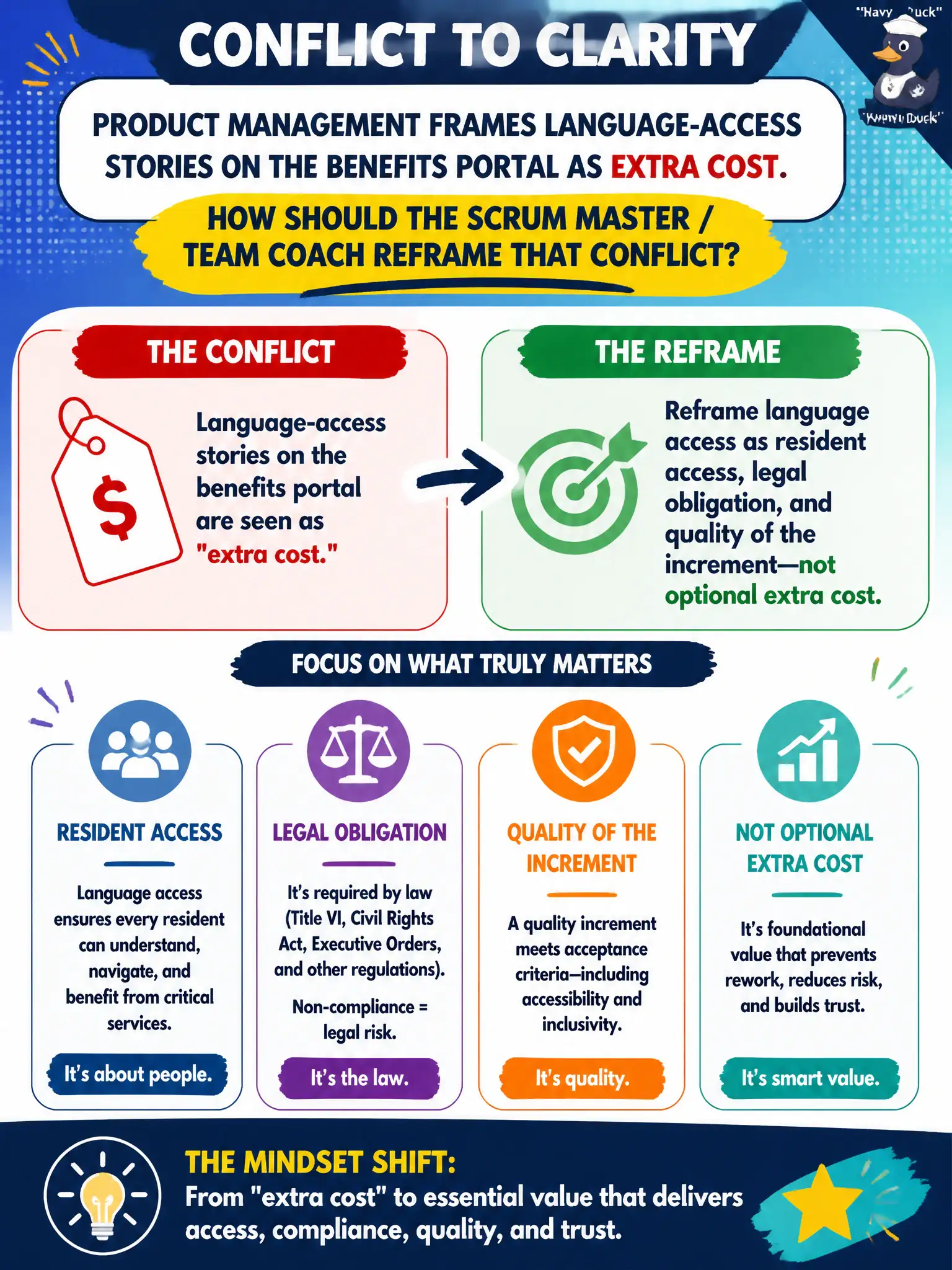
Calling language access “extra cost” is like calling a ramp “extra concrete.” Residents who cannot use the benefits portal did not get the increment. The coach reframes cost talk into access, obligation, and quality.
Full Explanation
Language-access stories on a benefits portal are not optional polish; they determine whether residents can use the increment. Product Management’s cost-only frame hides access, legal obligation, and Done quality. The Scrum Master / Team Coach reframes language work as part of delivering a usable civic service—so the conflict inspects resident outcomes and compliance, not merely line-item spend. A partial English-only release may look cheaper on a spreadsheet and still fail the public purpose the ART exists to serve.
Cutting language-access stories to protect budget keeps an incomplete increment for multilingual residents. Treating translation as a private tester hobby after English ships leaves quality outside the Definition of Done. Asking finance to score language work only as cost with no resident outcome locks the wrong economic frame.
Exam caveat: built-in quality and access requirements are part of value, not extras bolted on after cost cuts. Operational check: ask whether a non-English-speaking resident can complete the benefits task; if not, the increment is not Done regardless of budget slides.
In municipal ARTs, residents experience conflict outcomes as delayed permits, missed benefits, unsafe shelter conditions, or opaque public data—so the Scrum Master / Team Coach keeps facilitation tied to service flow, safety, and transparent inspection rather than positional wins. Document the chosen frame or strategy, the evidence used, and the next check date so the team can see whether the intervention improved civic delivery.