
The housing-voucher team tells the identity-service team “you blocked us.” How should the Scrum Master / Team Coach reframe the dependency?
Select an answer to reveal the explanation.
Short Explanation
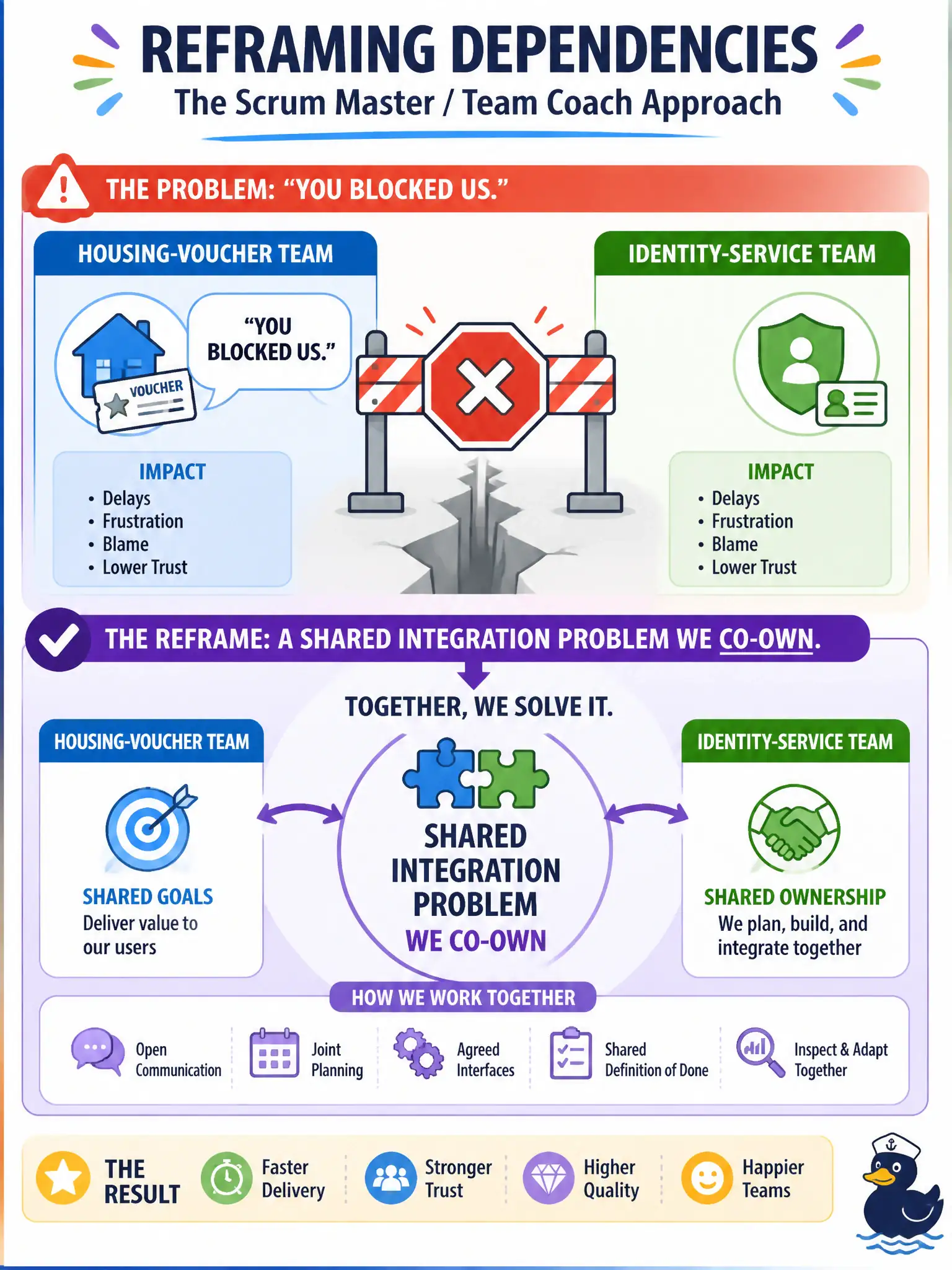
“You blocked us” is a finger pointed across the hallway. Housing vouchers and identity still have to integrate for residents. The coach reframes it as one shared integration problem both teams own—not a villain and a victim.
Full Explanation
Cross-team dependencies become positional when one team is labeled the blocker. Housing-voucher delivery and identity services still must integrate for residents to receive benefits. The Scrum Master / Team Coach reframes “you blocked us” as a shared integration problem both teams co-own—interfaces, timing, environments, and Definition of Done—so joint inspection can replace blame. Co-ownership opens design of handoffs instead of ART risk theater and keeps resident outcomes at the center of the conflict.
Naming the identity-service team as the official blocker in the risk register freezes a villain story and discourages partnership. Having the coach carry every dependency message makes the coach a human message bus and prevents the teams from building a working interface. Freezing both backlogs until leadership picks a winner stalls residents and keeps a win-lose frame.
Exam caveat: dependency management is collaboration and visibility, not naming a scapegoat team. Operational check: if two civic teams trade “you blocked us,” schedule a joint integration review of interface readiness before updating the risk register with blame.
In municipal ARTs, residents experience conflict outcomes as delayed permits, missed benefits, unsafe shelter conditions, or opaque public data—so the Scrum Master / Team Coach keeps facilitation tied to service flow, safety, and transparent inspection rather than positional wins. Document the chosen frame or strategy, the evidence used, and the next check date so the team can see whether the intervention improved civic delivery.