
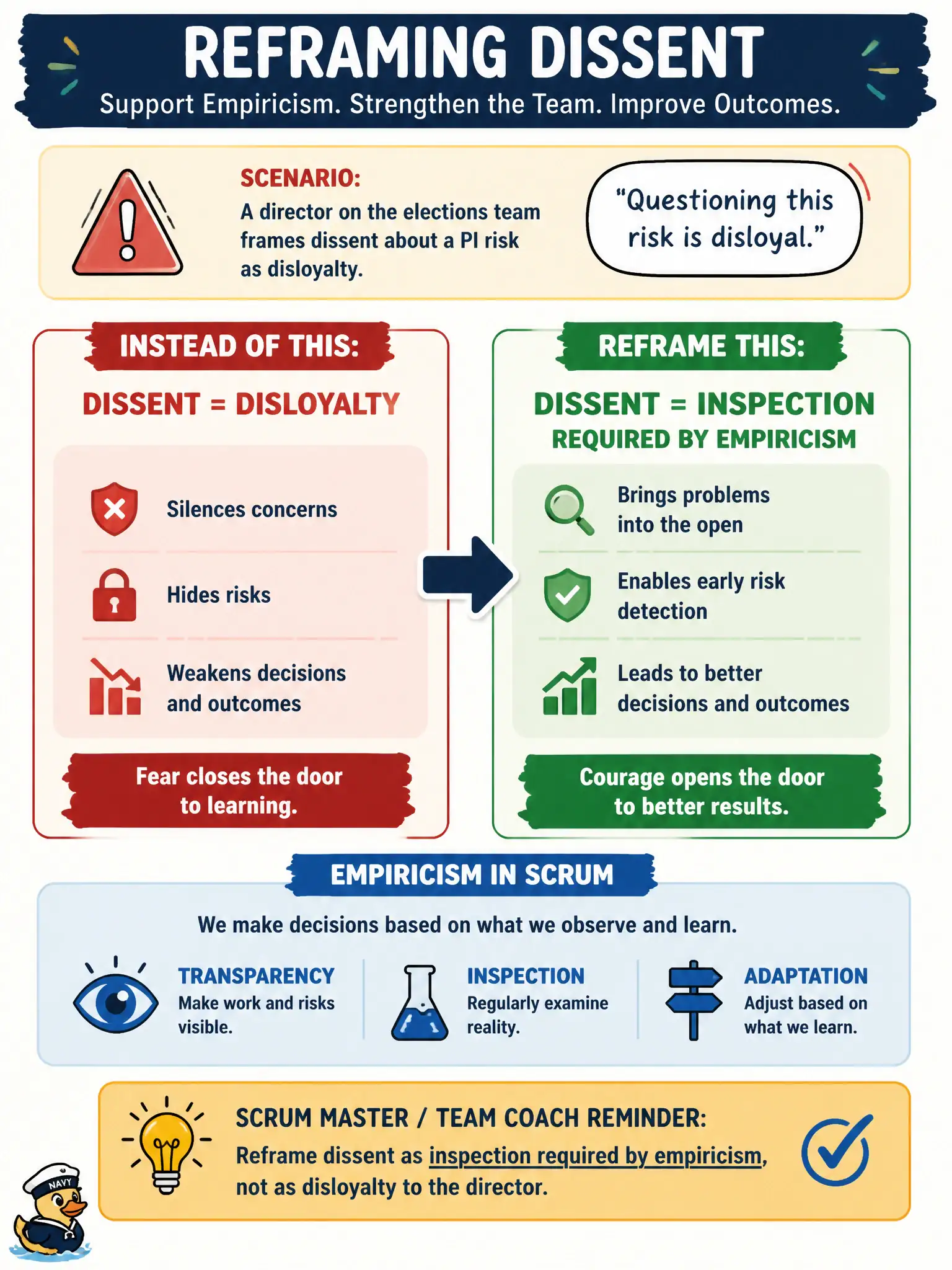
A director on the elections team frames dissent about a PI risk as disloyalty. How should the Scrum Master / Team Coach reframe that dissent?
Select an answer to reveal the explanation.
Short Explanation
Calling an elections risk “disloyal” is like punishing the smoke alarm for making noise. Empiricism needs people to inspect what they see. The Team Coach reframes dissent as inspection, not a loyalty test.
Full Explanation
Lean-Agile empiricism needs transparent inspection of risks and results. On an elections team, framing dissent about a PI risk as disloyalty shuts down the information the plan needs. The Scrum Master / Team Coach reframes dissent as required inspection—smoke alarms, not betrayal—so people can surface ballot, access, or integration risks without loyalty tests. Civic election systems cannot afford silenced risk signals when public trust depends on early honesty about what might fail.
Silencing dissenters to keep the PI “politically safe” hides threats until they become public failures. Escalating every dissenting comment to HR as insubordination weaponizes people processes against empiricism. Collapsing the Product Owner role into the director removes the backlog forum where risks should be negotiated and inspected.
Exam caveat: respect for leadership is not the same as suppressing risk inspection; the exam rewards reframing dissent as data. Operational check: in elections PI syncs, ask what risk was last raised and how it was treated—if loyalty language appears, reframe to inspection immediately.
In municipal ARTs, residents experience conflict outcomes as delayed permits, missed benefits, unsafe shelter conditions, or opaque public data—so the Scrum Master / Team Coach keeps facilitation tied to service flow, safety, and transparent inspection rather than positional wins. Document the chosen frame or strategy, the evidence used, and the next check date so the team can see whether the intervention improved civic delivery.