
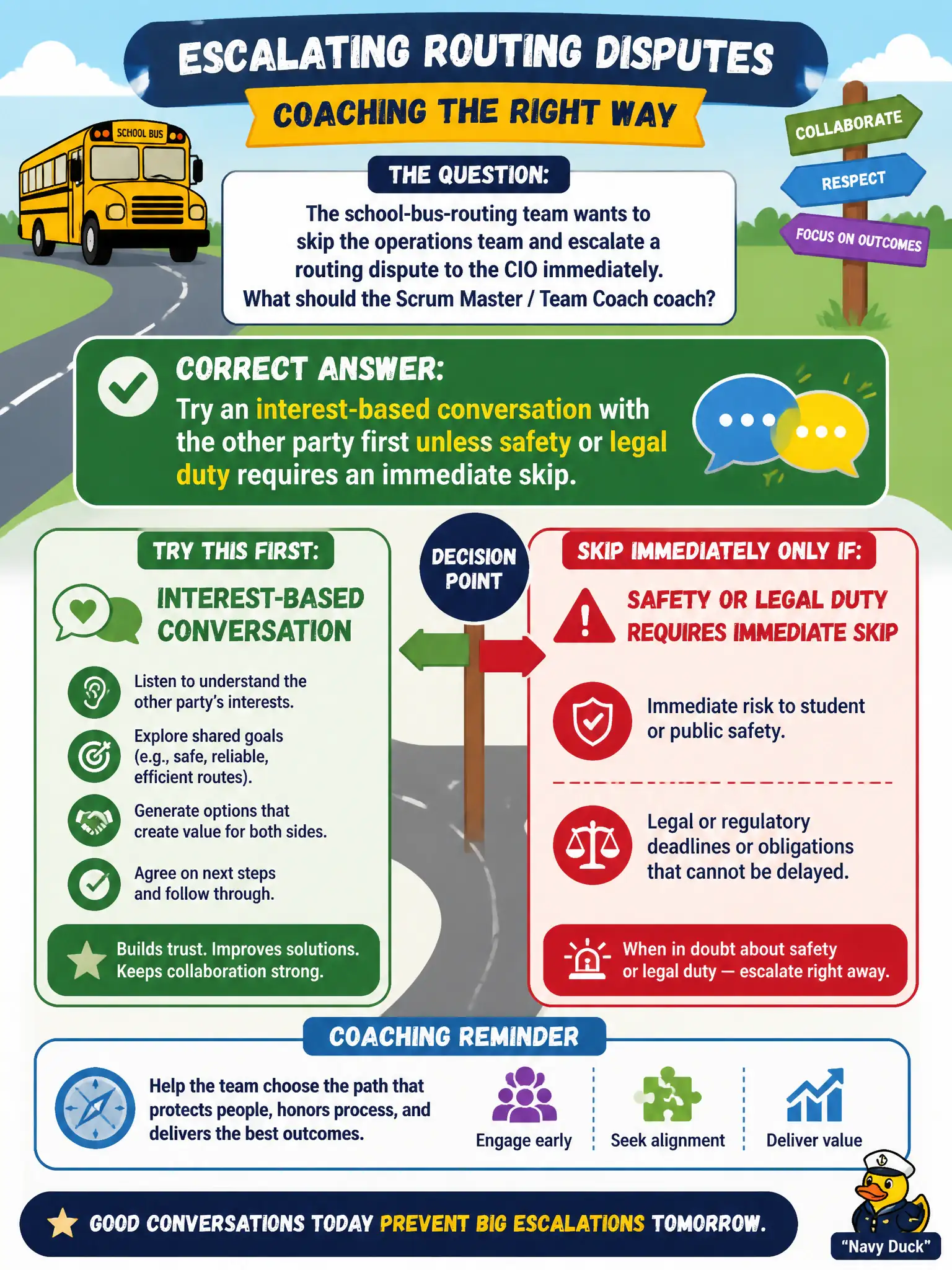
The school-bus-routing team wants to skip the operations team and escalate a routing dispute to the CIO immediately. What should the Scrum Master / Team Coach coach?
Select an answer to reveal the explanation.
Short Explanation
Calling the mayor about a bus-stop dispute before talking to the garage is a fire alarm for a sticky door. Try the interest-based conversation first. Skip only if safety or law says you must.
Full Explanation
Interest-based problem-solving tries dialogue with the other party before unnecessary escalation. When the school-bus-routing team wants to skip the operations team and escalate a routing dispute to the CIO immediately, the Scrum Master / Team Coach should coach trying an interest-based conversation with the other party first unless safety or legal duty requires an immediate skip. Student transportation conflicts with operations are often solvable through interests such as on-time pickup, driver feasibility, and route stability.
Escalating first because interest-based talk is only for private companies fails by concept: the method applies in municipal settings. Always skipping the other party when a CIO exists fails by concept by making hierarchy the default conflict path. Writing the CIO a blame memo before anyone names interests fails by concept: it weaponizes escalation instead of solving with operations.
Exam caveat: SASM recommends attempting interest-based conversation before escalation when safe and appropriate; safety and legal duties can justify immediate escalation. Coach judgment matters—routine routing disputes with operations should usually start peer-to-peer, not CIO-first.
Operational check: schedule a structured interest conversation with operations, name shared student-safety and service interests, invent options, escalate only if blocked or unsafe, and verify CIO escalations drop for issues that local interest-based talks can resolve.