
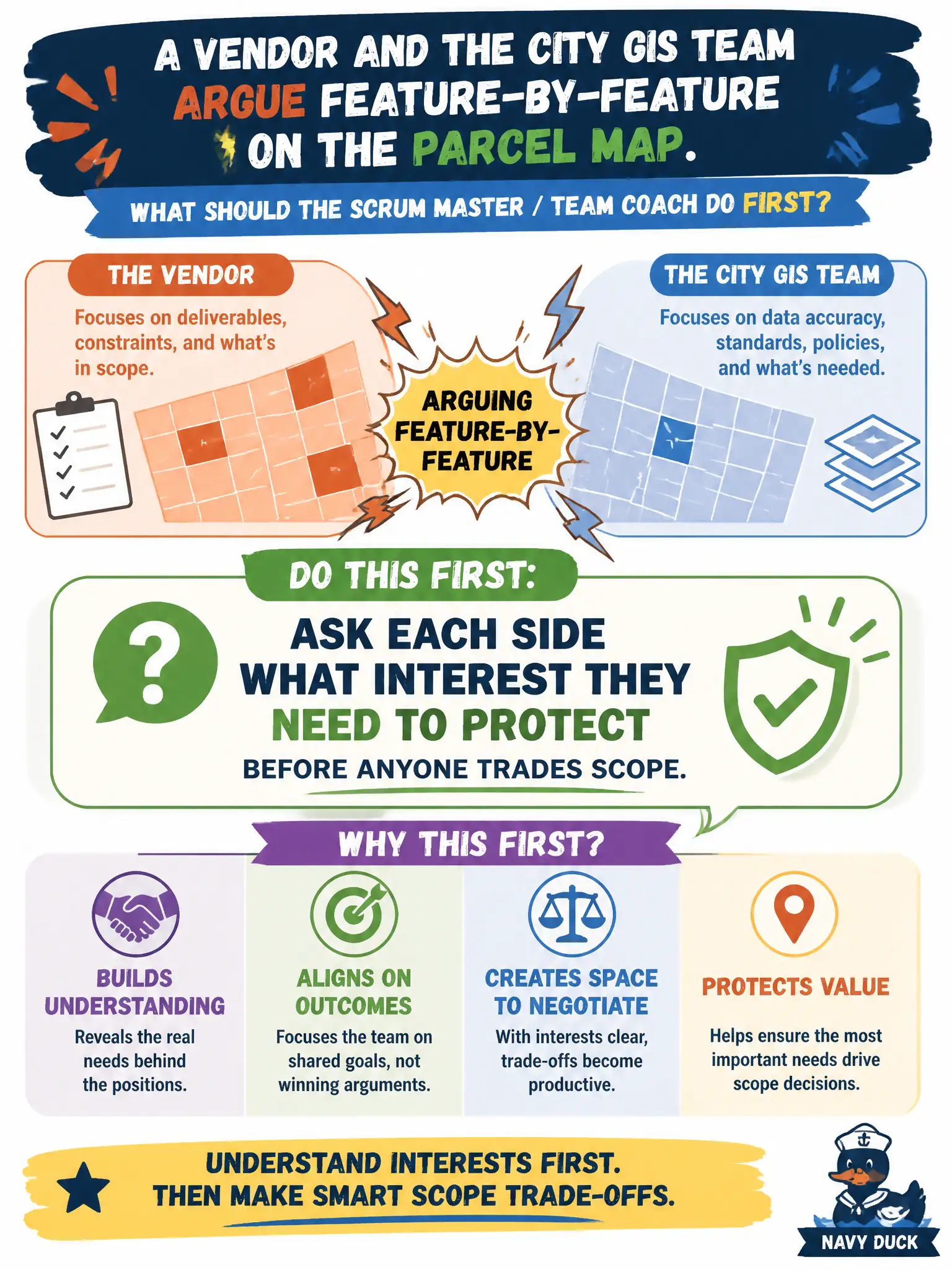
A vendor and the city GIS team argue feature-by-feature on the parcel map. What should the Scrum Master / Team Coach do first?
Select an answer to reveal the explanation.
Short Explanation
Horse-trading parcels before anyone says what they must protect is how you give away the courthouse. Ask the vendor and the GIS team what interest they are guarding. Then trade stories.
Full Explanation
Interest-based problem-solving elicits interests before trading scope. When a vendor and the city GIS team argue feature-by-feature on the parcel map, the Scrum Master / Team Coach should first ask each side what interest they need to protect before anyone trades scope. Feature-by-feature argument is positional unless each side names needs such as data integrity, delivery dates, maintainability, and assessor usability.
Trading stories immediately so the backlog gets shorter fails by concept: premature trading without interests produces unstable deals. Awarding every disputed feature to the city because vendors always overreach fails by concept: blanket positional wins ignore legitimate vendor constraints and partnership. Ending the session to file a procurement protest fails by concept when interests have not even been surfaced as a first facilitation step.
Exam caveat: SASM sequencing for interest-based talks starts with interests, then options and criteria; immediate horse-trading is a common wrong move. Procurement remedies remain available later if needed—they are not the first coaching move in a parcel-map feature dispute.
Operational check: ask each party for top interests, record them without trading yet, generate options that could satisfy both data integrity and delivery, apply agreed criteria, and verify scope trades only after interests are explicit on the GIS engagement.