
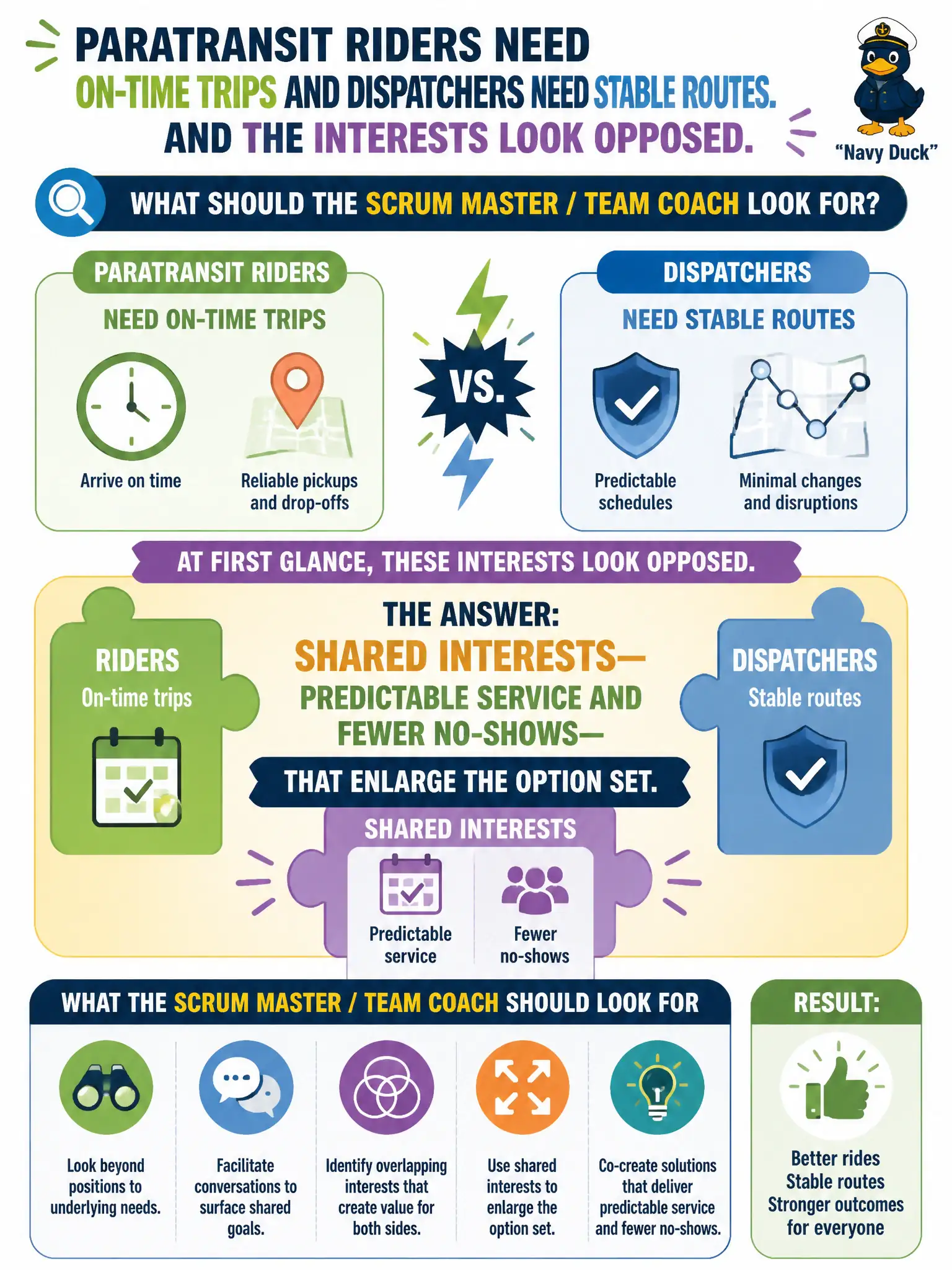
Paratransit riders need on-time trips and dispatchers need stable routes, and the interests look opposed. What should the Scrum Master / Team Coach look for?
Select an answer to reveal the explanation.
Short Explanation
On-time rides and stable routes sound like a tug-of-war until you notice both sides want predictable service and fewer wasted trips. Shared interests grow the pie. Crowning a winner shrinks it.
Full Explanation
When interests look opposed, interest-based problem-solving searches for shared interests that enlarge options. When paratransit riders need on-time trips and dispatchers need stable routes, the Scrum Master / Team Coach should look for shared interests—predictable service and fewer no-shows—that enlarge the option set. Shared interests can unlock boarding windows, reminder practices, or dispatch buffers that serve both riders and dispatchers.
Declaring a single winner between riders and dispatchers fails by concept: win-lose framing shrinks options and harms service. Setting a story-point target that makes both groups equally busy fails by concept by confusing effort metrics with interest satisfaction. An RTE ruling that frozen routes always beat on-time performance fails by concept: train authority asserting one position ignores shared service interests.
Exam caveat: SASM emphasizes finding shared interests to expand the pie before positional fighting; equal busyness and executive rulings are distractors. Not all interests are identical—shared interests are enough to generate better paratransit options than a pure contest.
Operational check: facilitate listing rider and dispatcher interests, highlight overlaps such as predictability and fewer no-shows, brainstorm options against those shared interests, pilot one change, and verify on-time performance and dispatcher stability move together rather than as a zero-sum fight.