
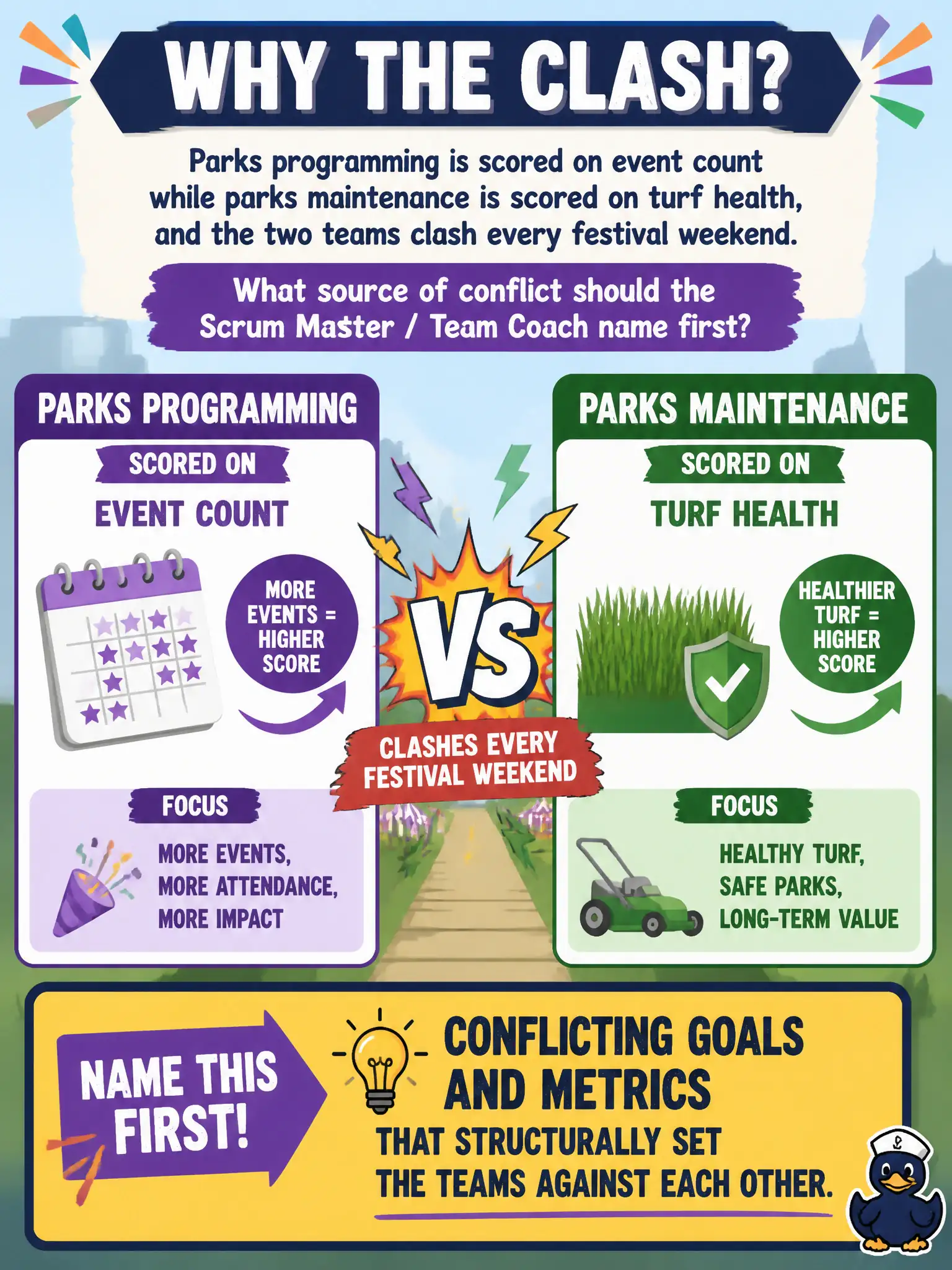
Parks programming is scored on event count while parks maintenance is scored on turf health, and the two teams clash every festival weekend. What source of conflict should the Scrum Master / Team Coach name first?
Select an answer to reveal the explanation.
Short Explanation
One scoreboard says "more concerts" and the other says "keep the grass alive." That is not two grouchy coworkers—that is two city report cards pointing opposite ways. Name the goal collision before anyone diagnoses personality.
Full Explanation
When parks programming is scored on event count while parks maintenance is scored on turf health and they clash every festival weekend, the Scrum Master / Team Coach should name conflicting goals and metrics that structurally set the teams against each other. Structural goal conflict explains recurring festival fights better than personality stories. Labeling it a personality clash between "outgoing programmers" and "stubborn maintenance" misdiagnoses systems as temperament. Treating it as a facts gap that one shared spreadsheet of last year's festivals will close underestimates the incentive conflict even when facts are shared. Blaming an RTE facilitation failure because PI Planning should have banned festivals avoids redesigning the metrics that create the collision. Exam caveat: SASM conflict analysis includes conflicting goals and metrics as a source; personality-first and facts-only diagnoses are incomplete. Operational check: make both scoreboards visible together, facilitate a conversation about shared resident outcomes for festival weekends, propose metric or WIP adjustments that reduce structural opposition, and test the change across one festival cycle. Confirm leadership sees the metric conflict as the root, not "difficult staff."