
Tempers rise on the jail-visitation team; the coach calls a short pause and returns with a talking-token. How should that be judged?
Select an answer to reveal the explanation.
Short Explanation
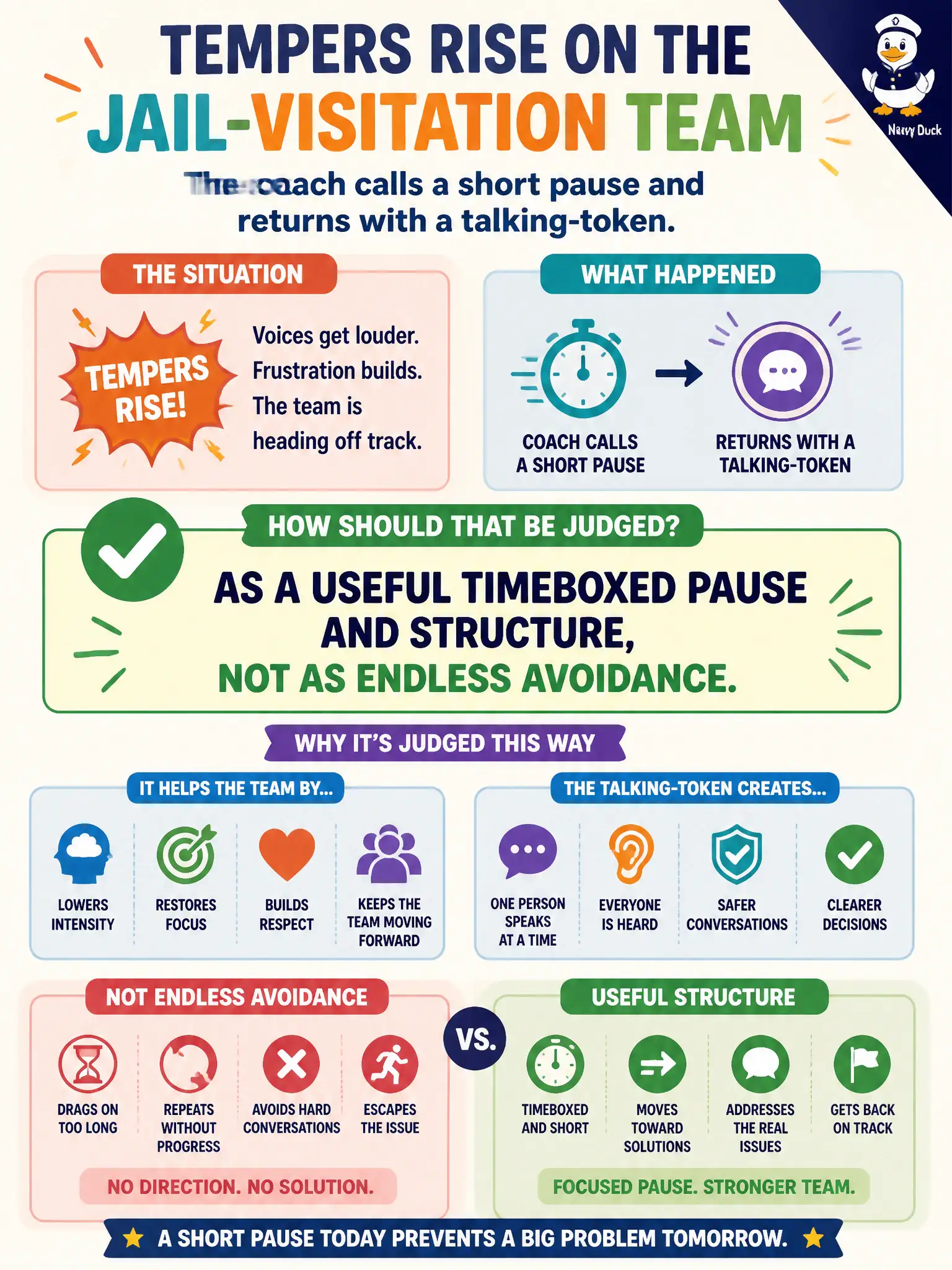
A short pause with a talking-token is a firebreak, not a retreat. Tempers on the jail-visitation team need a structure so the issue can come back into the room. Endless avoidance is the problem; a timebox is a tool.
Full Explanation
When tempers rise on a jail-visitation team and the coach calls a short pause then returns with a talking-token, that should be judged as a useful timeboxed pause and structure, not as endless avoidance. Structured cool-downs restore productive conflict behaviors so visitation scheduling and security concerns can be discussed without shouting. Treating any pause as fleeing conflict ignores the difference between a timebox and abandonment. Calling it a failed retro because talking-tokens are "only for ceremony attendance" confuses facilitation tools with attendance theater. Claiming only the Release Train Engineer may pause an ART issue strips team coaches of basic conflict facilitation. Exam caveat: SASM allows short structured pauses and talking structures to improve conflict quality; endless avoidance and RTE-only pause rights are distractors. Operational check: timebox the pause, restart with the talking-token or equivalent turn-taking, capture the substantive visitation issue once voices are regulated, and confirm the conflict returns to problem-solving rather than dissolving into silence. If pauses become habit without resolution, tighten the return agenda so the civic issue still closes.