
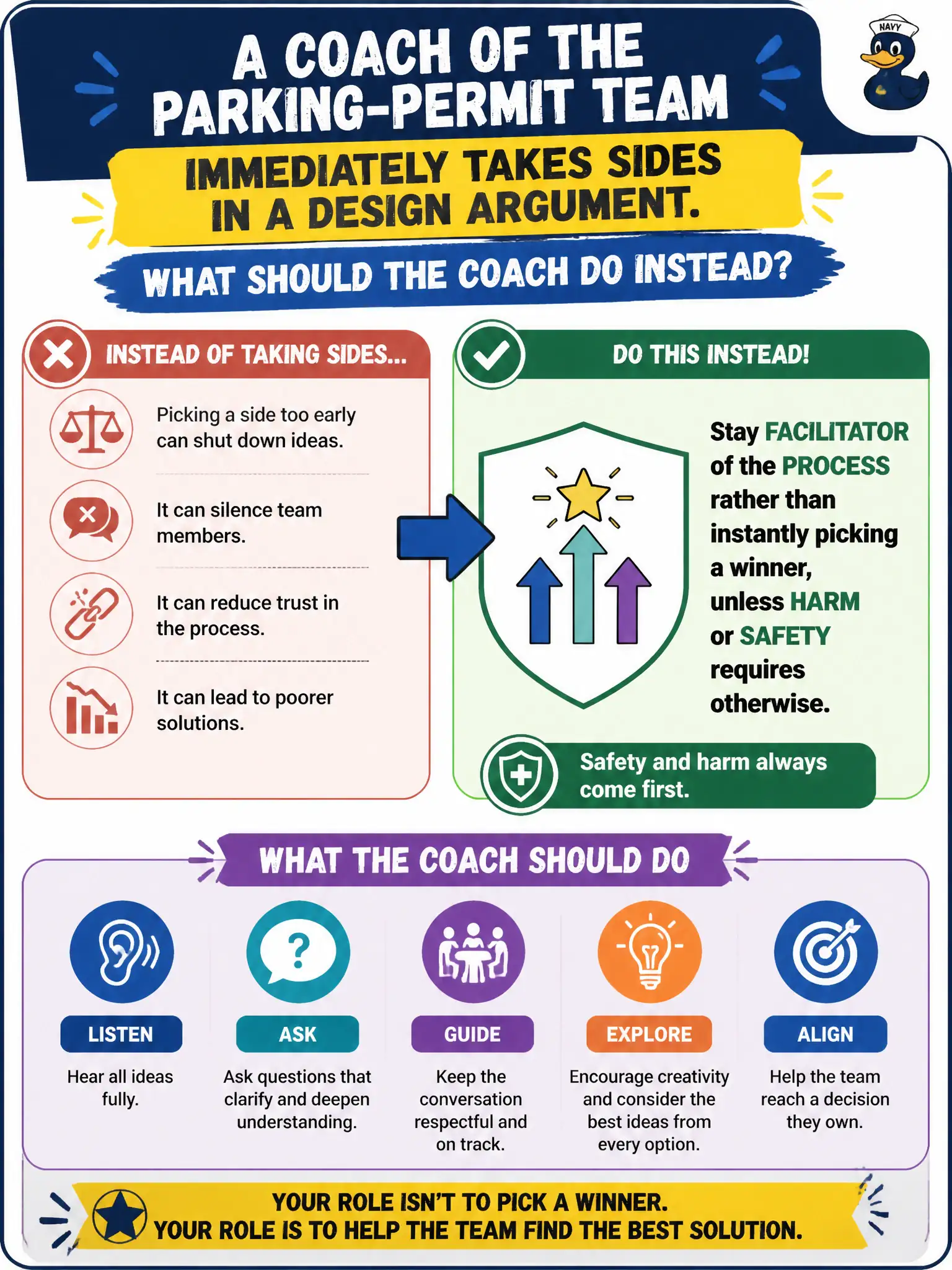
A coach of the parking-permit team immediately takes sides in a design argument. What should the coach do instead?
Select an answer to reveal the explanation.
Short Explanation
Jumping in as the judge turns a parking-permit design argument into a courtroom. The coach's job is the process, not the verdict—unless someone is actually getting hurt. Pick a winner in minute one and the team stops thinking.
Full Explanation
A coach of the parking-permit team who immediately takes sides in a design argument should instead stay facilitator of the process rather than instantly picking a winner, unless harm or safety requires otherwise. Early side-taking collapses inquiry and teaches the team that influence matters more than evidence about resident permitting. Keeping the habit of picking a winner in the first minute trains favoritism and short-circuits options. Sending both sides to the Release Train Engineer for a binding train ruling escalates team design conflict into RTE adjudication as the default. Writing a work-breakdown of the argument and assigning earned-value to each side imports predictive scoring into a facilitation failure. Exam caveat: SASM coaches facilitate conflict process; instant winners, default RTE rulings, and earned-value argument scoring are wrong first moves. Operational check: reset the conversation to interests and criteria for the parking-permit design, withhold a personal verdict unless safety or legal harm demands intervention, help the team reach a testable decision, and reflect afterward on whether facilitation stayed neutral. Document any safety exception so the team understands why the coach stepped out of pure facilitation.