
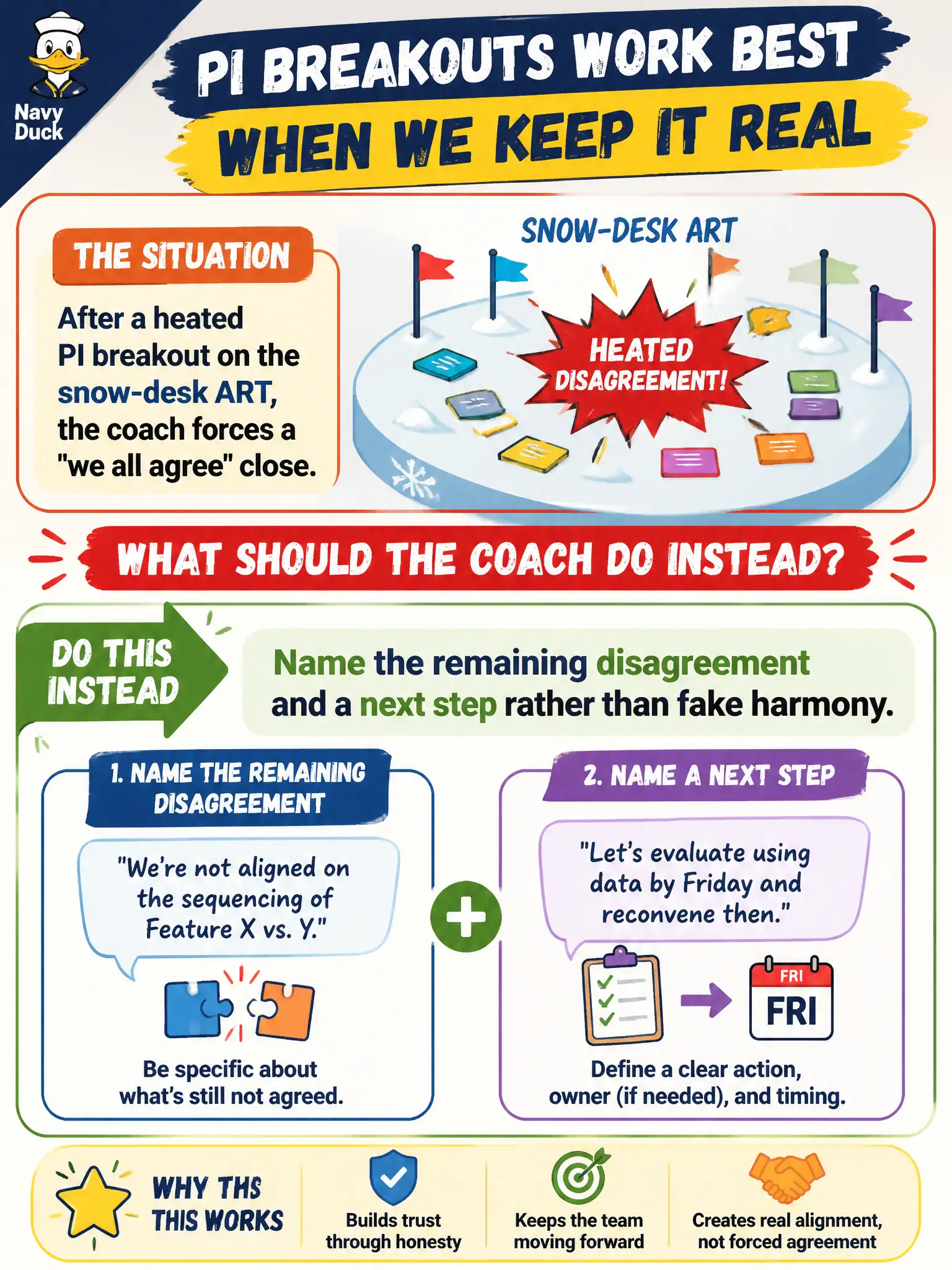
After a heated PI breakout on the snow-desk ART, the coach forces a "we all agree" close. What should the coach do instead?
Select an answer to reveal the explanation.
Short Explanation
"We all agree" after a shouting match is a sticker on a cracked windshield. Name the leftover disagreement and the next step. Fake harmony just postpones the snow-desk fight until it is more expensive.
Full Explanation
After a heated PI breakout on a snow-desk ART, the coach should name the remaining disagreement and a next step rather than forcing a "we all agree" close. Fake harmony hides unresolved risks that will reappear when snow hits routes, staffing, and public messaging. Forcing consensus until everyone repeats the same sentence manufactures compliance, not alignment, and teaches people to stay quiet. Canceling the rest of PI Planning so disagreement never has to be named abandons planning to avoid discomfort. Asking the Release Train Engineer to declare the official ART position from the stage may settle authority but skips team ownership of the conflict and the operational details teams hold. Exam caveat: SASM conflict facilitation makes disagreement visible with a next step; forced harmony and canceled planning are anti-patterns. Operational check: explicitly state what is still unresolved after the breakout, assign an owner and timebox for the next decision or experiment, record the open conflict on the PI board, and confirm the item is revisited before those teams take related work. Do not mark the breakout "aligned" until the civic disagreement is actually addressed or consciously deferred with a date.