
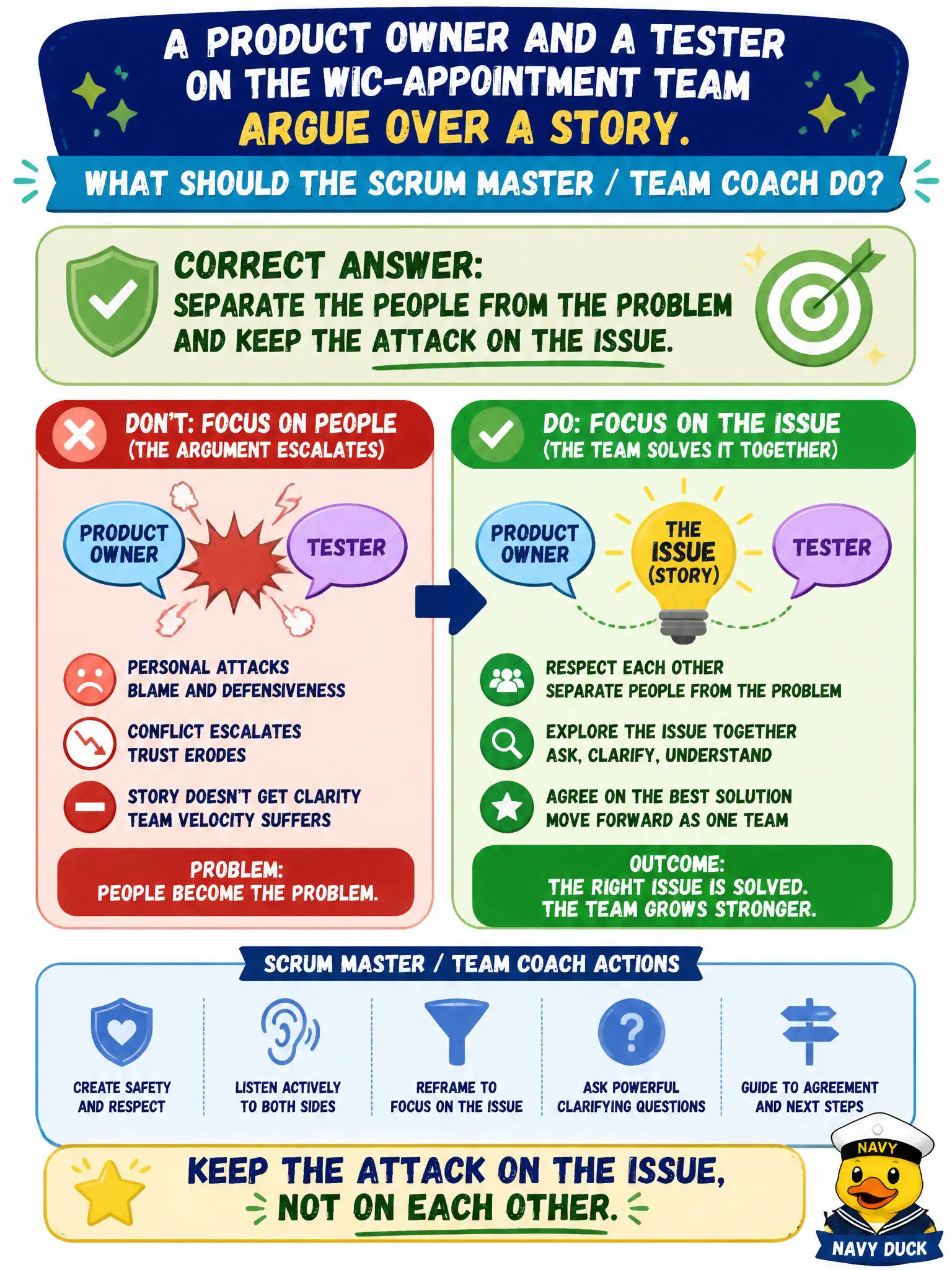
A Product Owner and a tester on the WIC-appointment team argue over a story. What should the Scrum Master / Team Coach do?
Select an answer to reveal the explanation.
Short Explanation
The fight is about the WIC story, not about who is a villain. Separate the people from the problem and the room can still work. Attack the appointment rule, not the person who named it.
Full Explanation
When a Product Owner and a tester on a WIC-appointment team argue over a story, the Scrum Master / Team Coach should separate the people from the problem and keep the attack on the issue. Interest-based problem solving protects working relationships while still pressing on appointment rules, evidence, eligibility edge cases, and acceptance criteria that affect caregivers. Deciding who is right and announcing a winner ends the moment but teaches power over inquiry and often creates quiet resistance. Moving the argument to private email hides conflict from the team that must implement the story and frequently hardens positions without witnesses. Asking the Release Train Engineer to rewrite the story from the train backlog removes team ownership and escalates a team conflict into train authorship. Exam caveat: SASM conflict navigation separates people from problems; winner announcements, secrecy, and RTE rewrites are distractors. Operational check: facilitate a short session that restates the shared resident outcome (reliable WIC appointments), list interests behind each position, attack the story problem with evidence, and update acceptance criteria together. Confirm both parties can work the next story without personal attack, and capture the facilitation pattern for Coach Sync if other civic teams face similar PO–tester conflicts.