
Four sequential sign-offs sit in the middle of the wastewater SCADA modernization ART workflow after a controller story is coded but before it can be integrated. What should the RTE summarize?
Select an answer to reveal the explanation.
Short Explanation
Four stamps after the wrench work is done is a parade, not safety. Slim the approvals—or let the people closest to the plant decide the routine ones. Extra signatures in the middle of the pipe just make the water wait.
Full Explanation
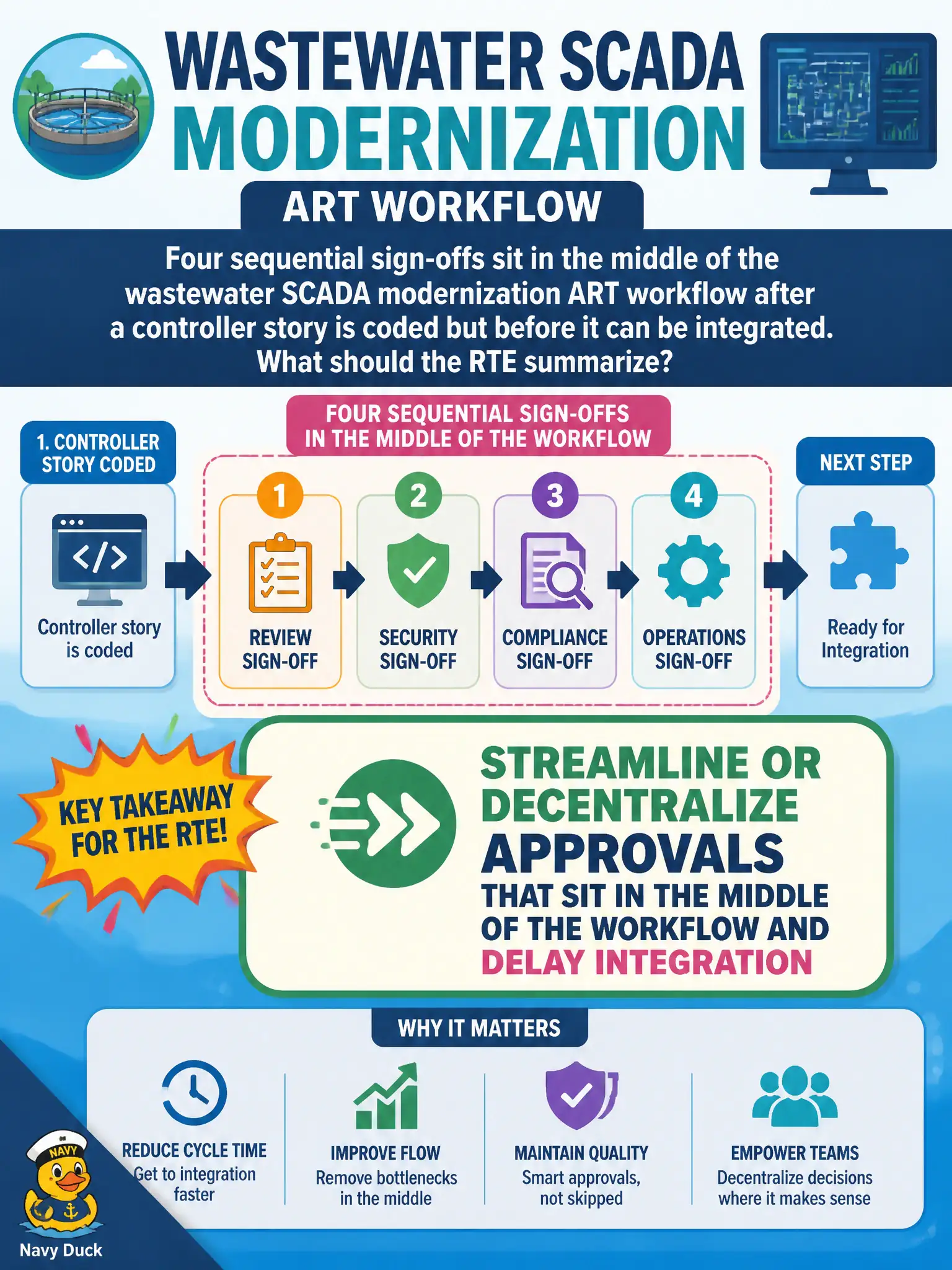
Streamline or decentralize approvals that sit in the middle of the wastewater SCADA modernization ART workflow and delay integration after coding. Mid-stream sequential sign-offs are common policy constraints; SAFe flow practice removes or shortens decision delays that do not require central control while retaining appropriate safety governance. Adding two more sequential sign-offs increases queue time and governance theater. Keeping the four-step chain while starting more SCADA stories raises WIP in front of the same gate. Moving all technical decisions to a yearly commission vote maximizes batch size and calendar delay for plant operations. Exam caveat: safety-critical OT/SCADA changes may still need designated approvals; streamlining means risk-based paths, concurrent review, or empowered local authority for standard changes—not eliminating accountability for public wastewater systems. Operational check: map the four sign-offs' wait versus processing time, pilot a reduced path for low-risk controller stories with clear guardrails, and measure integration lead time and incident rates. Keep plant operations and compliance stakeholders in the redesign so civic environmental and safety duties remain visible while flow improves.