
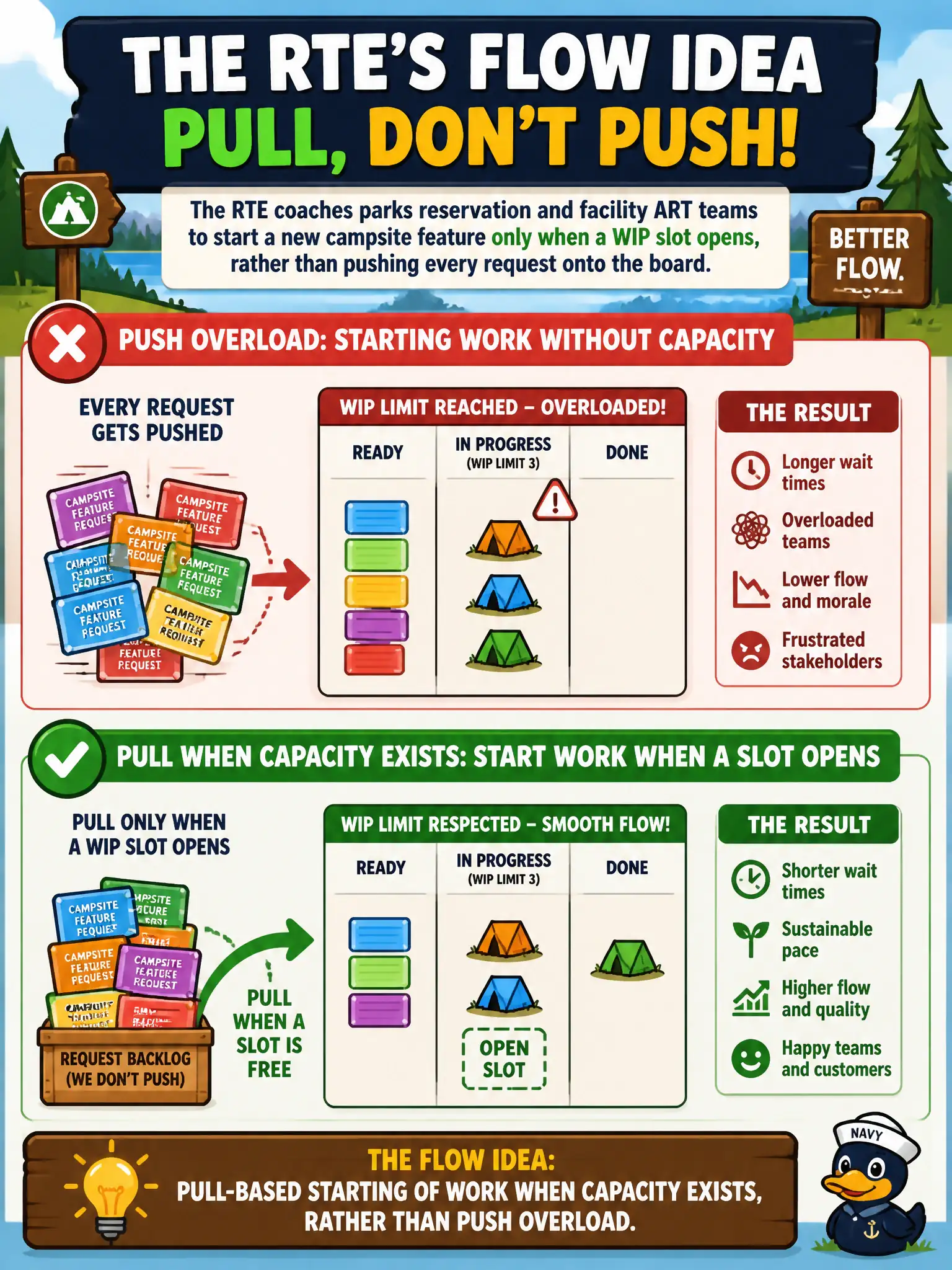
The RTE coaches parks reservation and facility ART teams to start a new campsite feature only when a WIP slot opens, rather than pushing every request onto the board. What flow idea is the RTE teaching?
Select an answer to reveal the explanation.
Short Explanation
A campground with a “site available” light is pull: take a spot when one opens. Push is handing every car a tent stake at the gate. Start work when there is room, not when the email lands.
Full Explanation
Pull-based starting of work when capacity exists—rather than push overload—is the flow idea the RTE is teaching parks reservation and facility ART teams. Starting a campsite or facility feature only when a WIP slot opens protects flow time and finishes work that residents and rangers can use. Pushing every reservation request onto the board the hour it arrives starts more than the system can finish. Starting all winter and summer park features on day one of the PI creates a WIP spike and long flow times. Ignoring capacity and letting the director's inbox set the start rate is unmanaged push from hierarchy rather than flow control. Exam caveat: true emergency facility or safety work may enter via an explicit expedite class; pull still governs standard and most fixed-date work. Operational check: visualize WIP limits on the reservation/facility board, refuse new standard starts when columns are full, and compare completed campsite features and median flow time after two iterations. Explain to parks leadership that the "site available" light is a civic service control: visitors get finished capabilities sooner when the ART stops handing every car a tent stake at the gate. In municipal and civic service contexts, record the rationale in the ART working agreements or improvement backlog so future PIs preserve the control, and re-validate the same measure or policy after the next Inspect and Adapt against resident-facing outcomes rather than activity theater.