
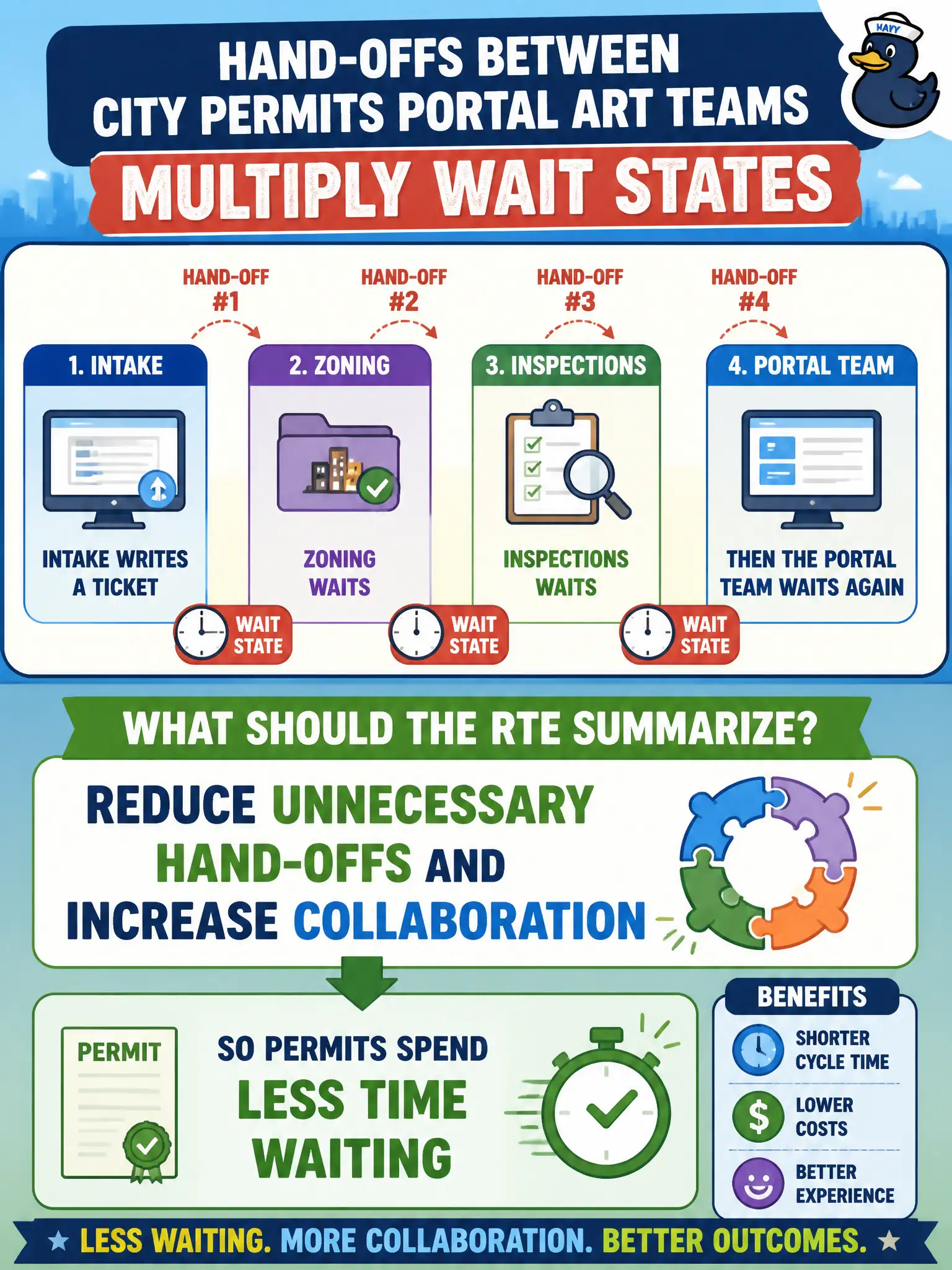
Hand-offs between city permits portal ART teams multiply wait states: intake writes a ticket, zoning waits, inspections waits, then the portal team waits again. What should the RTE summarize?
Select an answer to reveal the explanation.
Short Explanation
A permit that visits four counters for four stamps is a relay race where the baton sits on the floor. Cut the extra hand-offs. Collaboration is faster than a scavenger hunt.
Full Explanation
Reducing unnecessary hand-offs and increasing collaboration so permits spend less time waiting is the flow summary for the city permits portal ART. Each transfer between intake, zoning, inspections, and the portal team inserts queue, setup, and rework risk; flow improves when specialties work more concurrently on the same permit value stream. Adding more hand-off checklists layers paperwork onto wait states without removing the baton passes. Splitting the ART into more specialist queues multiplies desks and typically lengthens end-to-end permit time for residents and builders. Keeping the relay while measuring only individual desk utilization optimizes local busyness and hides system delay. Exam caveat: some regulated inspections and zoning decisions remain mandatory; the target is unnecessary internal hand-offs and serial waits, not unlawful skipping of civic due process. Operational check: map hand-offs on a current-state value stream for a typical portal permit, run a cross-functional collaboration experiment (joint refinement or shared WIP), and compare wait time versus processing time before and after. Report resident-facing permit lead time as the success measure so collaboration is judged by civic service outcomes, not by how many stamps the file collected.