
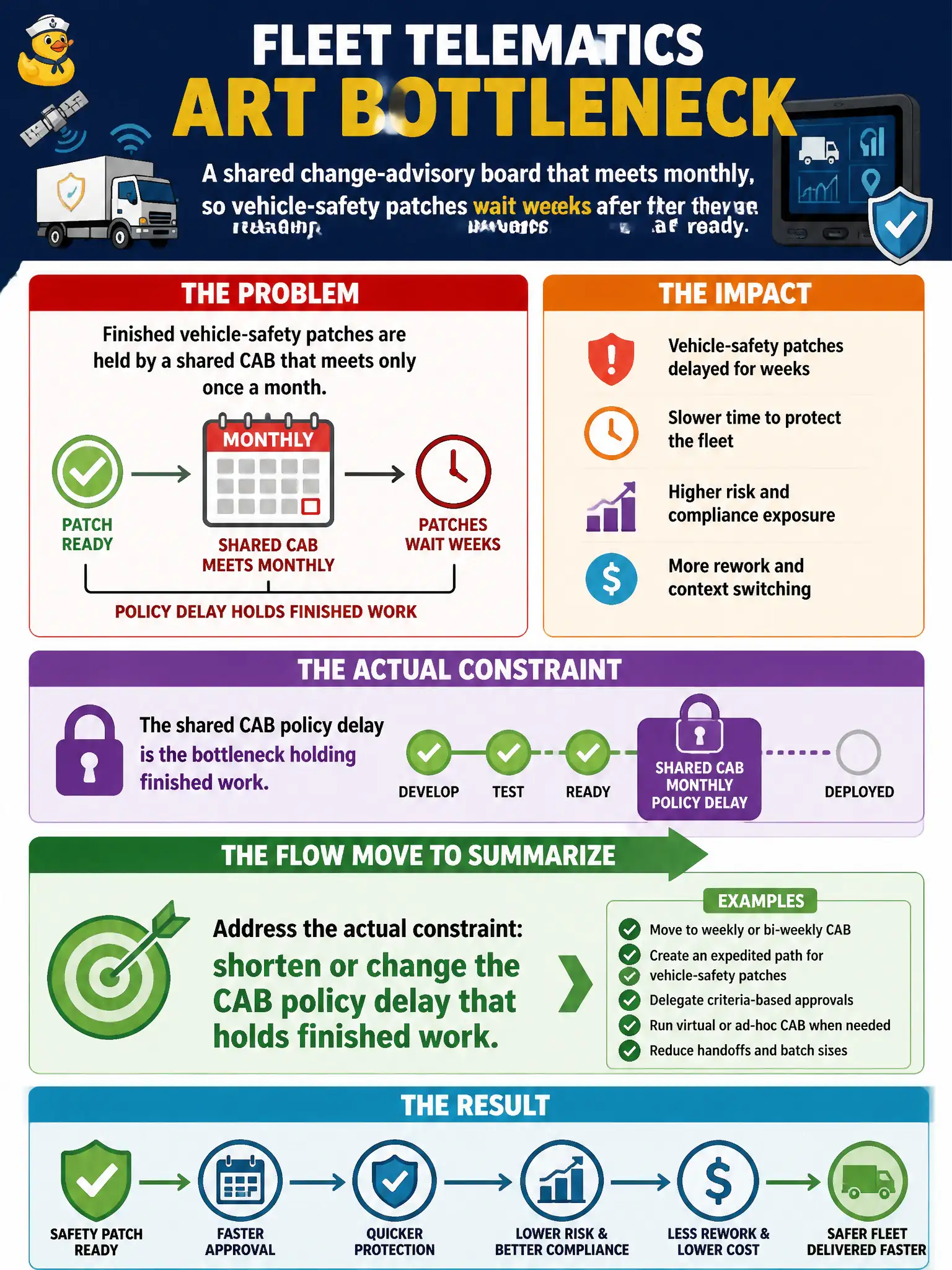
The fleet telematics ART bottleneck is a shared change-advisory board that meets monthly, so vehicle-safety patches wait weeks after they are ready. What should the RTE summarize as the flow move?
Select an answer to reveal the explanation.
Short Explanation
If the only garage door opens once a month, building more trucks does not get them on the road. The delay is the policy, not the wrenches. Fix the door schedule.
Full Explanation
The fleet telematics ART should address the actual constraint: the monthly change-advisory board policy delay that holds finished vehicle-safety patches. Constraint and SAFe flow thinking improve the bottleneck, not local capacity that only feeds the same queue. Hiring more telematics developers so more patches wait for the same monthly CAB increases WIP and cost without shortening time-to-road for safety fixes. Celebrating the monthly CAB as an immutable quality gate confuses governance intent with an unexamined calendar policy; cadence and decentralization of standard changes can preserve safety while reducing wait. Starting more parallel features to fill the board packet worsens overload in front of the gate. Exam caveat: safety-critical vehicle changes still need appropriate review; the move is to shorten cycle, use risk-based paths, or increase decision frequency—not to abolish all controls. Operational check: map how long ready patches wait for CAB, propose a more frequent or delegated path for standard telematics changes, and pilot it with one vehicle-safety class while measuring flow time to production. Keep municipal fleet and public-safety stakeholders in the policy redesign so civic accountability and faster hazard remediation both improve.