
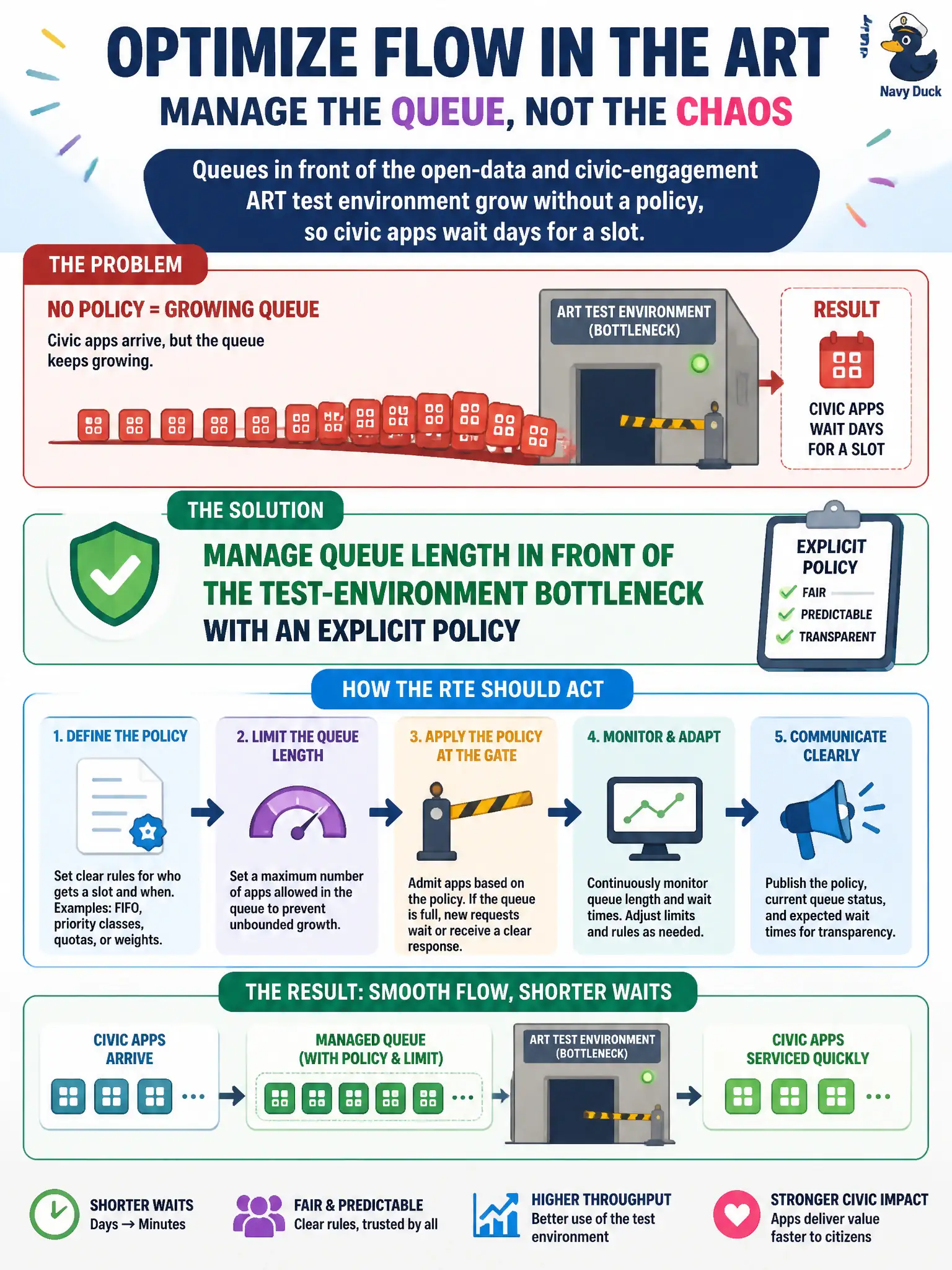
Queues in front of the open-data and civic-engagement ART test environment grow without a policy, so civic apps wait days for a slot. What should the RTE do to optimize flow?
Select an answer to reveal the explanation.
Short Explanation
An unstaffed permit window with a line around the block is not being helpful. Cap how long that test-environment line can get. Unmanaged queues are just delays wearing a polite name.
Full Explanation
Managing queue length in front of the test-environment bottleneck with an explicit policy optimizes flow for the open-data and civic-engagement ART. Queue time often dominates flow time; an unbounded wait for test slots silently lengthens delivery of civic apps even when coding looks busy. An explicit policy—maximum queue size, entry criteria, and what happens when the queue is full—makes the constraint visible and negotiable. Letting the queue grow unbounded so no requester is told to wait is false courtesy that creates invisible delay for community groups and city product teams. Adding more features to the queue only lengthens the line and raises WIP without raising test capacity. Hiding the wait column from the Kanban to keep briefings green removes the signal the ART Sync needs to fund capacity or reduce batch size. Exam caveat: queue policies should distinguish expedite (for example public-safety open-data fixes) from standard civic requests without making everything urgent. Operational check: publish a test-environment WIP/queue limit, age items in the wait column weekly, and either increase constrained capacity, reduce batch size entering the queue, or pull less work when the limit is hit. Report queue age to civic-engagement stakeholders so wait is treated as a service outcome, not an internal inconvenience.