
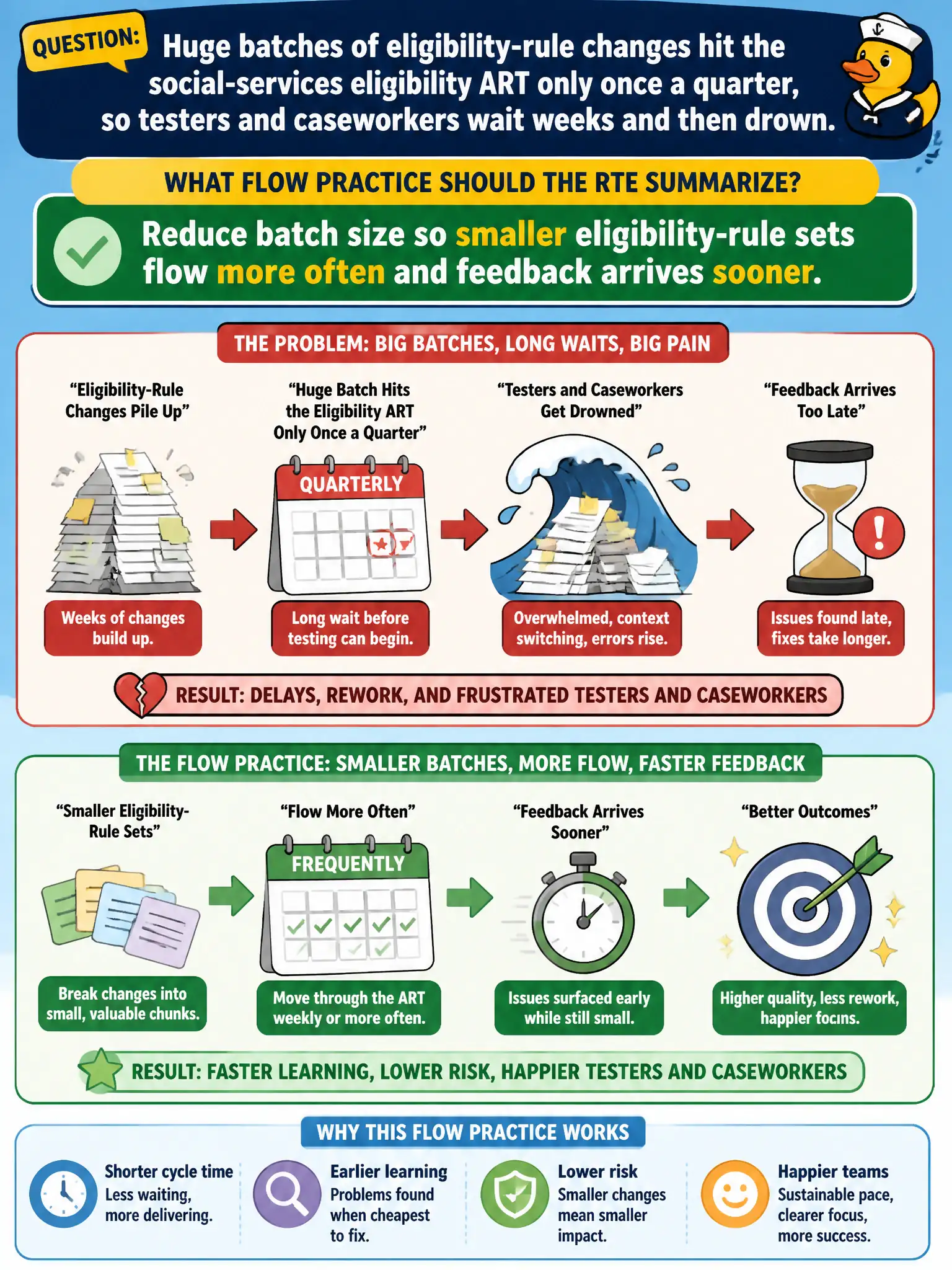
Huge batches of eligibility-rule changes hit the social-services eligibility ART only once a quarter, so testers and caseworkers wait weeks and then drown. What flow practice should the RTE summarize?
Select an answer to reveal the explanation.
Short Explanation
Dumping a dump-truck of rule changes on the eligibility desk once a quarter is how people get buried. Smaller, more frequent batches are like grocery bags that actually fit in two hands—and the rotten apple shows up sooner.
Full Explanation
Reducing batch size so smaller eligibility-rule sets flow more often is the flow practice the social-services eligibility ART needs. Huge quarterly dumps create long queues, delayed feedback, boom-and-bust load for testers and caseworkers, and late discovery of rule defects that affect residents' benefits. Smaller, more frequent batches shorten wait, enable earlier validation with caseworkers, and smooth capacity. Holding every rule change until fiscal year-end enlarges the batch and worsens the same failure mode. Freezing tester involvement until the entire quarterly packet is coded delays feedback and turns testing into a late inspection rather than continuous quality. Measuring only requirements-packet page count rewards document size, not flow of working eligibility rules. Exam caveat: some regulatory effective dates are fixed, but the ART can still stage, integrate, and validate smaller increments before the legal go-live rather than developing as one monolith. Operational check: split the next quarterly packet into weekly or bi-weekly rule slices with paired testing, track flow time and escaped defects versus the last big-bang release, and keep Business Owners informed of which resident-facing rules landed. Treat smaller batches as a civic reliability control so eligibility mistakes surface while caseworkers can still correct course.