
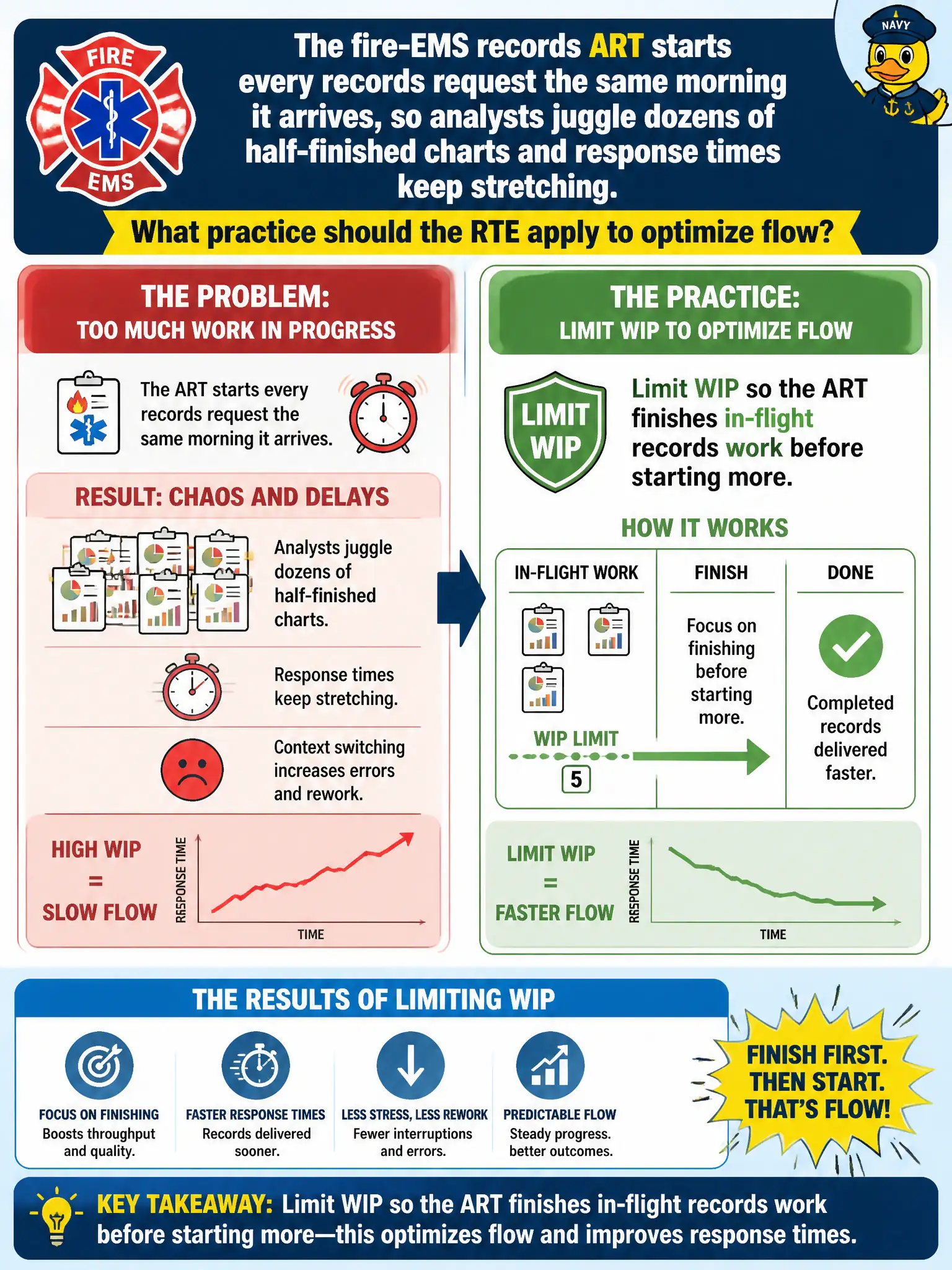
The fire-EMS records ART starts every records request the same morning it arrives, so analysts juggle dozens of half-finished charts and response times keep stretching. What practice should the RTE apply to optimize flow?
Select an answer to reveal the explanation.
Short Explanation
Opening every ambulance-records ticket at once is like cooking on every burner. Nothing finishes hot. A WIP limit is the stove with four burners—finish a pan, then start the next.
Full Explanation
Limiting WIP so the fire-EMS records ART finishes in-flight records work before starting more is a primary SAFe flow accelerator. Starting every records request the morning it arrives inflates flow load, forces multitasking, and typically lengthens response times even when analysts feel responsive. WIP limits make capacity visible, expose bottlenecks, and improve throughput of finished charts that public-safety stakeholders need. Raising individual utilization targets above 100 percent intensifies multitasking and queue time rather than optimizing flow. Adding a second weekly status briefing so leadership can start still more requests increases coordination overhead and push pressure without finishing work. Instant starts that empty the inbox are a push policy, not a flow policy. Exam caveat: emergency or life-safety records requests may use an explicit expedite class of service; expedite must remain rare so standard WIP limits still protect overall flow. Operational check: set an explicit WIP limit on the records analysis column, stop starting new non-expedite requests when the limit is hit, and compare median flow time for closed requests before and after two iterations. Brief fire and EMS business owners that unfinished half-charts are worse for response readiness than a short, visible intake queue managed under civic service-level expectations.