
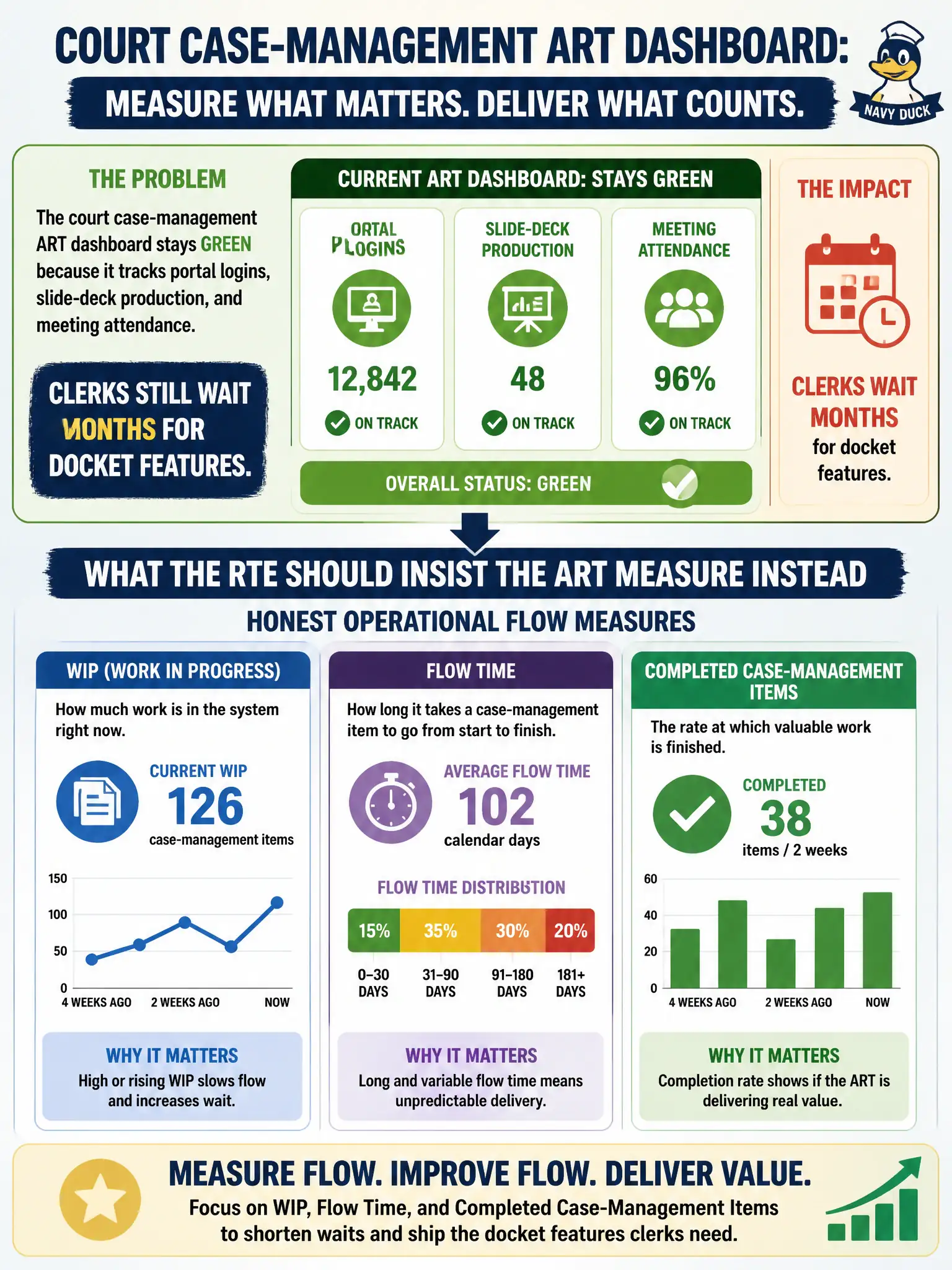
The court case-management ART dashboard stays green because it tracks portal logins, slide-deck production, and meeting attendance. Clerks still wait months for docket features. What should the RTE insist the ART measure instead?
Select an answer to reveal the explanation.
Short Explanation
A courthouse lobby counter that only counts people walking in will always look lively. Flow is whether case features actually finish. Trade vanity greens for WIP, flow time, and done items.
Full Explanation
Honest operational flow measures—WIP, flow time, and completed case-management items—are what tell a court case-management ART whether clerks are getting docket capabilities. Vanity greens such as portal logins, slide-deck production, and meeting attendance can stay healthy while value delivery stalls for months. SAFe flow coaching asks the RTE to prefer item-movement metrics over activity metrics that are easy to inflate. Portal logins and status-meeting attendance measure engagement with tools and ceremonies, not finished judicial workflow features. Counting Friday status decks for the bench rewards documentation theater and can increase WIP on reporting instead of on docket work. Team reports of feeling busy during ART Sync are subjective utilization proxies that hide wait and rework. Exam caveat: stakeholder communication and access metrics may still be tracked for adoption, but they must not replace flow load, flow time, and throughput when the question is whether the ART is delivering. Operational check: replace the green vanity tiles on the ART dashboard with WIP by state, median flow time for case-management features, and count of done items per PI; walk one clerk journey from request to usable docket capability in the next quantitative review. Keep the civic framing explicit: the measure of success is service to the court and the public, not a lively lobby counter of logins.