
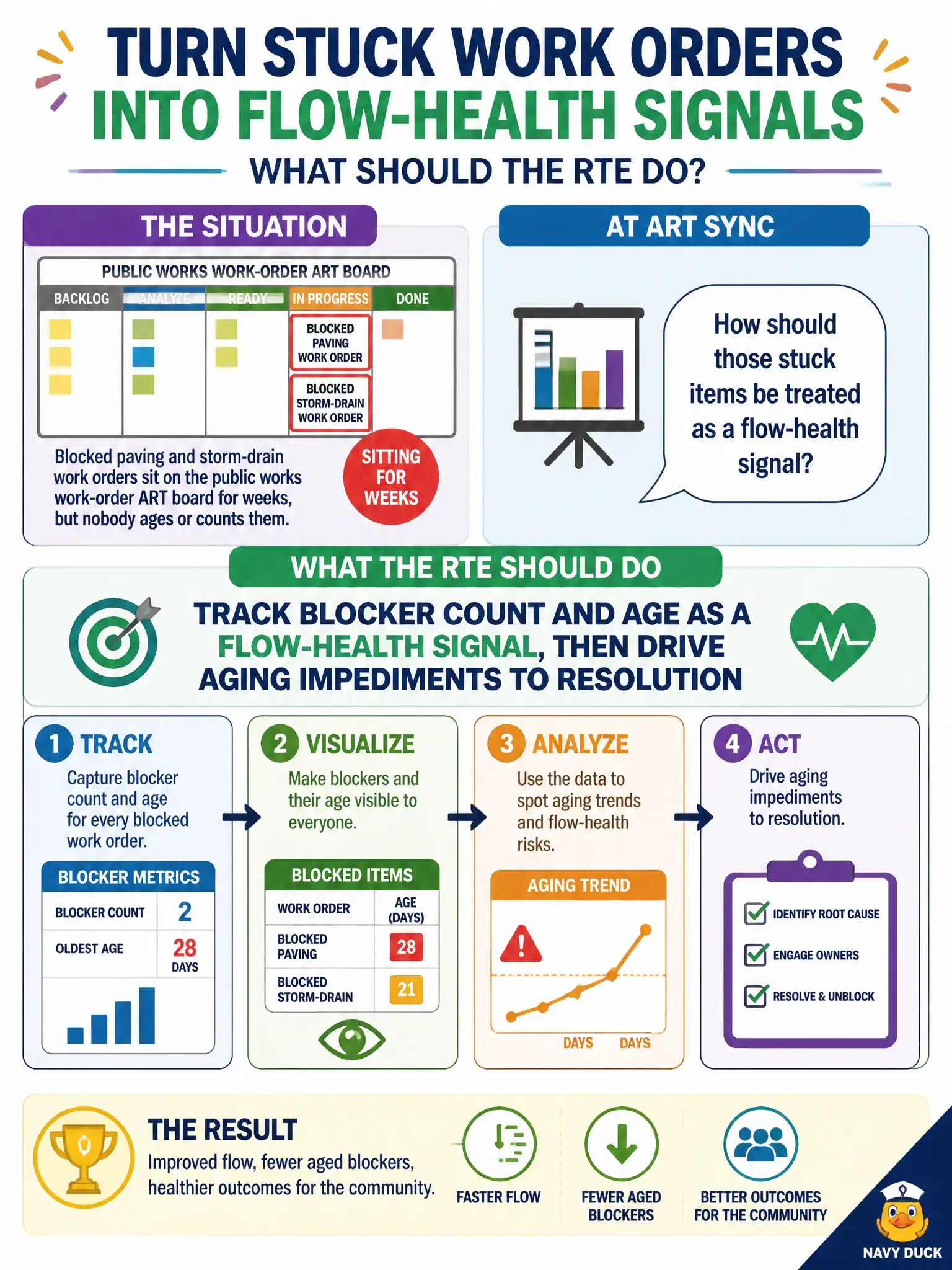
Blocked paving and storm-drain work orders sit on the public works work-order ART board for weeks, but nobody ages or counts them. During the ART Sync the operations director asks how those stuck items should be treated as a flow-health signal. What should the RTE do?
Select an answer to reveal the explanation.
Short Explanation
A blocked work order is a stalled truck in the left lane. Count how many are stuck and how long they have been sitting—that is the health signal. Pretty boards that hide the pile-up do not move asphalt.
Full Explanation
Blocked paving and storm-drain work orders that sit for weeks are flow-health signals, not board clutter. SAFe flow practice includes counting blockers and aging them so wait states stay visible and the RTE can drive systemic impediments to resolution during ART Sync and with operations partners. Hiding blocked cards to keep a public-works briefing green conceals delay and trains the ART to optimize appearance over asphalt and drainage outcomes for residents. Counting only completed paving tickets while ignoring permit or vendor waits systematically understates lead time and invents a false throughput story. Measuring individual crew utilization and treating blockers as personality issues personalizes a system problem and misses policy, dependency, and vendor constraints. Exam caveat: not every blocked card needs an emergency swarm, but blocker count and age should be explicit flow metrics; classes of service may escalate true safety blockers without declaring every wait an expedite. Operational check: add blocker count and oldest-blocker age to the ART Sync agenda, age the top three public-works impediments weekly, and record owners and target resolution dates. Confirm that blocked work-order cards remain visible on the board used for civic operations briefings so leadership sees the same flow-health picture the crews live with.