
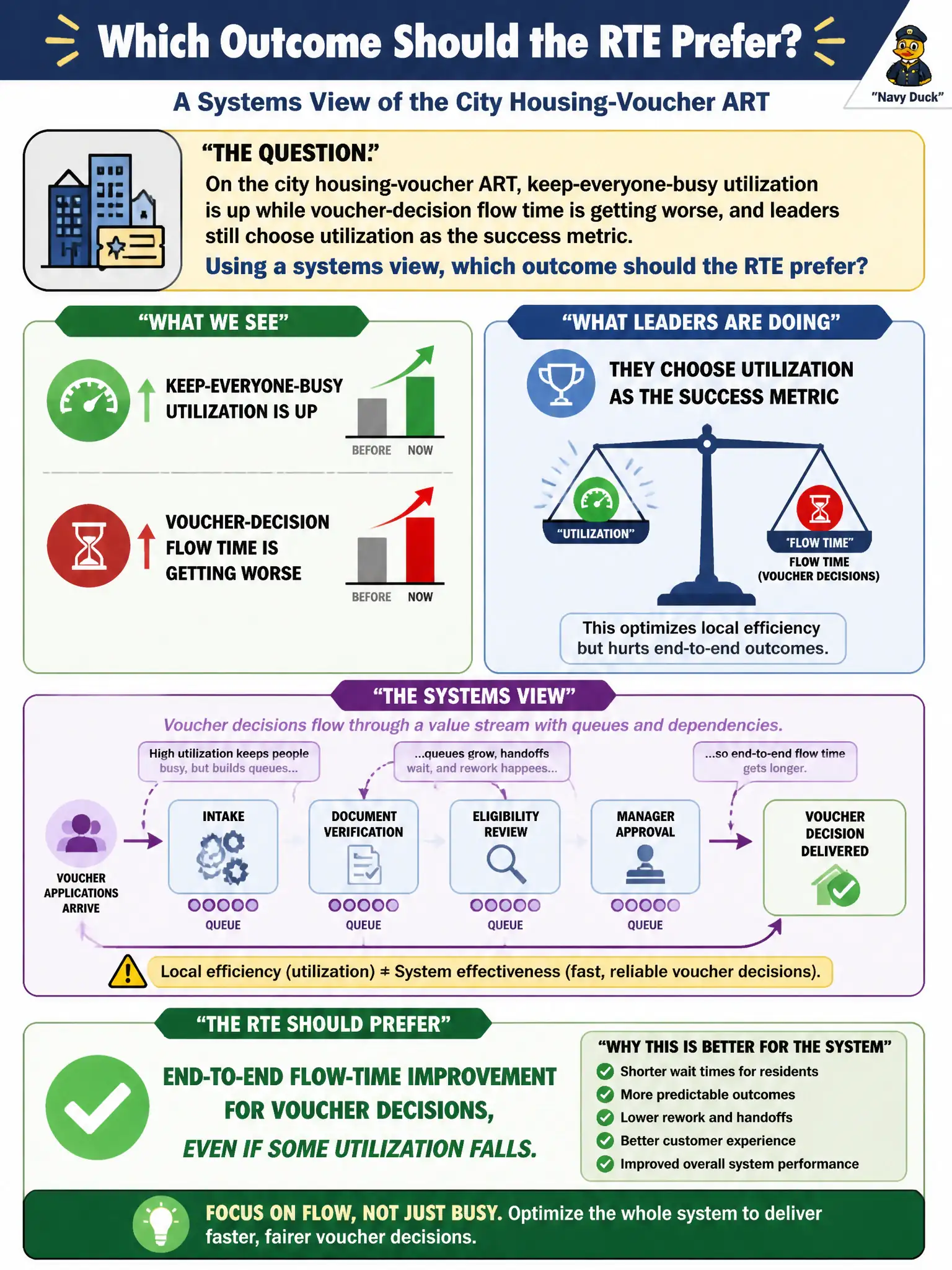
On the city housing-voucher ART, keep-everyone-busy utilization is up while voucher-decision flow time is getting worse, and leaders still choose utilization as the success metric. Using a systems view, which outcome should the RTE prefer?
Select an answer to reveal the explanation.
Short Explanation
Keeping every specialist "busy" while voucher folders sit is a packed waiting room, not a faster decision. Flow time is what the resident feels. A systems view picks the whole path over a full calendar.
Full Explanation
Prefer end-to-end flow-time improvement for voucher decisions on the city housing-voucher ART, even if some specialist utilization falls. When utilization and flow time conflict, systems thinking favors the citizen journey. Higher specialist utilization while cases wait longer institutionalizes delay. A blended score that always weights utilization above citizen wait encodes the wrong tradeoff. Dropping flow time from the dashboard because utilization is easier to staff to hides the resident experience. Exam caveat: extremely low utilization can be wasteful; the exam point is not maximizing idle time but refusing utilization that lengthens queues. Operational check: report median voucher-decision flow time as the headline metric, cap WIP that keeps specialists "busy," and brief leaders that a packed waiting room is not faster civic service. In municipal and civic service contexts, record the rationale in the ART working agreements or improvement backlog so future PIs preserve the control, and re-validate after the next Inspect and Adapt against resident-facing outcomes rather than activity theater. Confirm owners, success measures, and a re-check date so the practice remains inspectable.