
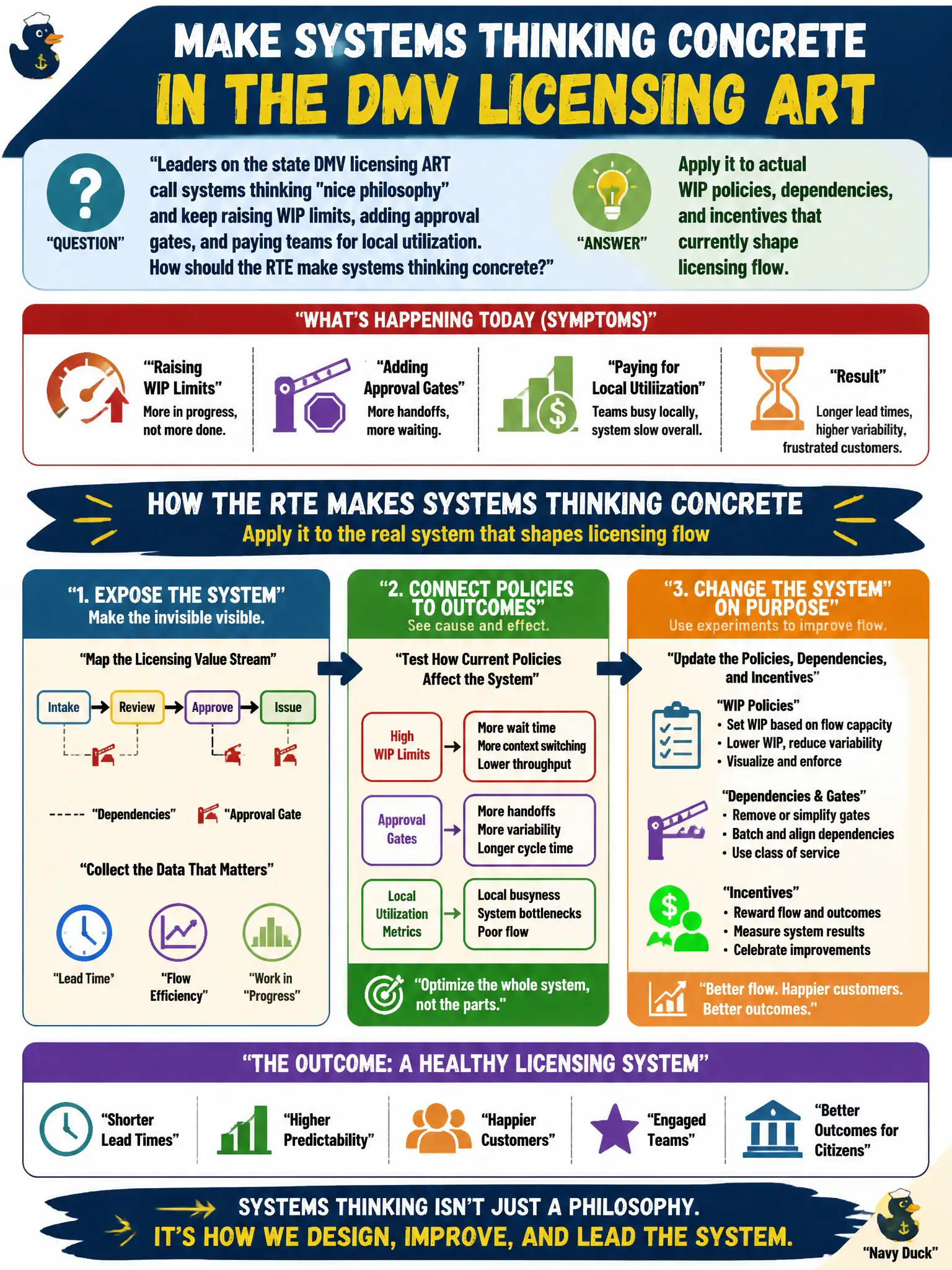
Leaders on the state DMV licensing ART call systems thinking "nice philosophy" and keep raising WIP limits, adding approval gates, and paying teams for local utilization. How should the RTE make systems thinking concrete?
Select an answer to reveal the explanation.
Short Explanation
A philosophy poster next to the same licensing bottleneck is decoration. Systems thinking shows up in WIP caps, which approvals pile up, and what the ART pays people to optimize. Change those knobs or it stays a slogan.
Full Explanation
Make systems thinking concrete on the state DMV licensing ART by applying it to actual WIP policies, dependencies, and incentives that currently shape licensing flow. SAFe systems thinking is operational, not a lunch-and-learn poster. Scheduling theory training with no policy change leaves queues untouched. Asking each team to write a systems-thinking essay as an IP objective substitutes homework for redesign. Replacing flow metrics with a philosophy statement on the ART homepage is decoration beside the same bottleneck. Exam caveat: education can support change, but only when paired with experiments on WIP, gates, and incentives. Operational check: pick one WIP policy, one approval dependency, and one local utilization incentive; redesign them; and measure licensing lead time so residents experience shorter waits rather than nicer slogans. In municipal and civic service contexts, record the rationale in the ART working agreements or improvement backlog so future PIs preserve the control, and re-validate after the next Inspect and Adapt against resident-facing outcomes rather than activity theater. Confirm owners, success measures, and a re-check date so the practice remains inspectable.