
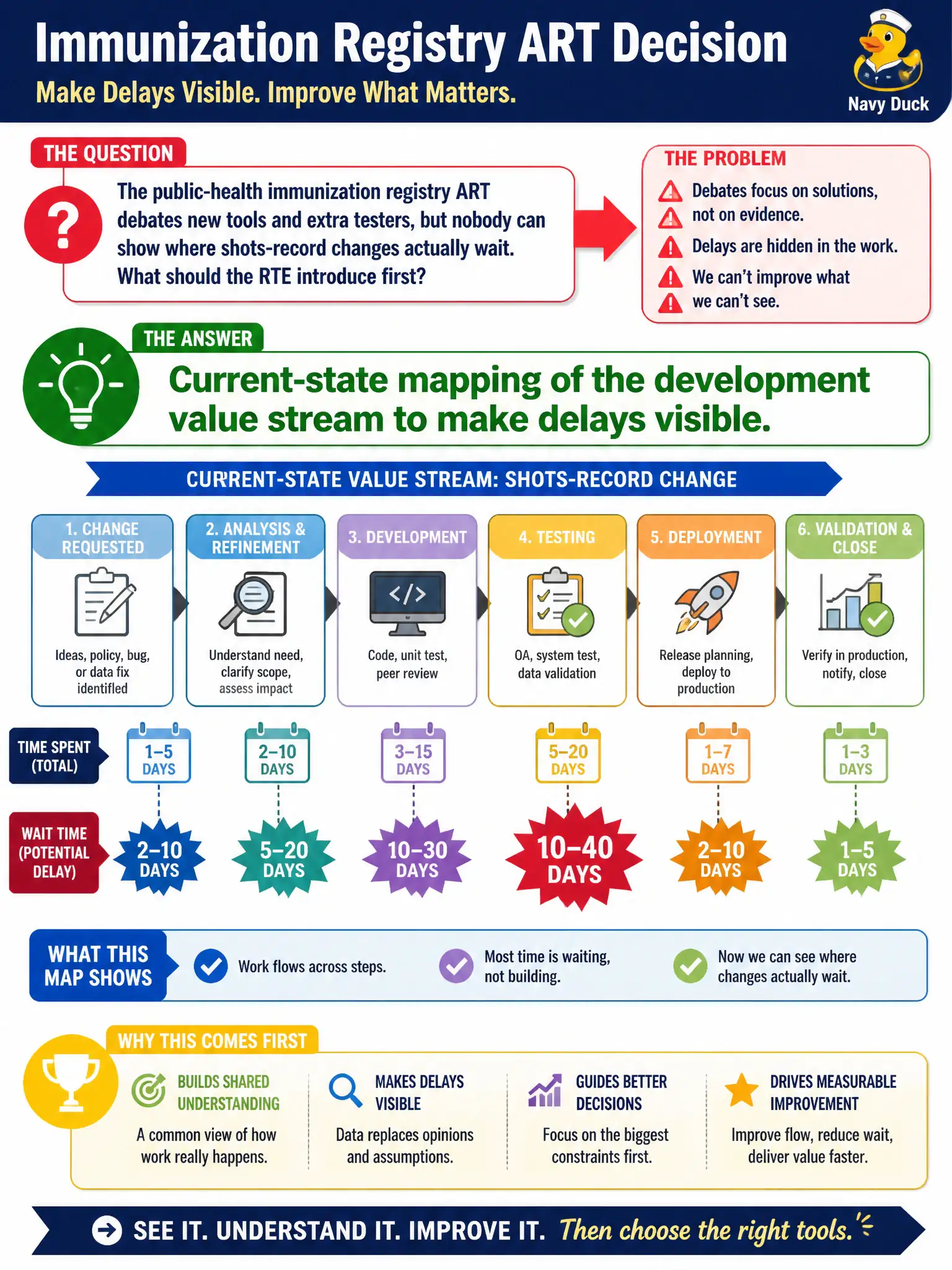
The public-health immunization registry ART debates new tools and extra testers, but nobody can show where shots-record changes actually wait. What should the RTE introduce first?
Select an answer to reveal the explanation.
Short Explanation
Shopping for tools before mapping waits is like ordering new ambulances without knowing which intersection the stretcher actually sits in. Current-state mapping shows where shots-record work idles. See the delays before buying a remedy.
Full Explanation
Introduce current-state mapping of the development value stream first so the public-health immunization registry ART makes delays visible before shopping for tools or testers. Mapping shows processing time, wait time, and handoffs where shots-record changes actually idle. Starting with a future-state tool catalog guesses architecture before seeing constraints. A hiring freeze until every team publishes utilization reports optimizes the wrong signal. A program-level Gantt replacement does not make value-stream mapping unnecessary. Exam caveat: future-state design follows current-state clarity; both matter, in that order. Operational check: facilitate a current-state map with the people who move registry changes, time the longest waits, and only then choose experiments—tools, policy, or capacity—aimed at those waits for clinic and resident record flow. In municipal and civic service contexts, record the rationale in the ART working agreements or improvement backlog so future PIs preserve the control, and re-validate after the next Inspect and Adapt against resident-facing outcomes rather than activity theater. Confirm owners, success measures, and a re-check date so the practice remains inspectable.