
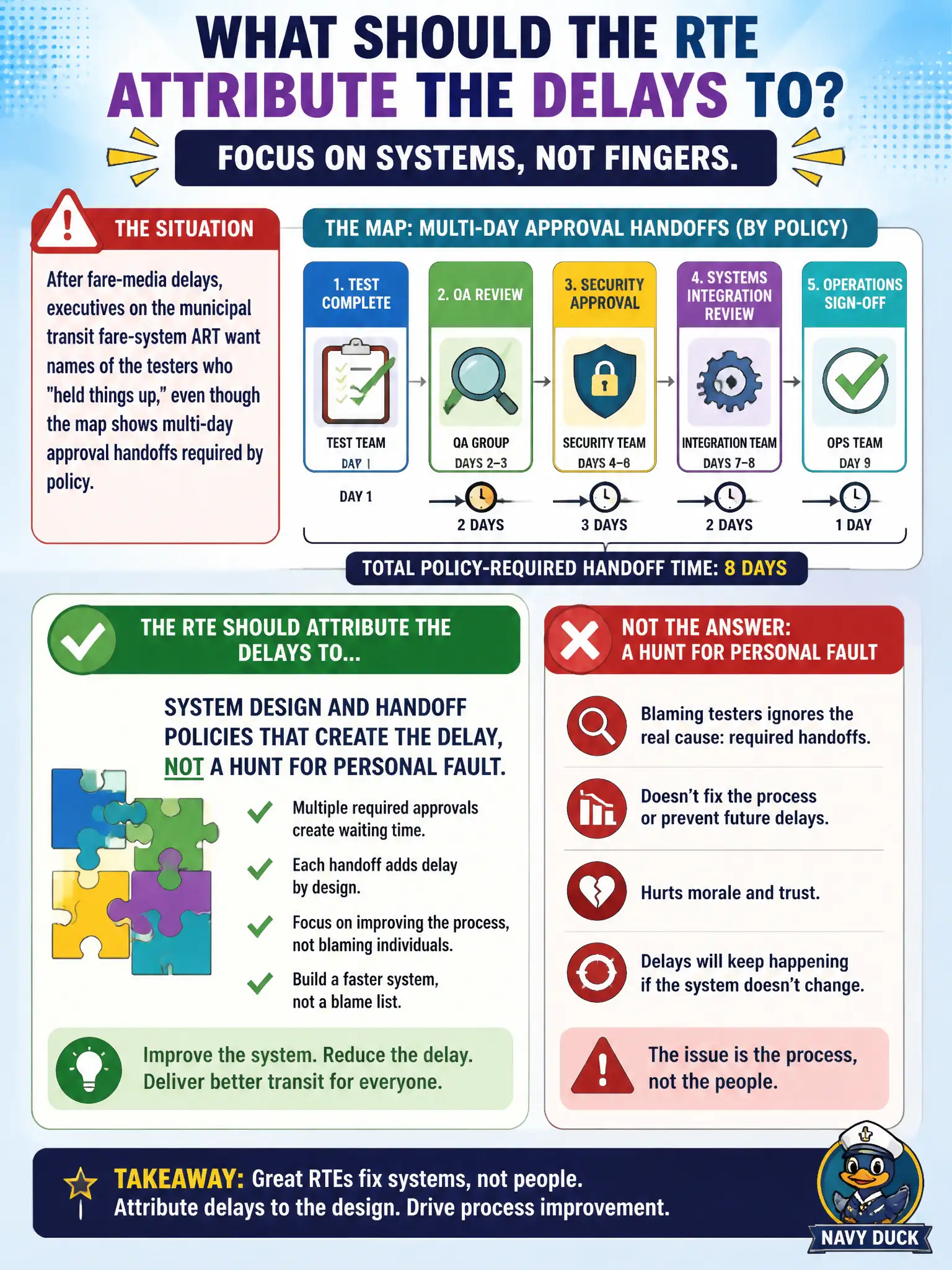
After fare-media delays, executives on the municipal transit fare-system ART want names of the testers who "held things up," even though the map shows multi-day approval handoffs required by policy. What should the RTE attribute the delays to?
Select an answer to reveal the explanation.
Short Explanation
Blaming testers for a three-desk approval policy is like yelling at the cashier because the ordinance requires three counters. The delay lives in the design of the handoffs. Name the system, not a scapegoat.
Full Explanation
Attribute fare-media delays on the municipal transit fare-system ART to system design and handoff policies, not a hunt for personal fault among testers. Systems thinking locates most flow failures in policies, queues, and structure. If the map shows multi-day approval handoffs required by policy, overtime, bonuses, and extra status reports will not remove that wait. Blaming testers who failed to work around the queues scapegoats people for ordinance-like gates. Adding stretch bonuses to push past policy gates invites unsafe shortcuts. More daily status reports increase overhead without changing the handoff design. Exam caveat: individual performance issues can exist, but when the map shows structural delay, start with the system. Operational check: present the value-stream evidence to executives, redesign the approval path, and measure flow time after the policy change so riders see faster fare-media fixes without a chill on problem-solving. In municipal and civic service contexts, record the rationale in the ART working agreements or improvement backlog so future PIs preserve the control, and re-validate after the next Inspect and Adapt against resident-facing outcomes rather than activity theater. Confirm owners, success measures, and a re-check date so the practice remains inspectable.