
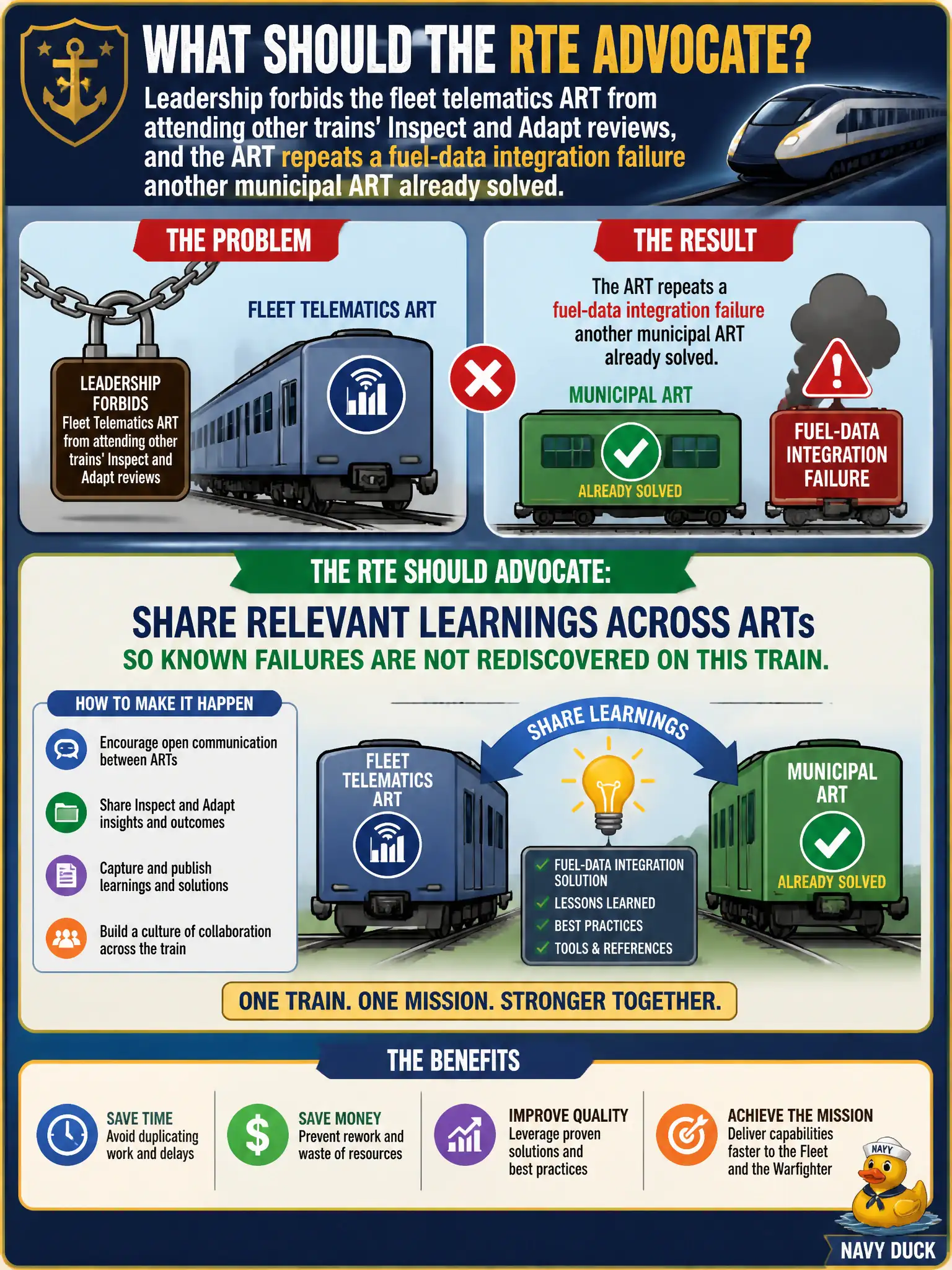
Leadership forbids the fleet telematics ART from attending other trains' Inspect and Adapt reviews, and the ART repeats a fuel-data integration failure another municipal ART already solved. What should the RTE advocate?
Select an answer to reveal the explanation.
Short Explanation
Forbidding cross-ART learning is like each firehouse inventing its own hydrant adapter after the station next door already solved the leak. Relentless improvement is cheaper when a known failure does not get a sequel. Share what helps; do not clone blindly.
Full Explanation
Advocate sharing relevant learnings across ARTs so the fleet telematics ART does not rediscover a fuel-data integration failure another municipal ART already solved. Measure-and-grow includes cross-ART learning via I&A visits, communities of practice, and LACE forums. Keeping ARTs isolated so retrospectives stay confidential recreates waste. Mandating a citywide copy of another ART's fix without inspecting this train's context is unexamined cloning. Replacing I&A with a PMO archive only executives may read removes learning from the people who build. Exam caveat: sensitive security details may be redacted; relevant failure patterns should still transfer. Operational check: schedule a short cross-ART learning exchange on the fuel-data pattern, adapt the solution to this fleet context, and verify the failure does not recur so municipal fleet reliability improves without a sequel. In municipal and civic service contexts, record the rationale in the ART working agreements or improvement backlog so future PIs preserve the control, and re-validate after the next Inspect and Adapt against resident-facing outcomes rather than activity theater. Confirm owners, success measures, and a re-check date so the practice remains inspectable.