
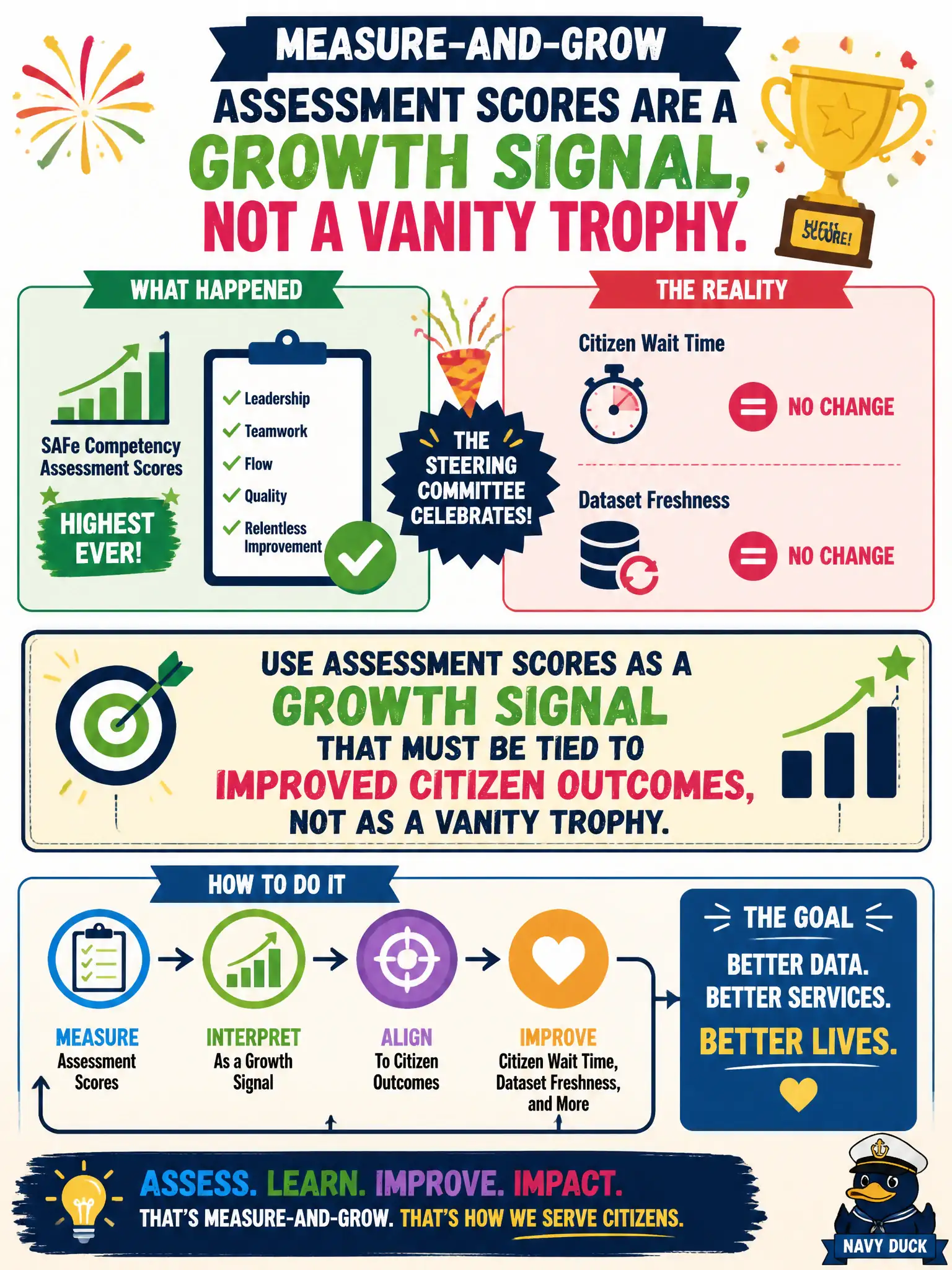
After the open-data and civic-engagement ART posts its highest SAFe competency-assessment scores yet, the steering committee throws a celebration even though citizen wait time and dataset freshness have not moved. What should the RTE emphasize about measure-and-grow?
Select an answer to reveal the explanation.
Short Explanation
A high maturity score with stale open-data wait times is like a firehouse bragging about drill-card grades while the engines still take eight minutes to roll. Measure-and-grow exists to move citizen outcomes, not to hang a trophy on the wall. The number is a signal, not the parade.
Full Explanation
Emphasize that measure-and-grow assessment scores are a growth signal that must be tied to improved citizen outcomes, not a vanity trophy for the open-data and civic-engagement ART. Scores are leading indicators of capability, not the value residents receive. Celebrating a score jump while citizen wait time and dataset freshness stay flat is score theater. Treating the score as the primary outcome and pausing outcome metrics inverts the purpose. Handing results to HR as performance-file material removes ART operating ownership. Raising the target by ten points next PI for a new celebration ignores unchanged wait. Exam caveat: score improvement can be meaningful when correlated with outcome movement; the error is trophy behavior without outcome linkage. Operational check: pair each assessment highlight with an outcome metric (wait time, freshness), fund experiments that target both, and refuse steering-committee celebrations that omit citizen results. In municipal and civic service contexts, record the rationale in the ART working agreements or improvement backlog so future PIs preserve the control, and re-validate after the next Inspect and Adapt against resident-facing outcomes rather than activity theater. Confirm owners, success measures, and a re-check date so the practice remains inspectable.