
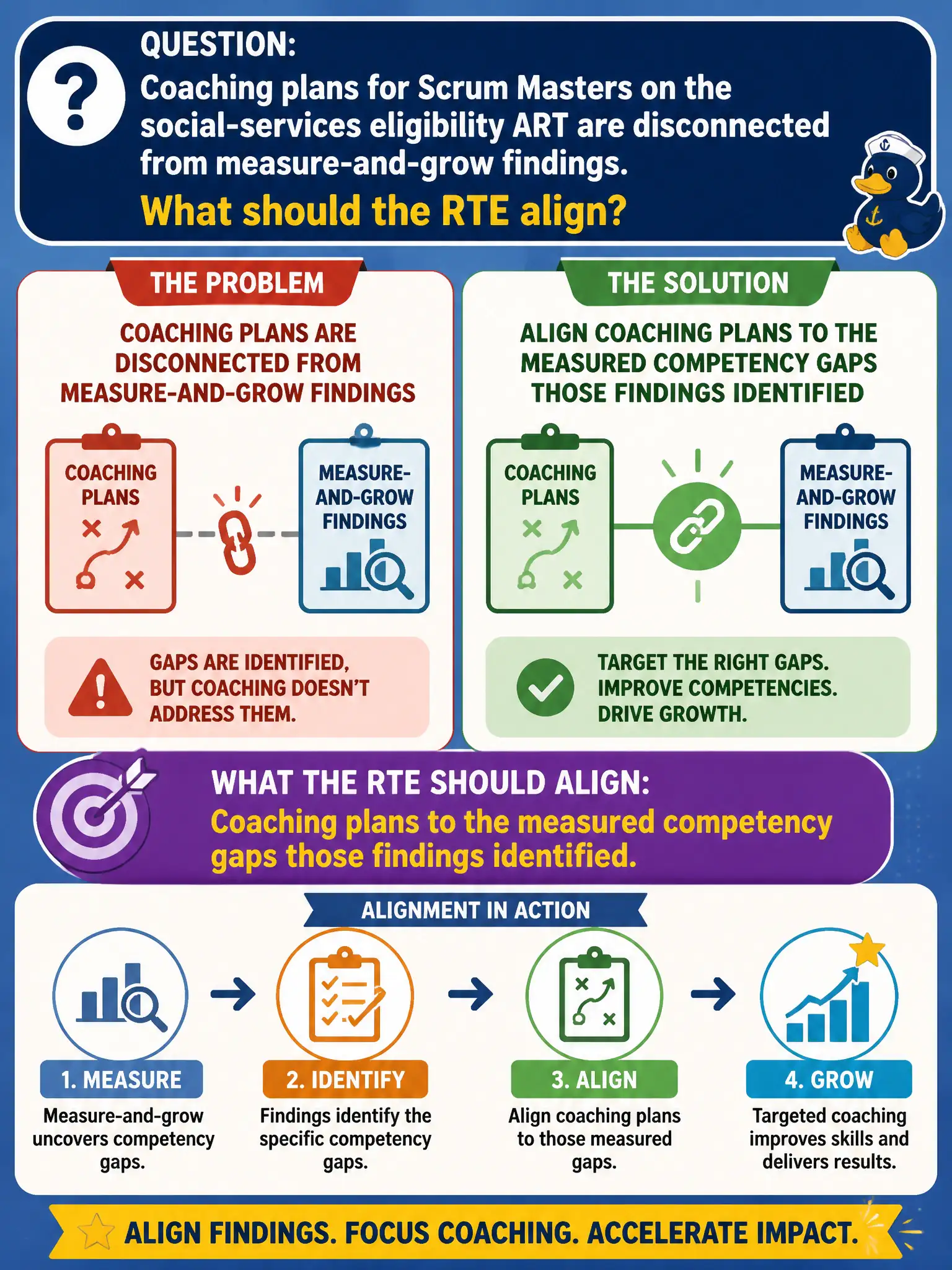
Coaching plans for Scrum Masters on the social-services eligibility ART are disconnected from measure-and-grow findings. What should the RTE align?
Select an answer to reveal the explanation.
Short Explanation
If the assessment says the eligibility ART is weak on flow and facilitation, coaching should go there—not to whatever webinar showed up in inboxes. Measure-and-grow is the map; coaching plans are the route. Point them at the same gaps or the Scrum Masters stay busy without moving the score.
Full Explanation
Align Scrum Master coaching plans on the social-services eligibility ART to the measured competency gaps measure-and-grow identified. Findings exist to target limited coaching time at actual ART constraints such as flow or facilitation. Pointing calendars at whichever conference brochure arrived this month is scattershot. Assigning every Scrum Master the same generic agile playlist ignores differentiated gaps. Coaching only individual caseworker tickets ignores ART-level system gaps. Exam caveat: individual skill needs still matter; they should complement, not replace, ART-level gap alignment. Operational check: map each priority assessment gap to coaching objectives, review progress monthly with Scrum Masters, and check whether eligibility flow or predictability measures move for residents seeking benefits. In municipal and civic service contexts, record the rationale in the ART working agreements or improvement backlog so future PIs preserve the control, and re-validate after the next Inspect and Adapt against resident-facing outcomes rather than activity theater. Confirm owners, success measures, and a re-check date so the practice remains inspectable. In municipal and civic service contexts, record the rationale in the ART working agreements or improvement backlog so future PIs preserve the control, and re-validate after the next Inspect and Adapt against resident-facing outcomes rather than activity theater. Confirm owners, success measures, and a re-check date so the practice remains inspectable.