
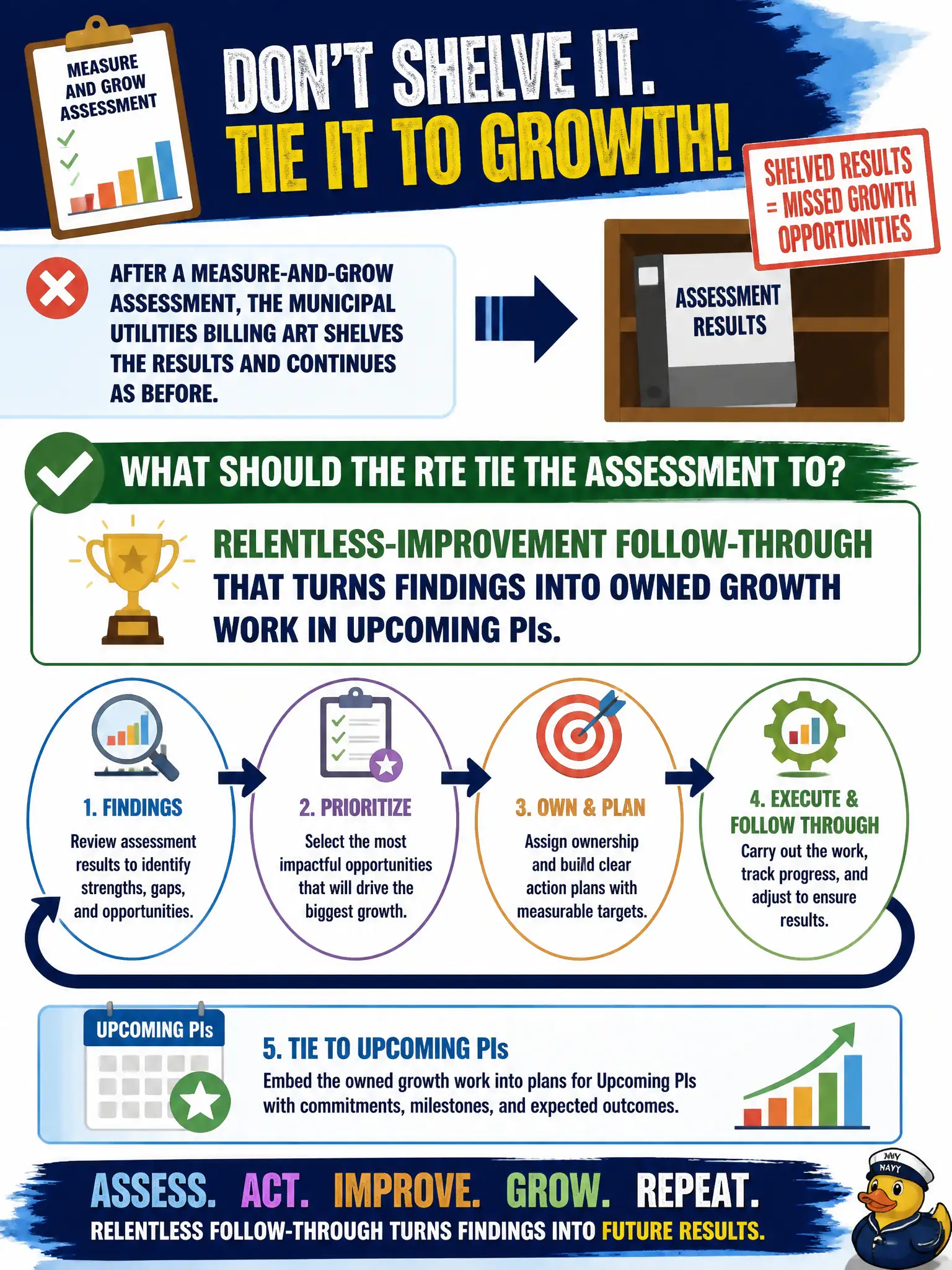
After a measure-and-grow assessment, the municipal utilities billing ART shelves the results and continues as before. What should the RTE tie the assessment to?
Select an answer to reveal the explanation.
Short Explanation
An assessment on a shelf is a water-quality report nobody reads. Measure-and-grow only counts when the billing ART picks a gap, names an owner, and puts work on the next PI. Otherwise you just paid for a snapshot of the same leak.
Full Explanation
Tie measure-and-grow assessment results to relentless-improvement follow-through that turns findings into owned growth work in upcoming PIs for the municipal utilities billing ART. Filing results in an archive folder proves only that an assessment occurred. A one-slide briefing filed without changing PI work is theater. Reassessing next year only if billing complaints rise waits for harm to residents. Exam caveat: not every finding needs immediate work—prioritize—but prioritized items must receive capacity. Operational check: within one PI of the assessment, create owned improvement stories, reserve PI Planning capacity, and re-measure the targeted competency or outcome so ratepayer billing reliability grows rather than remaining a shelf snapshot. In municipal and civic service contexts, record the rationale in the ART working agreements or improvement backlog so future PIs preserve the control, and re-validate after the next Inspect and Adapt against resident-facing outcomes rather than activity theater. Confirm owners, success measures, and a re-check date so the practice remains inspectable. In municipal and civic service contexts, record the rationale in the ART working agreements or improvement backlog so future PIs preserve the control, and re-validate after the next Inspect and Adapt against resident-facing outcomes rather than activity theater. Confirm owners, success measures, and a re-check date so the practice remains inspectable.