
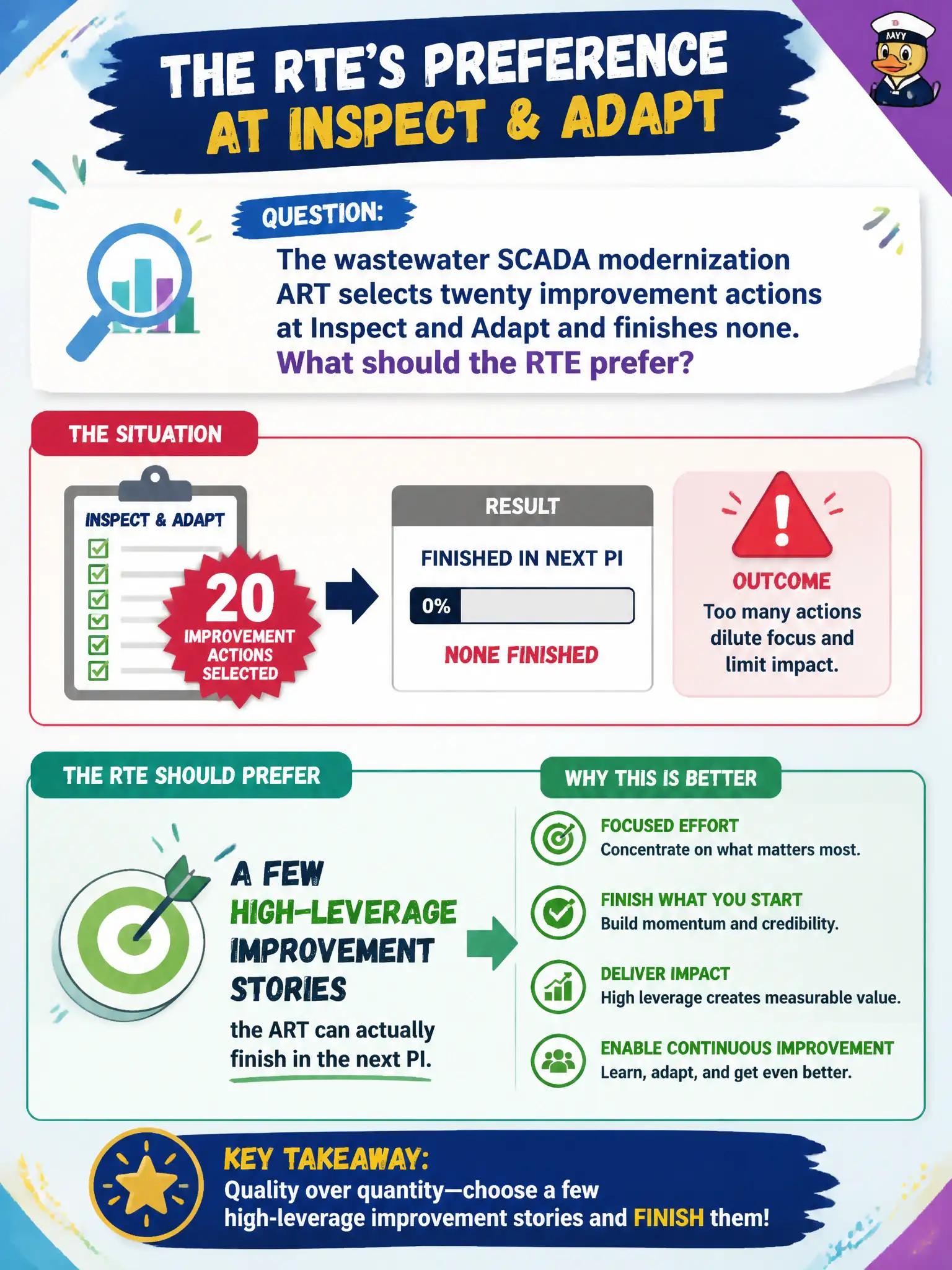
The wastewater SCADA modernization ART selects twenty improvement actions at Inspect and Adapt and finishes none. What should the RTE prefer?
Select an answer to reveal the explanation.
Short Explanation
Twenty unfinished fixes is a leaky pipe with twenty patches and no wrench time. Inspect and Adapt is supposed to pick a few high-leverage stories the train can actually finish. Finish two real improvements and the plant feels it; start twenty and the board just collects dust.
Full Explanation
Prefer a few high-leverage improvement stories the wastewater SCADA modernization ART can actually finish in the next PI. The workshop should produce a small funded set with owners and capacity. Keeping all twenty actions visible so no plant concern feels ignored creates WIP without outcomes. Replacing the list weekly with twenty more is churn. Freezing improvement until every SCADA feature is complete permanently postpones relentless improvement on a public plant system. Exam caveat: a parking lot for later ideas is fine if the funded set is explicit and small. Operational check: leave I&A with no more than a handful of improvement backlog items, assign capacity in PI Planning, and report completion at the next I&A so plant reliability improvements are real rather than dust on a board. In municipal and civic service contexts, record the rationale in the ART working agreements or improvement backlog so future PIs preserve the control, and re-validate after the next Inspect and Adapt against resident-facing outcomes rather than activity theater. Confirm owners, success measures, and a re-check date so the practice remains inspectable. In municipal and civic service contexts, record the rationale in the ART working agreements or improvement backlog so future PIs preserve the control, and re-validate after the next Inspect and Adapt against resident-facing outcomes rather than activity theater. Confirm owners, success measures, and a re-check date so the practice remains inspectable.