
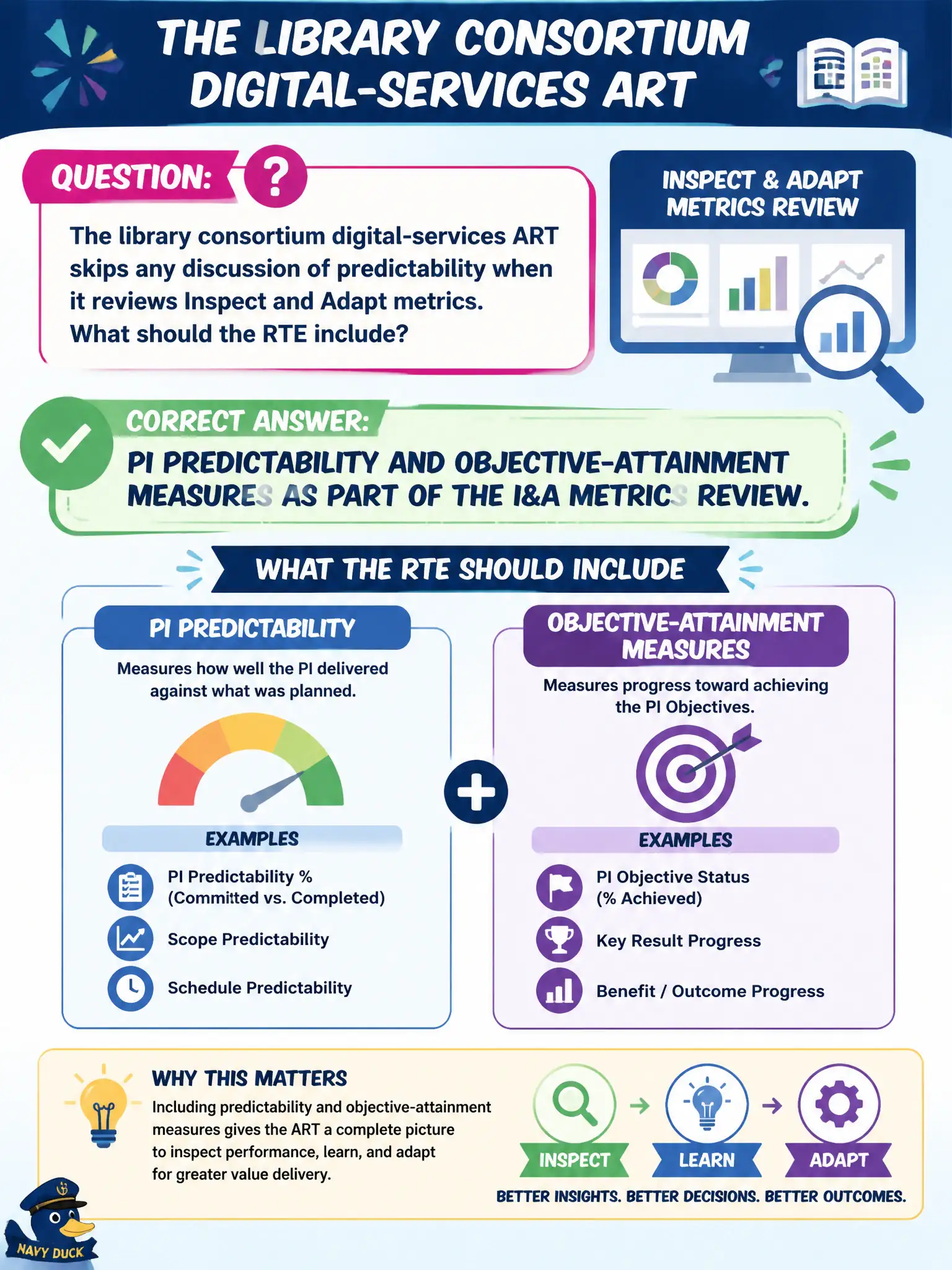
The library consortium digital-services ART skips any discussion of predictability when it reviews Inspect and Adapt metrics. What should the RTE include?
Select an answer to reveal the explanation.
Short Explanation
Predictability is whether the library train delivers what it committed, not whether someone stayed late reshelving tickets. Inspect and Adapt is the moment to look at objective attainment across the PI. Skip that measure and the consortium cannot tell a reliable catalog ART from a lucky one.
Full Explanation
Include PI predictability and objective-attainment measures in the library consortium digital-services ART's I&A metrics review. ART predictability, typically from planned versus actual business value on PI Objectives, shows whether the train can be trusted to meet commitments. Ranking branches by after-hours catalog tickets measures heroics, not predictability. Debating whether predictability matters because e-book licenses renewed dodges the measure. Discussing predictability only if every objective was fully met guarantees the conversation never happens when learning is most needed. Exam caveat: stretch objectives are often excluded from predictability calculations—know the local rule—but core committed objectives still belong in the review. Operational check: present the predictability chart at I&A, discuss overload or dependency causes, and set one improvement that protects catalog service commitments to member libraries and patrons. In municipal and civic service contexts, record the rationale in the ART working agreements or improvement backlog so future PIs preserve the control, and re-validate after the next Inspect and Adapt against resident-facing outcomes rather than activity theater. Confirm owners, success measures, and a re-check date so the practice remains inspectable.